
Now the LORD spoke to Moses and Aaron in the land of Egypt, saying, “This month (chodesh) shall be your beginning of months (chodesh); it shall be the first month (chodesh) of the year to you. – Exodus 12:1-2
A biblical month is based upon the cycles of the Moon. This measurement is derived from God’s commandment to Moses in Exodus 12:2. In the beginning, the first month of the year was observed in the autumn; the September/October timeframe on the Gregorian calendar. It is the beginning of the biblical year (Rosh Hashanah), even to this day. Move ahead six months and you are now in the spring…the time of the exodus from Egypt…the time of Passover…the time God told Moses to keep as the first month of the year. So now, what was formerly known as the seventh month, has become the first month. The years still turnover in the autumn, but the months turn over in the springtime.
“Chodesh” (“khoe-desh” – ח֗דֶשׁ) is a word used throughout the Hebrew Scriptures for the word “Moon” or “month” and it comes from a verb meaning “to renew or repair.” In the Scripture above, God gave Moses the commandment to sanctify the crescent New Moon and establish a lunar calendar. This is considered to be the first commandment Israel was given as a nation.
It takes the Moon roughly 29½ days to cycle through all of its phases and be renewed again. You don’t need a calendar to know what day of the month it is; just look up at the sky and see what phase the Moon is in. On the calendar in general use today (the Gregorian calendar) a month is not based upon the cycles of the moon or any other natural phenomenon. It is simply an artificial division of the year into twelve portions.
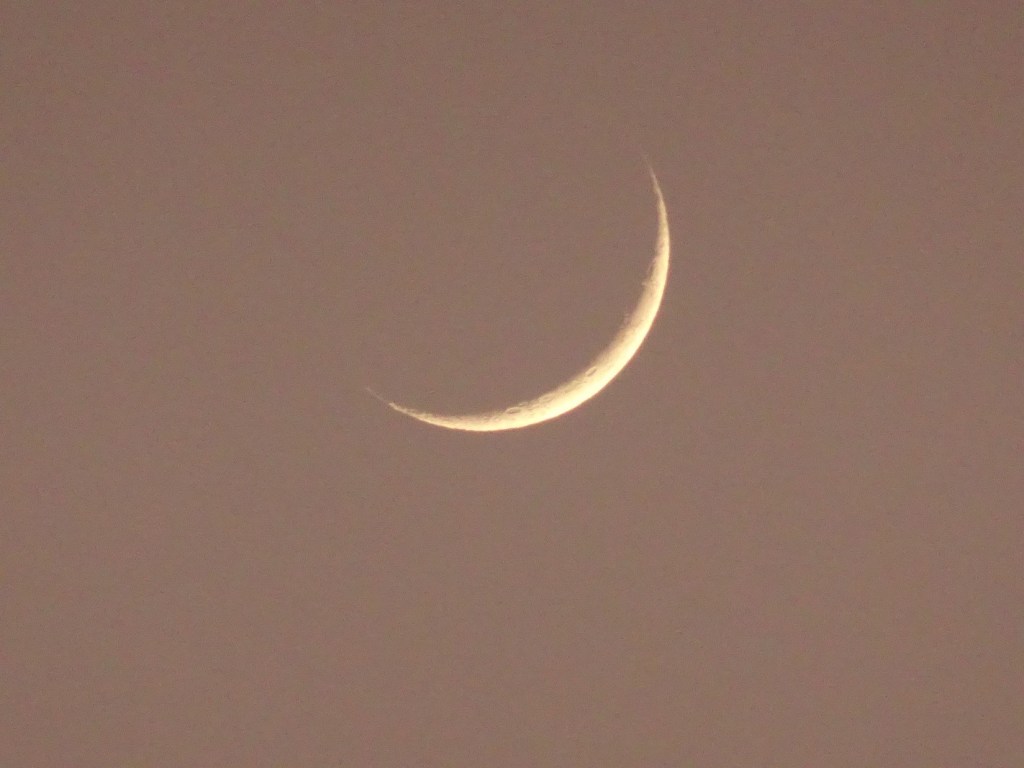
The Moon waxes and wanes from right to left; the same way Hebrew writings are read. The biblical New Moon is when the first visible sliver of the Moon is seen. This is not the same as the astronomical New Moon. The astronomical New Moon is defined as the phase of the Moon when “the lunar disk is not visible to the naked eye, except when it is silhouetted against the Sun during a solar eclipse.”[1] The Hebrew New Moon is counted as the first day of the month; the astronomical New Moon, therefore, occurs on the last day of the Hebrew month. There are some who argue that the astronomical New Moon is the same as the biblical New Moon; however, the majority opinion is that the Moon must be seen to be sanctified. Therefore, if the astronomical New Moon cannot be seen on a monthly basis, it cannot be sanctified.
In order to keep all of Israel on the same page, in ancient times, on the 30th day of every month, the Sanhedrin would “open for business” in a large courtyard in Jerusalem called Beit Ya’azek. Witnesses who claimed to have seen the New Moon on the previous night would come to give their testimony and be cross-examined. Two witnesses were required to sanctify the New Moon; each witness was questioned separately and, if their testimonies were in harmony, the New Moon was declared and the “30th day” was changed to the “1st day.” A month containing 30 days was called “malei” (“mah-lay” – מָלֵא) – which means “full;” a month containing 29 days was called “chaser” (“khah-sayr” – חָסֵר) – which means “lacking.” Typically, if one month contained 29 days, the next would contain 30 days.
Once the New Moon had been declared, signal fires were lit that night (the second day of the month) in order to spread the word that the New Moon had been sanctified. In this way, Jews all over Israel and as far away as Babylon could be in sync with Jerusalem. This was especially important when there was a holy day to be observed that month. For example, everyone needed to know what day to be in Jerusalem in order to make their Passover sacrifice.[2]
The “Feast of Trumpets” (one of God’s Appointed Times) falls upon the first day of the seventh month. As you can imagine, there would be a problem in communicating the sanctification of the New Moon in time for people in the outlying communities to celebrate this Holy Day. In order to combat this issue, people outside of Jerusalem would start counting the days from the sanctification of the sixth New Moon and celebrate both the 30th and the 31st days from its declaration. In this way, they would be sure to celebrate the appropriate day – whether the month was “malei” or “chaser.” This tradition is still observed outside of Israel to this day.
The photograph below is of the New Moon which occurred over Tamar in the Wilderness, Israel, on November 2, 2016. It was the first day of the eighth biblical month. When the Moon is in this phase, it is called “Rosh Chodesh” (“roshe khoe-desh” רׄאשׁ ח֗דֶשׁ -) meaning “Head of the Month.” The figure below shows the phases of the moon for the remaining days of the month.

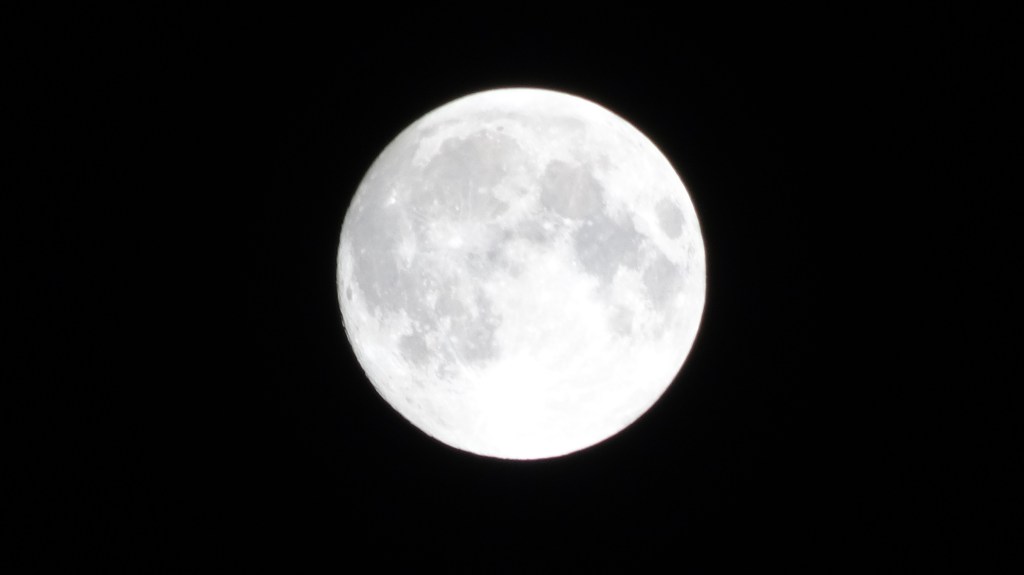
A Full Moon occurs at the middle of the biblical month, on either the 14th or 15th day. A lunar eclipse can only happen on the night of a Full Moon. A lunar eclipse occurs when the Moon moves into the Earth’s shadow, causing the Moon to be darkened. This can only occur when the Sun, Earth, and Moon are exactly or very closely aligned; with Earth residing between the other two. This happens about twice a year. When the Moon is eclipsed by the Earth, it sometimes takes on a reddish color that is caused by the Sun’s light being refracted by Earth’s atmosphere. Because of this, when the Moon is in eclipse, it is often referred to as a “Blood Moon.” Unlike a solar eclipse, which can only be viewed from a relatively small area of the world, a lunar eclipse may be viewed from anywhere on the night side of Earth.[3] So, to review, a solar eclipse is only possible on an astronomical New Moon, the last day of the Hebrew month; a lunar eclipse is only possible on a Full Moon, the 14th/15th day of the Hebrew month.
The Appointed Time of Passover occurs on the 14th day of the month. This means that a lunar eclipse may take place on Passover but, as we just learned, a solar eclipse could not occur on this day. The Bible tells us that the sun was darkened on the Passover of Jesus’ crucifixion.
Now it was about the sixth hour, and there was darkness over all the earth until the ninth hour. Then the sun was darkened, and the veil of the temple was torn in two. – Luke 23:44-45 (NKJ)
After what we’ve learned, we know that the sun being darkened on the day of Jesus’ crucifixion was not a natural phenomenon.
Leap Years
Obviously using the cycles of the Moon as the measurement of a month will lead to problems when trying to calculate a year. Every other month is 29 days and every other month is 30 days. No matter how you try, you can’t make this add up to 365¼ days. God said we need to keep the first month of the year in the springtime, at the time of the exodus from Egypt and the time of ripened barley. In order for His calendar to work properly, there are seven times within a 19-year cycle when an extra month is inserted into the Hebrew calendar – to keep the month of Nisan (the first month) in its proper place. It is called an intercalary month. Intercalary is defined as a day or a month inserted into the calendar to keep it aligned with the solar year. We’re already familiar with this concept on the Gregorian calendar, every four years, a “leap day” is added. The Hebrew calendar inserts a “leap month” by doubling the 12th month, Adar; they become known as Adar I and Adar II.
[1] https://en.wikipedia.org/wiki/New_moon
[2] https://www.chabad.org/library/article_cdo/aid/526874/jewish/The-Jewish-Month.htm; retrieved 4/11/23
[3] https://en.wikipedia.org/wiki/Lunar_eclipse; retrieved 4/11/23

 Today in the Bible
You must be logged in to post a comment.