Elul 29, 5783; from sunset September 14, 2023, to sunset September 15, 2023
Today in the Bible is the anniversary of the fifth day of creation.
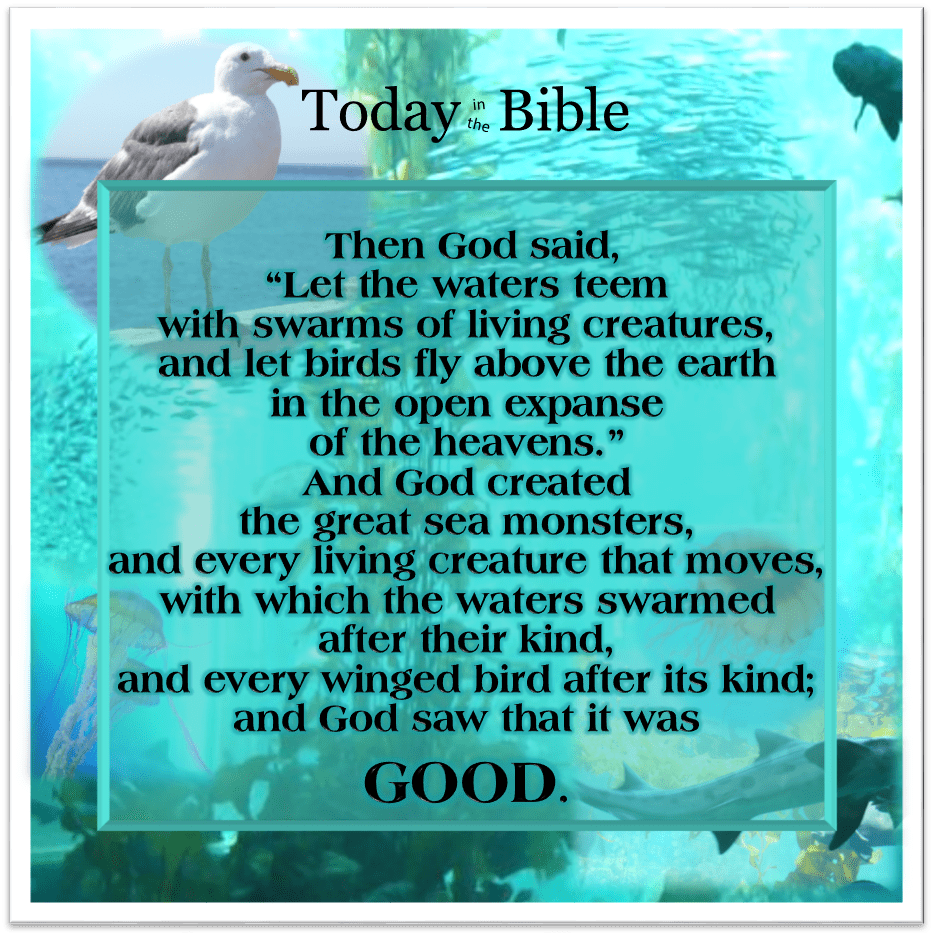
Then God said, “Let the waters abound with an abundance of living creatures, and let birds fly above the earth across the face of the firmament of the heavens.” So God created great sea creatures and every living thing that moves, with which the waters abounded, according to their kind, and every winged bird according to its kind. And God saw that it was good. And God blessed them, saying, “Be fruitful and multiply, and fill the waters in the seas, and let birds multiply on the earth.”
So the evening and the morning were the fifth day. – Genesis 1:20-23 (NKJ)
Once again God had created a habitat and prepared it for what was to come. On the second day, He placed the firmament, the expanse, in the heavens to separate the waters below from the waters above. Now, on the fifth day, He is filling the waters with all sorts of swarming creatures and the expanse with the winged creatures that fly about.
Today is the first time that God’s creation has included the “nefesh chayah” – the living creatures. On the third day, He provided the plants and trees needed for food. These things were alive, but they did not have the “nefesh chayah.” The word “nefesh” comes from a verb which means “to take a breath, to refresh oneself” and “chayah” means “to live, be alive.” Living breathing creatures. The word “nefesh” is translated in over twenty different ways in the King James Version of the Bible. Its main uses include life, soul, creature, person, appetite, desire, and mind.
So, God made the swarming things that swarm in the waters of the seas. He also made the “tanninim gedolim.” Tanninim is the plural form of the word tannin; the word gedolim means “great.” Tannin is used in various ways throughout the Bible, and gets translated as dragon, sea monster, serpent, crocodile, whale, and even jackal (when in reference to a land animal).
He also made the “ōf” (עוֹף – pronounced like “oaf”). “Ōf” comes from a verb which means “to fly, fly about, or fly away.” Let’s take a look at the Hebrew picture language – just for fun. (The Hebrew letters were originally pictographs, which are similar to an Egyptian hieroglyph.) The chart below shows the letters used in the word “ōf” and their corresponding pictographs.
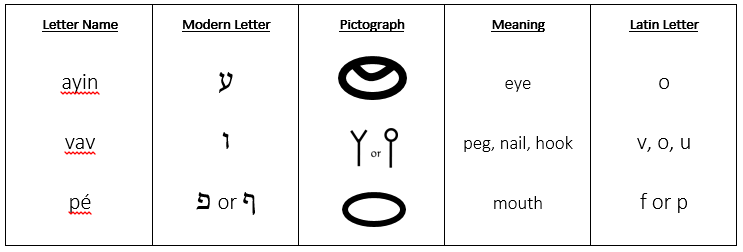
The word “ōf” (עוֹף) seems to focus on the eye and the mouth of the flying creature rather than its wings – but, then again, there isn’t a pictograph for a wing. So, an “ōf” seems to have been viewed as a creature with eyes and a nail-like mouth? Maybe?? This is the fun of the Hebrew language, trying to see how the ancient peoples formed the meaning of the words they used. Can you imagine God presenting a bird before Adam to see what he would name it? What did Adam see that made him name it an “ōf?”
Did you know that our posts are categorized and tagged by content?
When you visit our home page at https://todayinthebible.com and select any post,
you can find the associated categories and tags just to the right of the title.
Simply click on any tag and you will be taken to all related posts.

© 2026 Today in the Bible

 Today in the Bible
You must be logged in to post a comment.