
Tishrei 4, 5784; from sunset September 18, 2023, to sunset September 19, 2023
Yom Kippur is coming up next week, on the 10th day of Tishrei. Also known as the Day of Atonement; it is listed among God’s “mo’adim” (Appointed Times) as found in Leviticus 23. There is a lot to “cover” for Yom Kippur, so let’s get started a little early.
יוֹם הַכִּפֻּרִים
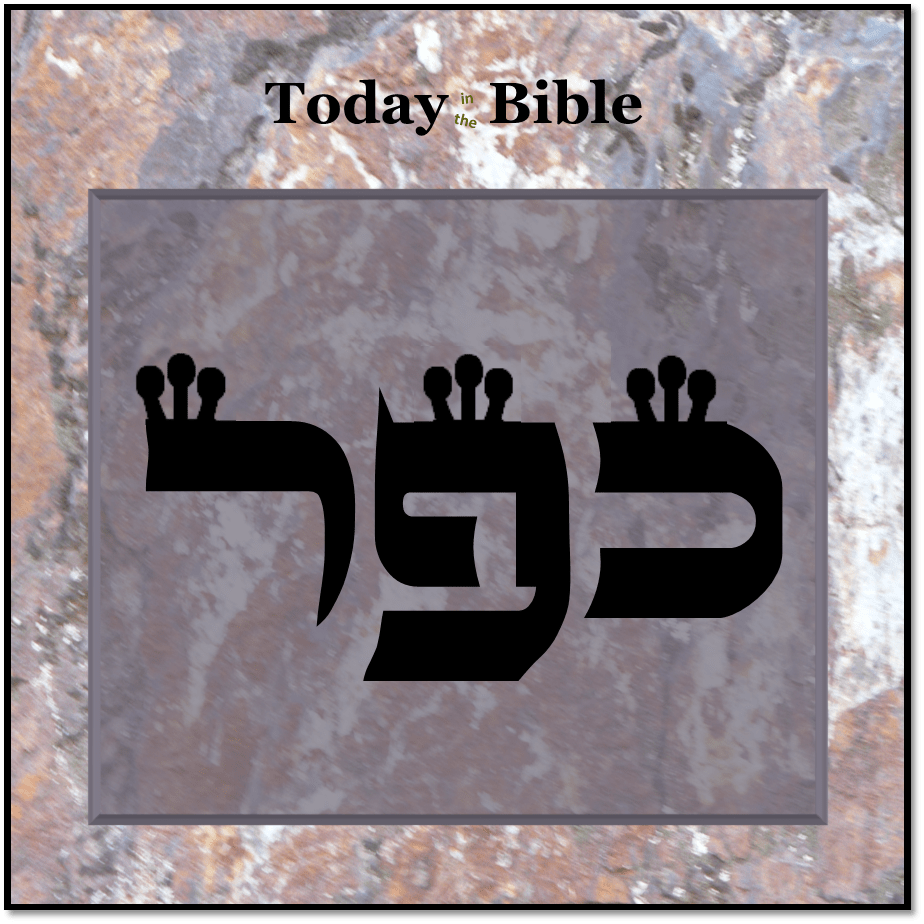
The Hebrew actually reads “Yom Hakippurim” or “Day of Atonements” …in the plural. Spelled out in Hebrew, above, you can see we’ve highlighted the root of the word in red. In the Hebrew language, generally words come from a three-letter root and most of the time, the root word is a verb (though this is an over-simplified statement). From this verb-root, nouns also stem. Sometimes a verb-root can carry more than one set of meanings, as is the case in our root. But first, let’s take care of a little bit of housekeeping before we get started.
There are some Hebrew letters which can make more than one sound. Our root contains two of those letters.

Now that we’ve had a little lesson about the letters in our root and the different sounds they can make, let’s take a look at the verbs and nouns stemming from it. Scholars have organized them into four groups.

*Kafar has a connection to the name of a biblical town most of you have probably heard of…Capernaum. In Hebrew, Capernaum is “Kefar Nachum” (כְּפַר נַחוּם). “Nachum” comes from the same root as the name Nehemiah (“Nechemyah”), meaning “to be sorry, regret, repent, or comfort.” Capernaum means “Village of Consolation” – although some have suggested an alternative meaning – “Protected by Being Sorry.”
Over the next few days, we’ll take a closer look at God’s instructions for the Day of Atonement. We’ll also look at some stories in the Bible and consider whether or not they may have a connection to Yom Kippurim – which, after all, is plural – more than one atonement, more than one covering?

 Today in the Bible
You must be logged in to post a comment.