
Tishrei 10, 5784; from sunset September 24, 2023, to sunset September 25, 2023
The Day of Atonement (Yom Kippur) falls upon the 10th day of the seventh month. We’re exploring the story of Noah to see if there may be a connection to Yom Kippur. Since there are a number of Bible stories to study for Yom Kippur, we’re getting started a few days early.
Noah’s Ark (1846), by the American folk painter Edward Hicks.
Wait, Noah’s Yom Kippur? Why would we say that? Well, let’s read today’s verses and then we’ll reconnect and see what we see.
The earth also was corrupt before God, and the earth was filled with violence. So God looked upon the earth, and indeed it was corrupt; for all flesh had corrupted their way on the earth. And God said to Noah, “The end of all flesh has come before Me, for the earth is filled with violence through them; and behold, I will destroy them with the earth. Make yourself an ark of gopherwood; make rooms in the ark, and cover it inside and outside with pitch. – Genesis 6:11-14 (NKJ)
In our last few posts, we have been focusing on the Hebrew root word “כפר” and have discovered that it has several different meanings. It shows up twice in Genesis 6:14; let’s take a look. We’ve highlighted our words in red to make them easier to see.
וְכָפַרְתָּ אֹתָהּ מִבַּיִת וּמִחוּץ בַּכֹּפֶר
vechafarta ottah mibayit umichutz bakofer
cover it inside and outside with pitch
God commanded Noah to “cover” the ark with “pitch.” At first glance, you may think that may not be enough to make a connection. How does Noah’s act of covering the ark with pitch fit into the Day of Atonement? But if we look at the verses falling before this statement, we see that the earth was corrupt, corrupt, corrupt, and full of violence. Full of sin. Just a few verses earlier, the Bible tells us that all mankind ever thought about was…always only continually evil.
Then the LORD saw that the wickedness of man was great in the earth, and that every intent of the thoughts of his heart was only evil continually. – Genesis 6:5 (NKJ)
We know the rest of the story, because of the great sin of mankind, God sent a flood to destroy every living thing – but He spared Noah and his family. Noah was a righteous man, perfect in his generation; but without the pitch that he used to cover the ark, even Noah would have been subject to the consequences of sin. The pitch, the “kofer,” can be compared to the atonement, the “chafar,” of Yom Kippur. In both the Yom Kippur ceremony and the story of Noah, we see God dealing with the sin of mankind. In the story of Noah, we can clearly see our need for atonement.
Another connection lies in the word “flesh” (“basar” – בָּשָׂר). In the verses above, God said that all “basar” was corrupt. “Basar” is the same word used in the Yom Kippur ceremony when it says the High Priest must “bathe his flesh.” In Noah’s story, all “flesh” was bathed in the flood.
In the next chapter of Genesis, we discover another word (“machah” – מָחָה – “to blot or wipe out”) that ties the story of Noah to the next event in our Yom Kippur saga – the sin of the golden calf.
He blotted out (“machah” – מָחָה) every living thing that was upon the face of the ground, man and animals and creeping things and birds of the air; they were blotted out (“machah” – מָחָה) from the earth. Only Noah was left, and those that were with him in the ark. – Genesis 7:23 (RSV)
But now, if thou wilt forgive their sin — and if not, blot me (“machah” – מָחָה), I pray thee, out of thy book which thou hast written.” – Exodus 32:32 (RSV)
We, at Today in the Bible, believe that the tenth day of this month may have been the day that Noah covered the ark in pitch. Time-wise, it seems to fit. In only about a month from now, God commands Noah and his family to enter the ark; for in seven days, He will send the flood.
Please join us next time to study the story of Moses and the sin of the golden calf and its connection to Yom Kippur.
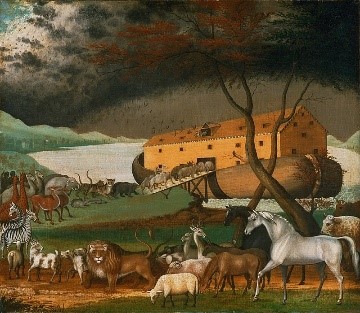
If you’d like to read all of our posts on Noah, please click on the image above.

© 2026 Today in the Bible

 Today in the Bible
You must be logged in to post a comment.