A Song of Ascent ~ with a particular focus on the Feast of Tabernacles
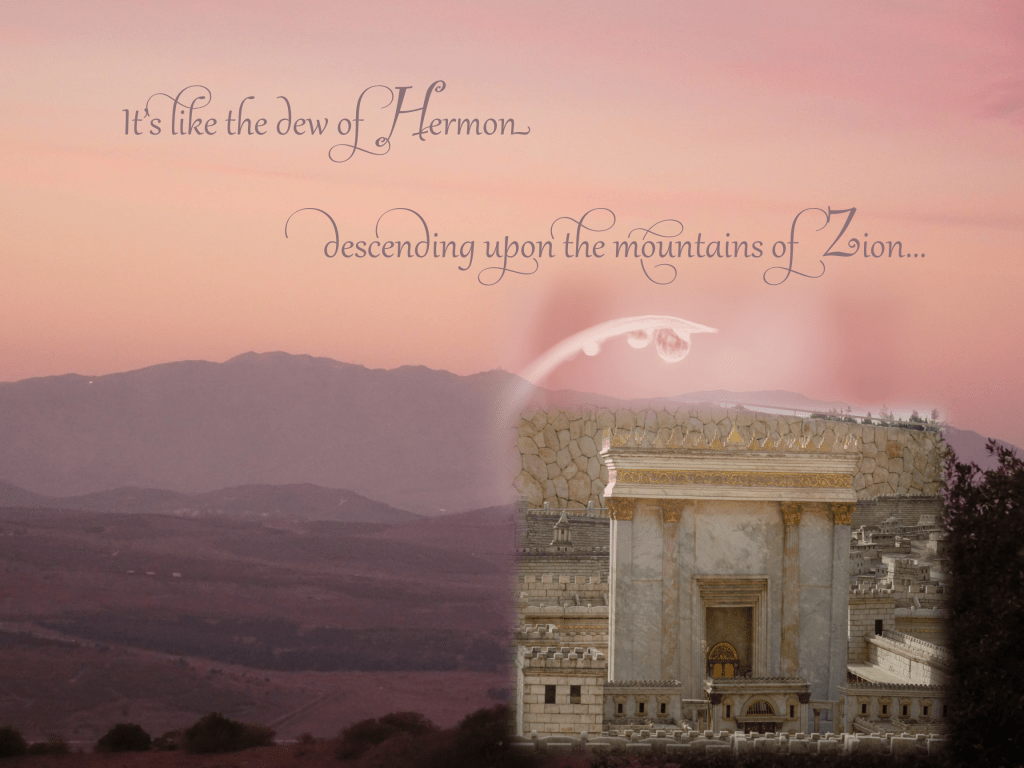
& the Second Temple Model, Jerusalem. Photo credits: Today in the Bible
Psalm 133 is one of the Songs of Ascent (Psalms 120-134). These fifteen psalms are believed to have been sung by worshippers making the ascent to Jerusalem for the three pilgrimage festivals:
- Pesach (aka Passover)
- Shavu’ot (aka Feast of Weeks or Pentecost)
- Sukkot (aka Feast of Booths or Feast of Tabernacles)
There is also believed to be a connection between the Songs of Ascent and the Levites’ ascent of the fifteen steps leading up to the Temple, on their way to minister unto the LORD. This tradition dates back to the days of Solomon and his dedication of the First Temple.
Psalm 133 has a special connection to the Feast of Tabernacles as it speaks of brothers dwelling together in unity. Dwelling as one with God and man is the end goal of the Bible; for that matter, it was the beginning goal!
Since this psalm is just a few verses, we’ll take the opportunity to learn it both in Hebrew and in English.
שִׁיר הַמַּעֲלוֹת לְדָוִד
Shir hama’alot leDavid
A song of ascents, of David
הִנֵּה מַה טּוֹב וּמַה נָּעִים
Hineh mah tov umah na’im
Behold, how good and how pleasant
שֶׁבֶת אַחִים גַּם יָחַד׃
Shevet achim gam yachad.
The dwelling of brothers, yea, in unity.
כַּשֶּׁמֶן הַטּוֹב עַל הָרֹאשׁ
Kashemen hatov al harosh
Like oil of goodness upon the head
יֹרֵד עַל הַזָּקָן זְקַן אַהֲרֹן
Yored al hazakan, zekan Aharon
Coming down upon the beard, the beard of Aaron
שֶׁיֹּרֵד עַל פִּי מִדּוֹתָיו׃
Sheyored al pi midotav.
Descending upon the edge of his garment.
כְּטַל חֶרְמוֹן שֶׁיֹּרֵד עַל הַרְרֵי צִיּוֹן
Ketal Chermon sheyored al harerei Tzion
Like the dew of Hermon descending upon the mountains of Zion
כִּי שָׁם צִוָּה ה’ אֶת הַבְּרָכָה
Ki sham tzivah ADONAI et-haberachah
For there He commanded, the LORD, the blessing
חַיִּים עַד הָעוֹלָם׃
Chayim ad ha’olam!
Life forevermore unto eternity!
The word “Hermon” is actually pronounced like “Chermon” in Hebrew (with the “ch” sounding like “kh”). It comes from the verb “charam” which means “to devote, ban, or utterly destroy.” Leviticus 27:28 speaks of something that is devoted to the LORD. It is totally given over; never to be used by anyone again.
Nevertheless no devoted [cherem] offering that a man may devote [charim] to the LORD of all that he has, both man and beast, or the field of his possession, shall be sold or redeemed; every devoted offering [cherem] is most holy to the LORD. – Leviticus 27:28 (NKJ)
Many believe that the transfiguration of Jesus occurred on Mount Hermon. The mountain was the location of the worship of many deities over the millennia. The ruins of a temple dedicated to “Ba’al” (which means “lord”) was found there. Ba’al was said to be the son of “El” (which means “god”). The “lord” the “son of god.” A counterfeit of the true Lord, the true Son of God. I find it fitting that our Heavenly Father would have acknowledged His Son at this place.
This is My beloved Son, in whom I am well pleased.
Listen to Him!
– Matthew 17:5
Did you know that you can view any of our posts whenever you’d like?
Visit our home page at https://todayinthebible.com
where you can find them organized by month
in the “Archives” section on the right side of the page.

© 2026 Today in the Bible

 Today in the Bible
You must be logged in to post a comment.