
Cheshvan 17, 5784; from sunset October 31, 2023, to sunset November 1, 2023
Noah’s Ark (1846), by the American folk painter Edward Hicks.
One week ago, God instructed Noah and his family to enter the ark and then He shut them in. Today, the rain begins to fall.
And it came to pass after seven days that the waters of the flood were on the earth. In the six hundredth year of Noah’s life, in the second month, the seventeenth day of the month, on that day all the fountains of the great deep were broken up, and the windows of heaven were opened. And the rain was on the earth forty days and forty nights.
On the very same day Noah and Noah’s sons, Shem, Ham, and Japheth, and Noah’s wife and the three wives of his sons with them, entered the ark–they and every beast after its kind, all cattle after their kind, every creeping thing that creeps on the earth after its kind, and every bird after its kind, every bird of every sort. And they went into the ark to Noah, two by two, of all flesh in which is the breath of life. So those that entered, male and female of all flesh, went in as God had commanded him; and the LORD shut him in. – Genesis 7:10-16 (NKJ)
In the story of Noah, the Bible says that the flood began on the 17th day of the second month. I used to think that meant the flood started on February 17th; that is, before I learned how to understand the dates in the Bible. But, wait a minute, all of the other posts we’ve been studying have said this is the eighth month…why are we studying the flood today?
Normally we recognize the second month of the biblical calendar to be Iyyar which corresponds to April/May on the Gregorian calendar that we use today. But In Exodus 12:2, at the time of the Exodus from Egypt, God changed the first month from Tishrei (in the autumn) to Nisan (in the spring). Since the flood took place before the Exodus, most people believe that the second month referenced in this story is the month of Cheshvan.
Cheshvan is normally the month when the rains come again to Israel. But there may be other hints that this is the correct month for the beginning of the flood; before the Babylonian exile this month was sometimes referred to as Bul – as stated in 1 Kings 6:38. The Hebrew word translated as “flood” in Genesis is “mabul” – and may be related to the word “Bul.” But that depends upon who you ask; others disagree with this thought and place “mabul” in a category all its own.
At Today in the Bible, we’ll follow Noah and his family throughout the next year as they spend their days in the ark. The medieval rabbi, Rashi (1040-1105 AD), pulled together a calendar of the major events recorded in Noah’s story. We’ll use his calendar as our guide as we work our way through. Others believe the flood began in the second month of the springtime; if that is the case, then all of our events can be moved forward six months. We’ll not get into a debate about that, our main goal is to remember and learn.
When we studied Yom Kippur, we wondered if that day could correspond to the day that Noah covered the ark with pitch (kofer). We learned that the word “kippur” and the word “kofer” come from the same Hebrew root. We also considered that both Yom Kippur and the act of covering the ark with pitch are connected to the idea of dealing with the consequences of sin. We’ll add that event to Rashi’s calendar, as well as the Feast of the Ingathering (aka Feast of Tabernacles) as a possible date for the day that Noah gathered in the harvest of food that would be needed for the long days in the ark.
| Tishrei 10 | Noah covers ark with pitch? |
| Tishrei 15 | Noah gathers harvest into the ark? |
| Cheshvan 11 | Noah, his family, and the animals enter the ark. |
| Cheshvan 17 | The rains begin to fall. |
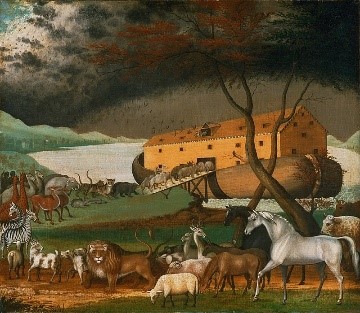
If you’d like to read all of our posts on Noah, please click on the image above.

© 2026 Today in the Bible

 Today in the Bible
You must be logged in to post a comment.