
Shevat 20, 5784; from sunset January 29, 2024, to sunset January 30, 2024
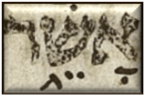
This is the name “Asher” as seen in the Aleppo Codex.
According to tradition, Asher, the son of Jacob and Leah’s maid, Zilpah, was born on the 20th of Shevat. Some accounts also list today as the date of his passing. The letters highlighted in red, below, show the word-play Leah used when naming the boy. They all contain the letters used to spell “Asher.”

Vatomer Le’ah be’oshri
ki ishruni banot
vatikra et-shemo Asher.
And she said, Leah, “Because of my happiness
for they will bless me, the daughters
and she called his name “Asher.”
And Leah’s maid Zilpah bore Jacob a second son. Then Leah said, “I am happy, for the daughters will call me blessed.” So she called his name Asher. – Genesis 30:12-13 (NKJ)
The name Asher comes from a root word meaning to be happy or blessed – both of which are called out in Leah’s statement at his birth. It can also mean straight, right, level, or just. The name Jasher (Yashar) comes from the same root. The following passages are taken from the 45th chapter of Jasher and provide some detail about Asher’s wives. The book of Jasher is mentioned twice in the Bible, but it is widely believed that the version in circulation today is not the same as the one mentioned in the Bible. The stories below should be taken with a grain of salt.
And Asher went forth and took Adon the daughter of Aphlal, the son of Hadad, the son of Ishmael, for a wife, and he brought her to the land of Canaan. And Adon the wife of Asher died in those days: she had no offspring; and it was after the death of Adon that Asher went to the other side of the river and took for a wife Hadurah the daughter of Abimael, the son of Eber, the son of Shem.
And the young woman was of a comely appearance, and a woman of sense, and she had been the wife of Malkiel the son of Elam, the son of Shem. And Hadurah bare a daughter unto Malkiel, and he called her name Serach, and Malkiel died after this, and Hadurah went and remained in her father’s house.
And after the death of the wife [of] Asher he went and took Hadurah for a wife, and brought her to the land of Canaan, and Serach her daughter he also brought with them, and she was three years old, and the damsel was brought up in Jacob’s house. And the damsel was of a comely appearance, and she went in the sanctified ways of the children of Jacob; she lacked nothing, and the Lord gave her wisdom and understanding.
And Hadurah the wife of Asher conceived and bare unto him Yimnah, Yishvah, Yishvi and Beriah; four sons. – Jasher 45:12-18
The names of Asher’s children are also listed in Genesis 46:17, though the transliterations are a little different, in Hebrew the names are the same.
The sons of Asher were Jimnah, Ishuah, Isui, Beriah, and Serah, their sister. And the sons of Beriah were Heber and Malchiel. – Genesis 46:17 (NKJ)
Before he died, Jacob pronounced a blessing over all of his children. This is the blessing he spoke over Asher:
“Bread from Asher shall be rich, and he shall yield royal dainties. – Genesis 49:20 (NKJ)
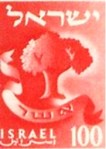
“Bread” is the word “lechem.” The word translated as “rich” is “shemenah.” This word comes from the root “shamen” which means to be or become fat. Shemen, meaning oil, also comes from this root. It could be that Jacob prophesied about the olive tree which will be prominent in the land given to the tribe of Asher. The olive tree became a symbol of the tribe and is found on its banner. The image below is a postage stamp honoring the tribe of Asher.
The words “royal dainties” are “ma’adanei-melech.” Ma’adanei has the same root as the garden of “Eden.” Words from this root carry the meaning of luxury, delight, dainty (as in food), finery, pleasure. Royal is “melech” which means “king.” “The dainties, the delicacies of a king.”
The book of Judges relates a parable in which the trees are looking for a king, the olive tree is their first choice. Olive oil was used in the anointing ceremony for kings.
“The trees once went forth to anoint a king over them. And they said to the olive tree, `Reign over us!’” – Judges 9:8.
Moses’ blessing over Asher:
And of Asher he said: “Asher is most blessed of sons; let him be favored by his brothers, and let him dip his foot in oil. Your sandals shall be iron and bronze; as your days, so shall your strength be.” – Deuteronomy 33:24-25 (NKJ)
Moses’ blessing for Asher bounces off of the meaning of Asher’s name…happy, blessed…and echoes Jacob’s “oily” blessing.
We’ll end our look at Asher’s life with a verse from Jasher which relates information surrounding his death. Jasher sets his age at 123 though other sources say that he lived to be 126.
And in the eighty-second year died Asher his brother, he was a hundred and twenty-three years old at his death, and he was placed in a coffin in Egypt, and given into the hands of his children. – Jasher 62:4
Did you know that our posts are categorized and tagged by content?
When you visit our home page at https://todayinthebible.com and select any post,
you can find the associated categories and tags just to the right of the title.
Simply click on any tag and you will be taken to all related posts.

© 2026 Today in the Bible

 Today in the Bible
You must be logged in to post a comment.