
Adar II 2, 5784; from sunset March 11, 2024, to sunset March 12, 2024
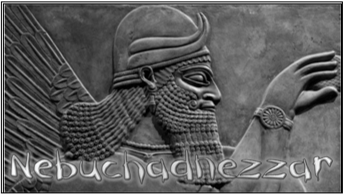
The name Nebuchadnezzar comes from the Akkadian “Nabu-kudurri-uṣur,” meaning “O Nabu, watch over my heir.” In 607–606 BCE, Nebuchadnezzar, as crown prince, commanded an army with his father, Nabopolassar, in northern Assyria. The next year, as commander in chief of the army, he crushed the Egyptians in the Battle of Carchemish, securing Babylonian control over all Syria.
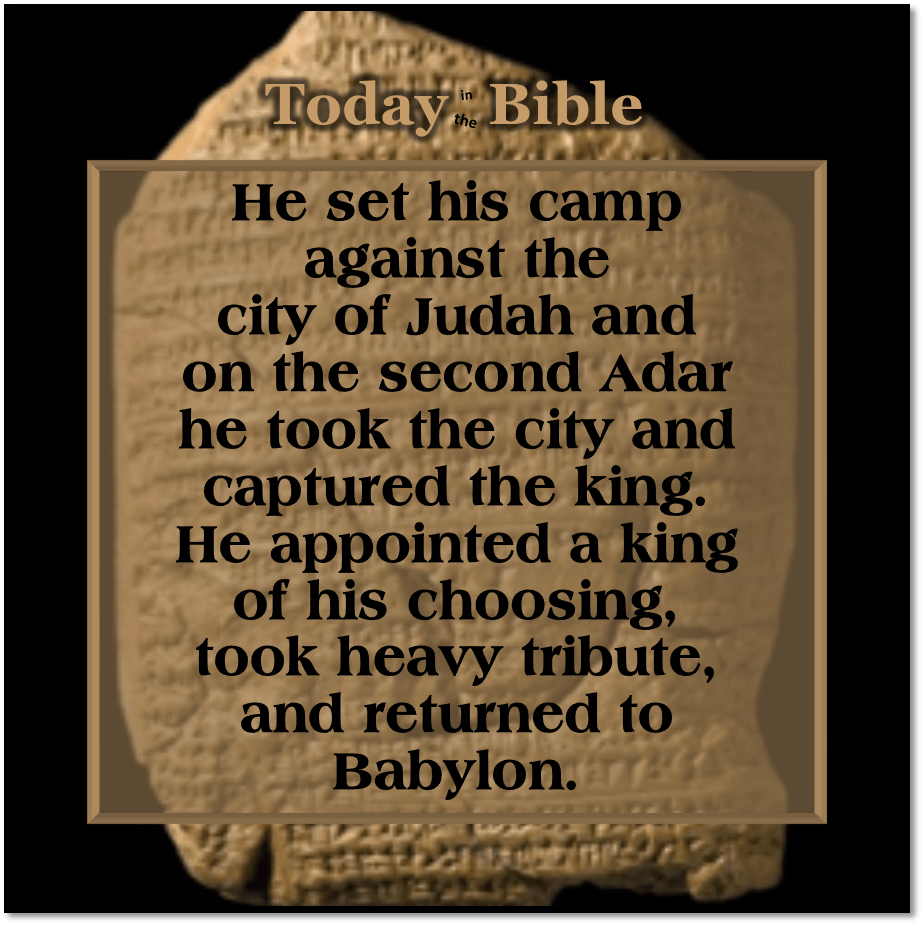
Above is an image of the Nebuchadnezzar Chronicle, one of 50+ Babylonian Chronicles, which is a series of tablets recording major events in Babylonian history. They were written from the reign of Nabonassar up to the Parthian Period. According to the Chronicle, Nebuchadnezzar captured Jerusalem on this day while Jehoiachin was king. The Akkadian cuneiform inscription reads:
Year 7 [597 BCE] in Kislev the king of Babylonia [Nebuchadnezzar] called out his army and marched to Hattu [the land of Syria, Israel and Judea]. He set his camp against the city of Judah [Jerusalem] and on the second Adar he took the city and captured the king [Jehoiachin]. He appointed a king of his choosing there [Zedekiah], took heavy tribute, and returned to Babylon.
The Biblical parallel to this story is found in 2 Kings 24 and 2 Chronicles 36:
Jehoiachin was eighteen years old when he became king, and he reigned in Jerusalem three months. His mother’s name was Nehushta the daughter of Elnathan of Jerusalem. And he did evil in the sight of the LORD, according to all that his father had done.
At that time the servants of Nebuchadnezzar king of Babylon came up against Jerusalem, and the city was besieged. And Nebuchadnezzar king of Babylon came against the city, as his servants were besieging it.
Then Jehoiachin king of Judah, his mother, his servants, his princes, and his officers went out to the king of Babylon; and the king of Babylon, in the eighth year of his reign, took him prisoner. And he carried out from there all the treasures of the house of the LORD and the treasures of the king’s house, and he cut in pieces all the articles of gold which Solomon king of Israel had made in the temple of the LORD, as the LORD had said.
Also he carried into captivity all Jerusalem: all the captains and all the mighty men of valor, ten thousand captives, and all the craftsmen and smiths. None remained except the poorest people of the land.
And he carried Jehoiachin captive to Babylon. The king’s mother, the king’s wives, his officers, and the mighty of the land he carried into captivity from Jerusalem to Babylon. All the valiant men, seven thousand, and craftsmen and smiths, one thousand, all who were strong and fit for war, these the king of Babylon brought captive to Babylon.
Then the king of Babylon made Mattaniah, Jehoiachin’s uncle, king in his place, and changed his name to Zedekiah. – 2 Kings 24:8-17 (NKJ)
According to 2 Chronicles, Jehoiachin was eight years old when he became king, as opposed to age 18 as stated in 2 Kings.
Jehoiachin was eight years old when he became king, and he reigned in Jerusalem three months and ten days. And he did evil in the sight of the LORD. At the turn of the year* King Nebuchadnezzar summoned him and took him to Babylon, with the costly articles from the house of the LORD, and made Zedekiah, Jehoiakim’s brother, king over Judah and Jerusalem. – 2 Chronicles 36:9-10 (NKJ)
*Similar to the Hebrew calendar, Babylonia used a lunisolar calendar with years consisting of 12 lunar months, each beginning when a new crescent moon was first sighted low on the western horizon at sunset, plus an intercalary month inserted as needed by decree. Contrary to the Hebrew calendar, Babylonia’s year began in the spring.
Did you know that you can view any of our posts whenever you’d like?
Visit our home page at https://todayinthebible.com
where you can find them organized by month
in the “Archives” section on the right side of the page.

© 2026 Today in the Bible

 Today in the Bible
You must be logged in to post a comment.