
Adar II 25, 5784; from sunset April 3, 2024, to sunset April 4, 2024
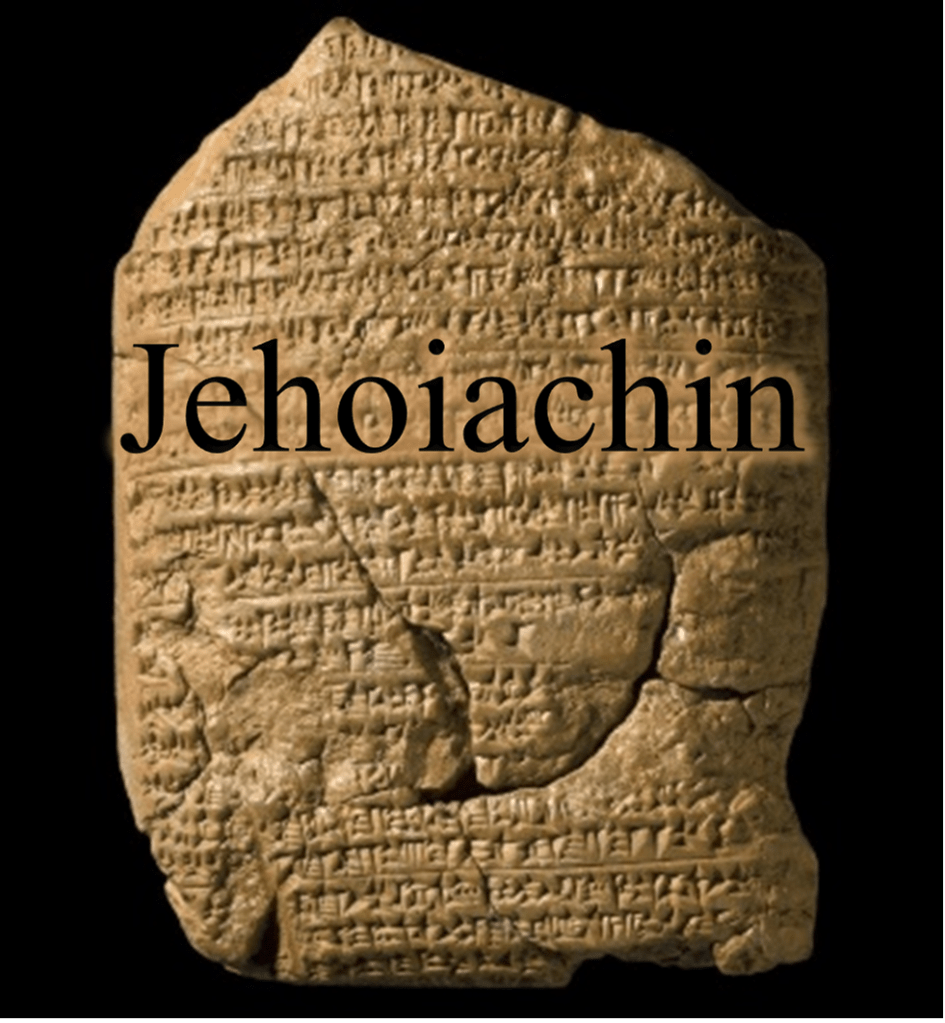
This is an image of the Nebuchadnezzar Chronicle; one of 50+ Babylonian Chronicles which is a series of tablets recording major events in Babylonian history. This tablet brags of capturing the king of Judah (Jehoiachin) and the appointment of a king of his choosing (Zedekiah).
A couple of weeks ago, we remembered the day that Jehoiachin’s three-month and ten-day reign came to an end at the hands of Nebuchadnezzar of Babylon. That date came from the Babylonian chronicle pictured above. The dating of today’s story comes from the Bible itself.
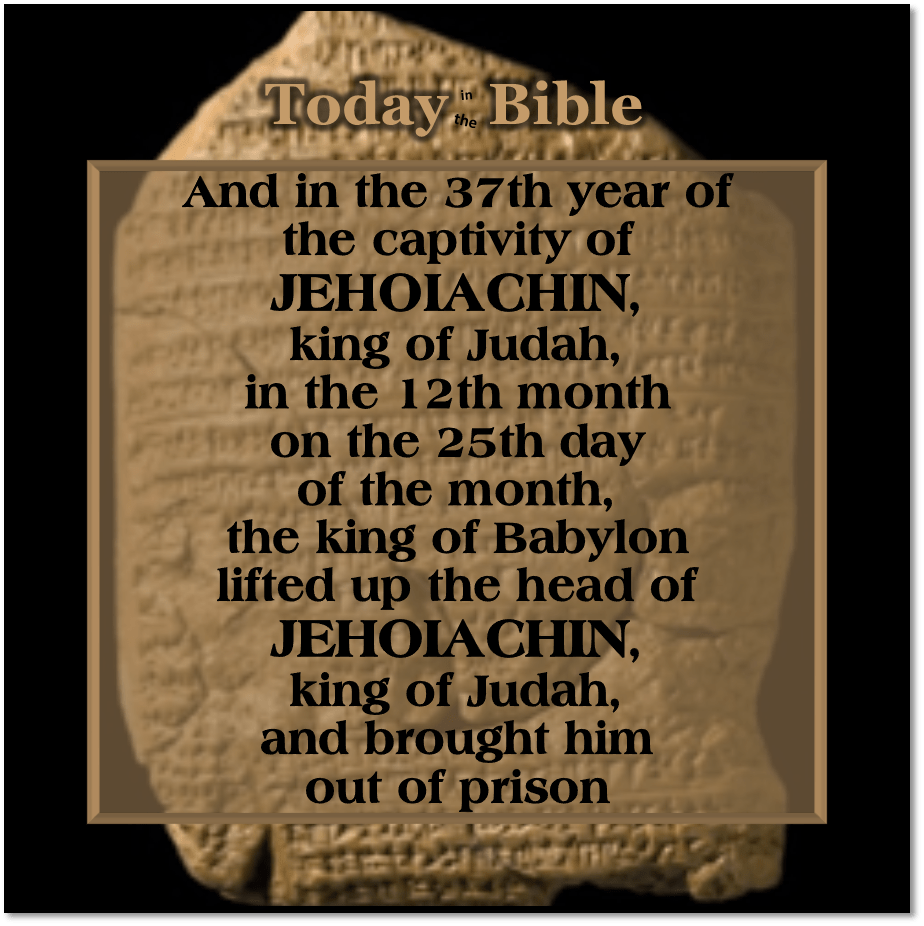
And in the thirty-seventh year of the captivity of Jehoiachin king of Judah, in the twelfth month, on the twenty-fifth day of the month, Evilmerodach king of Babylon, in the year that he became king, lifted up the head of Jehoiachin king of Judah and brought him out of prison; and he spoke kindly to him, and gave him a seat above the seats of the kings who were with him in Babylon. So Jehoiachin put off his prison garments. And every day of his life he dined regularly at the king’s table; as for his allowance, a regular allowance was given him by the king according to his daily need, until the day of his death as long as he lived. – Jeremiah 52:31-34 (RSV)
This story is also listed as occurring on the 27th day of the 12th month in the book of 2 Kings 25.
Jewish tradition also recognizes this day as the death of King Nebuchadnezzar.
In Babylon, near the Ishtar gate, archaeologists found a vault containing records dating back to the time of Nebuchadnezzar. Among the records is a tablet referencing rations for Jehoiachin and his five sons. These were discovered in the late 19th to early 20th centuries.
Jehoiachin’s rations tablets date from the 6th century BC and describe the rations set aside for a royal captive identified with Jeconiah, king of Judah. Tablets from the royal archives of Nebuchadnezzar king of Babylon were unearthed in the ruins of Babylon that contain food rations paid to captives and craftsmen who lived in and around the city. On one of the tablets, “Ya’u-kīnu, king of the land of Yahudu” is mentioned along with his five sons listed as royal princes. (Wikipedia)
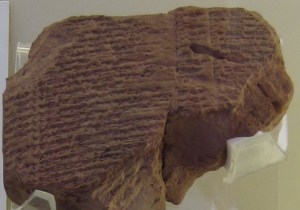
Translation:
The tablets’ text states:
Babylon 28122: “…t[o] Ia-‘-u-kin, king…”
Babylon 28178: “10 (sila of oil) to …Ia-‘-kin, king of Ia[…] 21/2 sila to […so]ns of the king of Ia-a-hu-du”
Babylon 28186: “10 (sila) to Ia-ku-u-ki-nu, the son of the king of Ia-ku-du, 21/2 sila for the 5 sons of the king of Ia-ku-du”
Another tablet reads:
- 1 1/2 sila (oil) for three carpenters from Arvad, 1/2 apiece,
- 11 1/2 sila for eight woodworkers from Byblos, . . .
- 3 1/2 sila for seven Greek craftsman, 1/2 sila apiece,
- 1/2 sila to the carpenter, Nabuetir
- 10 sila to Ia-ku-u-ki-nu, the king of Judah’s son,
- 2 1/2 sila for the five sons of the Judean king.
A sila is a Babylonian unit of capacity equivalent to about 800 ml (1.7 US pints).
Did you know that our posts are categorized and tagged by content?
When you visit our home page at https://todayinthebible.com and select any post,
you can find the associated categories and tags just to the right of the title.
Simply click on any tag and you will be taken to all related posts.

© 2026 Today in the Bible

 Today in the Bible
You must be logged in to post a comment.