
Nisan 12, 5784; from sunset April 19, 2024, to sunset April 20, 2024
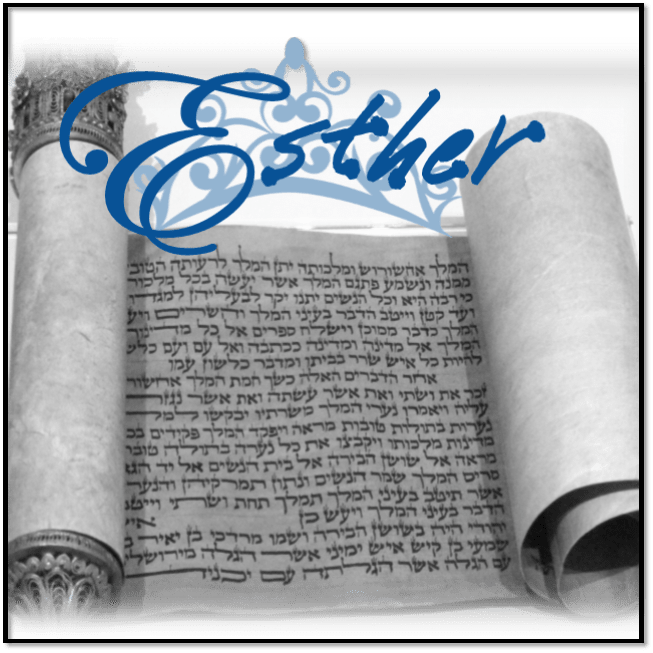
Esther is the Persian name of a Hebrew girl named “Hadassah.” Hadassah originates in the Hebrew “hadas” which means “myrtle.” The name Esther could either be from the Persian word for star (setareh) or the Median word for myrtle (astra). The myrtle tree produces a star-shaped flower which may be the connection between these words.
Haman Casts Lots
The book of Esther tells us that, in the month of Nisan, Haman plotted to destroy the Jewish people. He cast lots to determine the day. We’re placing the casting of lots to Nisan 12, as the decree to kill the Jews is dated to tomorrow, Nisan 13.
After these things King Ahasuerus promoted Haman, the son of Hammedatha the Agagite, and advanced him and set his seat above all the princes who were with him.
And all the king’s servants who were within the king’s gate bowed and paid homage to Haman, for so the king had commanded concerning him. But Mordecai would not bow or pay homage.
Then the king’s servants who were within the king’s gate said to Mordecai, “Why do you transgress the king’s command?”
Now it happened, when they spoke to him daily and he would not listen to them, that they told it to Haman, to see whether Mordecai’s words would stand; for Mordecai had told them that he was a Jew.
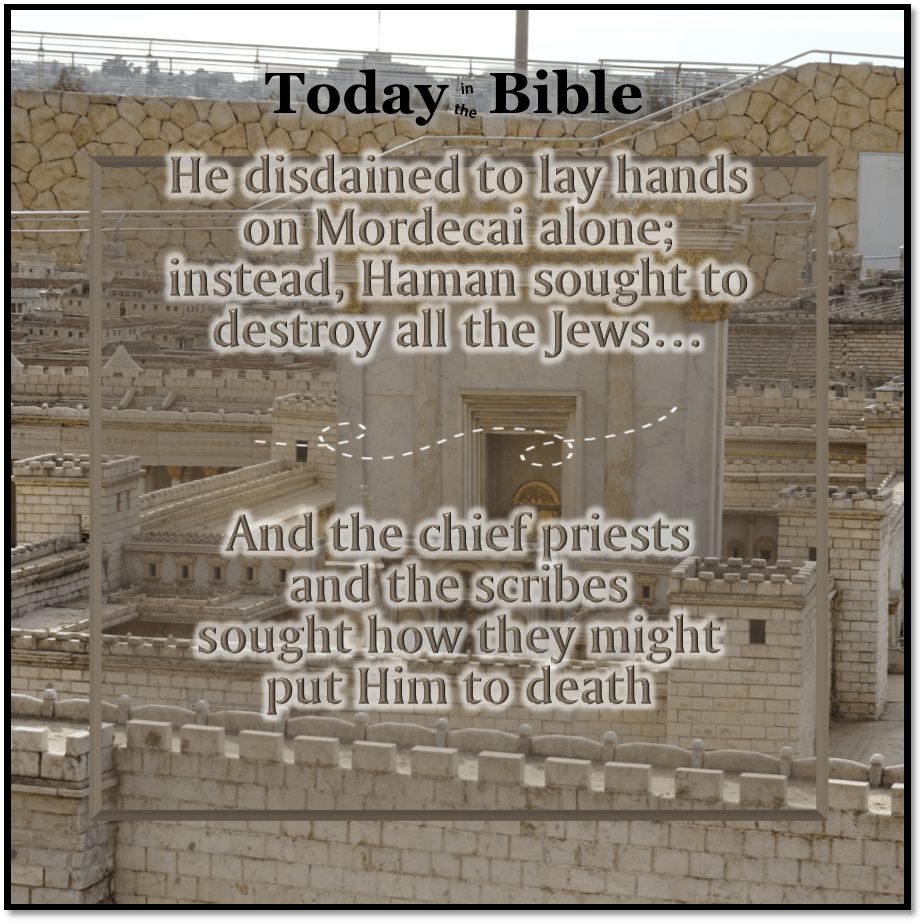
When Haman saw that Mordecai did not bow or pay him homage, Haman was filled with wrath. But he disdained to lay hands on Mordecai alone, for they had told him of the people of Mordecai. Instead, Haman sought to destroy all the Jews who were throughout the whole kingdom of Ahasuerus– the people of Mordecai.
In the first month, which is the month of Nisan, in the twelfth year of King Ahasuerus, they cast Pur (that is, the lot), before Haman to determine the day and the month, until it fell on the twelfth month, which is the month of Adar.
Then Haman said to King Ahasuerus, “There is a certain people scattered and dispersed among the people in all the provinces of your kingdom; their laws are different from all other people’s, and they do not keep the king’s laws. Therefore it is not fitting for the king to let them remain. If it pleases the king, let a decree be written that they be destroyed, and I will pay ten thousand talents of silver into the hands of those who do the work, to bring it into the king’s treasuries.”
So the king took his signet ring from his hand and gave it to Haman, the son of Hammedatha the Agagite, the enemy of the Jews. And the king said to Haman, “The money and the people are given to you, to do with them as seems good to you.” – Esther 3:1-11 (NKJ)
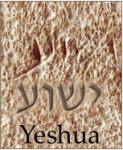
This is the name “Yeshua” (יֵשׁוּעַ – Jesus) as seen on the James Ossuary. Yeshua comes from the verb “yasha” meaning “to save or deliver.” Yeshua means “Salvation.”
Chief Priests & Scribes Plot Against Jesus
Flash forward ~400 years and we find a parallel between the story above and Jesus’ last few days before His crucifixion. In the same way that Haman and his cronies plotted to kill Mordecai, we find the chief priests and the scribes plotting to find a way to kill Jesus. And, as we can see from our calendar, these two events roughly fit into the same timeframe.
After two days it was the Passover and the Feast of Unleavened Bread. And the chief priests and the scribes sought how they might take Him by trickery and put Him to death. But they said, “Not during the feast, lest there be an uproar of the people.” – Mark 14:1-2
Also found in Luke 22:1-2
Joseph
We couldn’t finish this post without remembering the story of Joseph and his brothers. Their story seems to mirror that of Jesus. Like Jesus, Joseph was sent to his brothers by his father. And like Jesus, his brothers plotted to kill him. Beginning today, we’ll start pulling on the thread that belongs to Joseph and weave it into the story of Passover. Let’s refresh our memory of how Joseph’s brothers plotted against him.
Then his brothers went to feed their father’s flock in Shechem. And Israel said to Joseph, “Are not your brothers feeding the flock in Shechem? Come, I will send you to them.”
So he said to him, “Here I am.”
Then he said to him, “Please go and see if it is well with your brothers and well with the flocks, and bring back word to me.” So he sent him out of the Valley of Hebron, and he went to Shechem.
Now a certain man found him, and there he was, wandering in the field. And the man asked him, saying, “What are you seeking?”
So he said, “I am seeking my brothers. Please tell me where they are feeding their flocks.”
And the man said, “They have departed from here, for I heard them say, `Let us go to Dothan.’” So Joseph went after his brothers and found them in Dothan.
Now when they saw him afar off, even before he came near them, they conspired against him to kill him. Then they said to one another, “Look, this dreamer is coming! Come therefore, let us now kill him and cast him into some pit; and we shall say, `Some wild beast has devoured him.’ We shall see what will become of his dreams!” – Genesis 37:12-20 (NKJ)
To see all of our posts regarding “Yeshua” (יֵשׁוּעַ – Jesus), click on the image below.

© 2026 Today in the Bible

 Today in the Bible
You must be logged in to post a comment.