Sivan 6, 5784; from sunset June 11, 2024, to sunset June 12, 2024
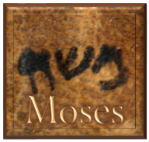
This is the name “Mosheh” (מֺשֶׁה – Moses) as seen in the Dead Sea Scrolls, written over two thousand years ago.
Tonight, at sunset, marks the beginning of the Feast of Weeks. In Hebrew, it is called “Shavu’ot.” A “shavu’ah” is one week. “Shavu’ot” is the plural form of “shavu’ah” – it means “weeks.” Most Christians are familiar with this appointed time through its Greek name, “Pentecost.” Pentecost means “fiftieth day.” It is listed as one of the three pilgrimage festivals in Exodus 23:
And the Feast of Harvest, the first fruits of your labors, which you have sown in the field; – Exodus 23:16a
It is listed among the LORD’s Appointed Times in the 23rd chapter of Leviticus:
From the day after the Sabbath, the day you brought the sheaf of the wave offering, count off seven full weeks. Count off fifty days up to the day after the seventh Sabbath, and then present an offering of new grain to the LORD. From wherever you live, bring two loaves made of two-tenths of an ephah of the finest flour, baked with yeast, as a wave offering of firstfruits to the LORD. Present with this bread seven male lambs, each a year old and without defect, one young bull and two rams. They will be a burnt offering to the LORD, together with their grain offerings and drink offerings– a food offering, an aroma pleasing to the LORD. Then sacrifice one male goat for a sin offering and two lambs, each a year old, for a fellowship offering. The priest is to wave the two lambs before the LORD as a wave offering, together with the bread of the firstfruits. They are a sacred offering to the LORD for the priest. On that same day you are to proclaim a sacred assembly and do no regular work. This is to be a lasting ordinance for the generations to come, wherever you live. When you reap the harvest of your land, do not reap to the very edges of your field or gather the gleanings of your harvest. Leave them for the poor and for the foreigner residing among you. I am the LORD your God. – Leviticus 23:15-22 (NIV)
It is mentioned again in the book of Numbers:
Also in the day of the firstfruits, when you bring a new meal offering to the Lord, in your feast of weeks, you shall have a holy gathering; you shall do no labor; but you shall offer the burnt offering for a sweet savor to the Lord; two young bulls, one ram, seven lambs of the first year; and their meal offering of flour mixed with oil, three tenth measures for one bull, two tenth measures for one ram, a tenth measure for one lamb, for the seven lambs; and one kid of the goats, to make an atonement for you. You shall offer them beside the continual burnt offering, and its meal offering, they shall be to you without blemish, and their drink offerings. – Numbers 28:26-31
And Deuteronomy describes its connection to the harvest:
Then it shall be, when you enter the land which the LORD your God gives you as an inheritance, and you possess it and live in it, that you shall take some of the first of all the produce of the ground which you shall bring in from your land that the LORD your God gives you, and you shall put it in a basket and go to the place where the LORD your God chooses to establish His name. And you shall go to the priest who is in office at that time, and say to him, ‘I declare this day to the LORD my God that I have entered the land which the LORD swore to our fathers to give us.’
Then the priest shall take the basket from your hand and set it down before the altar of the LORD your God.
And you shall answer and say before the LORD your God, ‘My father was a wandering Aramean, and he went down to Egypt and sojourned there, few in number; but there he became a great, mighty and populous nation. And the Egyptians treated us harshly and afflicted us, and imposed hard labor on us. Then we cried to the LORD, the God of our fathers, and the LORD heard our voice and saw our affliction and our toil and our oppression; and the LORD brought us out of Egypt with a mighty hand and an outstretched arm and with great terror and with signs and wonders; and He has brought us to this place, and has given us this land, a land flowing with milk and honey. And now behold, I have brought the first of the produce of the ground which Thou, O LORD hast given me.’
And you shall set it down before the LORD your God, and worship before the LORD your God; and you and the Levite and the alien who is among you shall rejoice in all the good which the LORD your God has given you and your household.
When you have finished paying all the tithe of your increase in the third year, the year of tithing, then you shall give it to the Levite, to the stranger, to the orphan and to the widow, that they may eat in your towns, and be satisfied.
And you shall say before the LORD your God, ‘I have removed the sacred portion from my house, and also have given it to the Levite and the alien, the orphan and the widow, according to all Thy commandments which Thou hast commanded me; I have not transgressed or forgotten any of Thy commandments. I have not eaten of it while mourning, nor have I removed any of it while I was unclean, nor offered any of it to the dead. I have listened to the voice of the LORD my God; I have done according to all that Thou hast commanded me. Look down from Thy holy habitation, from heaven, and bless Thy people Israel, and the ground which Thou hast given us, a land flowing with milk and honey, as Thou didst swear to our fathers.’
This day the LORD your God commands you to do these statutes and ordinances. You shall therefore be careful to do them with all your heart and with all your soul. You have today declared the LORD to be your God, and that you would walk in His ways and keep His statutes, His commandments and His ordinances, and listen to His voice. And the LORD has today declared you to be His people, a treasured possession, as He promised you, and that you should keep all His commandments; and that He shall set you high above all nations which He has made, for praise, fame, and honor; and that you shall be a consecrated people to the LORD your God, as He has spoken. – Deuteronomy 26 (NAS)
Shavu’ot is an important day, not just because of the Scriptures mentioned above, it is also recognized as the day that God made His covenant at Mount Sinai and spoke the “ten words” – the Ten Commandments. We’ll explore this event further in a future post.
Now there are some people who believe this day should be celebrated on this coming Sunday. Greater Judaism celebrates this feast every year on Sivan 6. The dispute comes from the command to begin counting the seven weeks on the “day after the Sabbath” of the Feast of Unleavened Bread. Now, the Feast of Unleavened Bread is seven days long. The first day and the seventh day are special Sabbath days, no matter what day of the week they fall upon. And, since the feast is seven days long, there is also a weekly Sabbath that falls during the feast. The question is, after which Sabbath day do we begin counting? Greater Judaism begins counting on the day after the first day of the Feast of Unleavened Bread. Others choose to begin counting on the day after the regular weekly Sabbath. When using this method of counting, Shavu’ot will always fall on the first day of the week, Sunday, and it may fall on a different day of Sivan every year…not necessarily on Sivan 6.
We hope that you’ll continue studying this feast with us as we remember this special day.
Did you know that you can view any of our posts whenever you’d like?
Visit our home page at https://todayinthebible.com
where you can find them organized by month
in the “Archives” section on the right side of the page.

© 2026 Today in the Bible

 Today in the Bible
You must be logged in to post a comment.