
Tammuz 12, 5784; from sunset July 17, 2024, to sunset July 18, 2024
This is the name “Ezra” (עֶזְרָא) the Scribe as seen in the Dead Sea Scrolls; written by a scribe over two thousand years ago.
We’re checking in again with Ezra. Three months ago, the Bible told us that he and over 1,400 men along with their families left Ahava and began their nearly 900-mile journey back to Jerusalem.
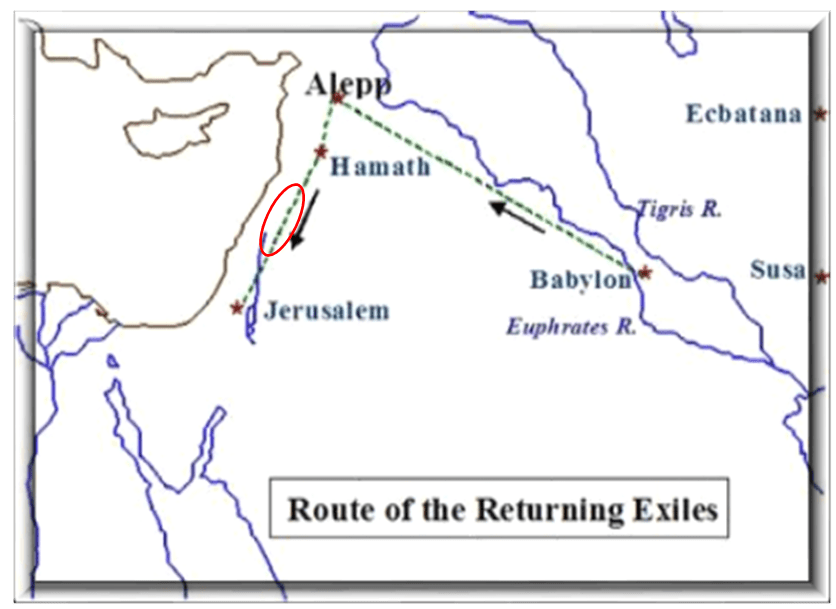
Last month we placed the returnees near the city of Aleppo. By now they are probably somewhere in the Beqaa Valley. The Beqaa Valley (marked in red above) is a fertile valley in eastern Lebanon. It contains pastureland in the north and crops such as cotton, wheat, vegetables and vineyards and orchards in the middle and southern portions. The valley is also home to migratory birds, including storks. My mother and I saw hundreds of them near Dan in northern Israel. The rather fuzzy photo below was taken from our moving bus. Those little white specs are storks.
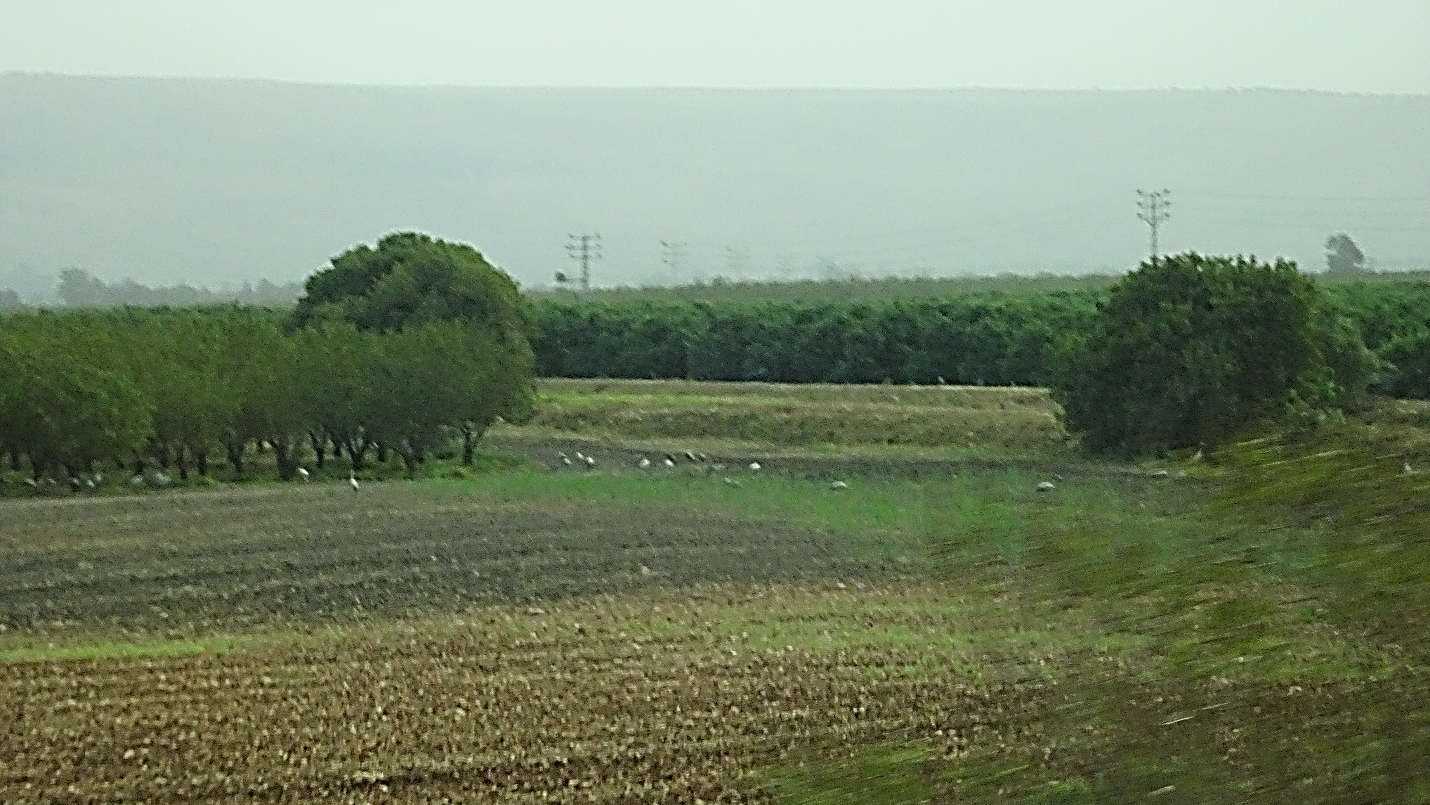
The word stork in Hebrew is “chasidah”. It comes from the same root as the word “chesed,” which is a covenantal term meaning “loving-kindness.”
Even the “chasidah” in the heavens knows her appointed times; and the turtledove, the swift, and the swallow observe the time of their coming. But My people do not know the judgment of the LORD. – Jeremiah 8:7
In spite of its beauty, the Beqaa Valley was a dangerous place to pass through. The production of hashish and opium in this region goes back for millennia. It was a major trade route with no shortage of robbers lying in wait along the way. Spiritually, it was home to Ba’al worship and, later on, the Roman pantheon. This reminds us of the many perils that the Israelites faced on their journey back from the exile. Returning to the Promised Land would not be an easy journey…and they knew it. Ezra fasted and prayed for the Lord’s protection before beginning their journey.
Then I proclaimed a fast there at the river of Ahava, that we might humble ourselves before our God, to seek from Him the right way for us and our little ones and all our possessions. For I was ashamed to request of the king an escort of soldiers and horsemen to help us against the enemy on the road, because we had spoken to the king, saying, “The hand of our God is upon all those for good who seek Him, but His power and His wrath are against all those who forsake Him.” So we fasted and entreated our God for this, and He answered our prayer. – Ezra 8:21-23 (NKJ)
Besides their personal belongings, they were carrying with them many silver and gold vessels for the Temple. The vessels were split up and distributed to trustworthy men; they were weighed out and a record was made as to who was given what. This allowed them to spread out risk in the event of a robbery. These men were then expected to produce the exact same weight of silver and gold when they arrived in Jerusalem. But as we learned – back in the month of Nisan, before they started their journey – the real treasure they carried was inside of themselves. You’re invited to read our articles on the “segulah” of the LORD to learn the deeper meaning of this treasure.
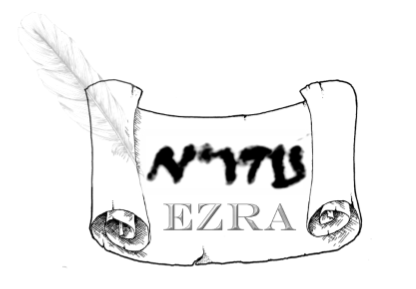
To read all of our posts about Ezra, please click on the image above.

© 2026 Today in the Bible

 Today in the Bible
You must be logged in to post a comment.