Av 2, 5784; from sunset August 5, 2024, to sunset August 6, 2024
(The second day of the fifth month)

This the name Jeremiah (“Yirmeyahu”) as seen in the Aleppo Codex, written over one thousand years ago.
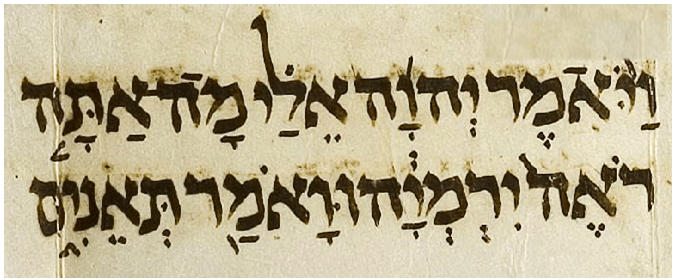
Vayo’mer ADONAI elai, “Mah attah ro’eh Yirmeyahu? Va’omar, “Te’enim.”
And He said, ADONAI, to me, “What do you see Jeremiah? And I said, “Figs.”
– Jeremiah 24:3a
The book of Ezra begins by telling us that this happened, “that the word of the LORD by the mouth of Jeremiah might be fulfilled.” Today in the Bible, we’re remembering a prophecy that the LORD gave to Jeremiah about figs. Now, we’re not suggesting that Jeremiah received the prophecy on this date. But, given the timeline of Ezra’s return to Jerusalem yesterday and the destruction of the Temple (only a week away), it seems like a good opportunity to remember it.
Figs. Naturally sweet, nutritious and good to eat…unless they have gone bad. How does this tie-in to the book of Ezra? Let’s study it out.
The LORD showed me, and there were two baskets of figs set before the temple of the LORD, after Nebuchadnezzar king of Babylon had carried away captive Jeconiah the son of Jehoiakim, king of Judah, and the princes of Judah with the craftsmen and smiths, from Jerusalem, and had brought them to Babylon.
One basket had very good figs, like the figs that are first ripe; and the other basket had very bad figs which could not be eaten, they were so bad.
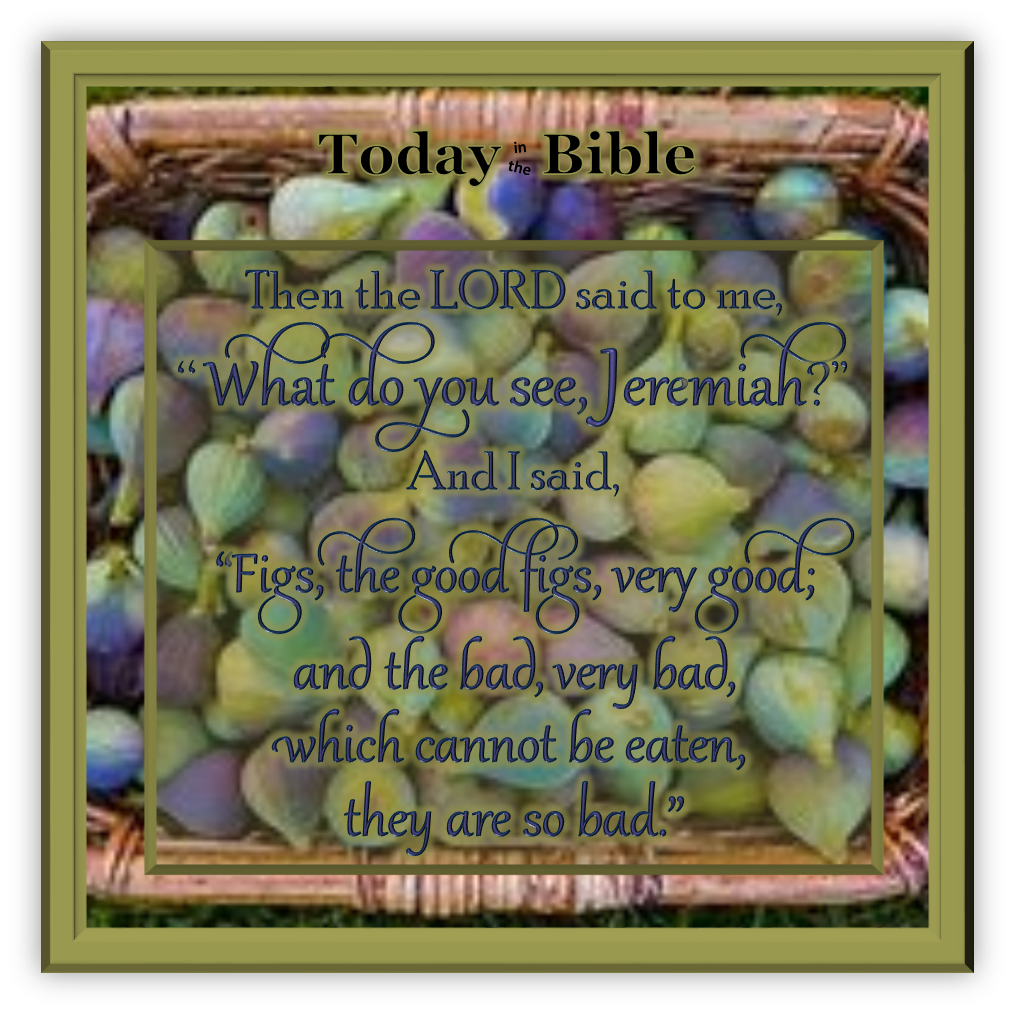
Then the LORD said to me, “What do you see, Jeremiah?” And I said, “Figs, the good figs, very good; and the bad, very bad, which cannot be eaten, they are so bad.”
Again the word of the LORD came to me, saying, “Thus says the LORD, the God of Israel: `Like these good figs, so will I acknowledge those who are carried away captive from Judah, whom I have sent out of this place for their own good, into the land of the Chaldeans. For I will set My eyes on them for good, and I will bring them back to this land; I will build them and not pull them down, and I will plant them and not pluck them up. Then I will give them a heart to know Me, that I am the LORD; and they shall be My people, and I will be their God, for they shall return to Me with their whole heart.
`And as the bad figs which cannot be eaten, they are so bad’– surely thus says the LORD–`so will I give up Zedekiah the king of Judah, his princes, the residue of Jerusalem who remain in this land, and those who dwell in the land of Egypt. I will deliver them to trouble into all the kingdoms of the earth, for their harm, to be a reproach and a byword, a taunt and a curse, in all places where I shall drive them. And I will send the sword, the famine, and the pestilence among them, till they are consumed from the land that I gave to them and their fathers.’” – Jeremiah 24 (NKJ)
We’re just one week away from remembering the date that the First Temple was destroyed by Nebuchadnezzar’s army. And, just as the LORD gave Jeremiah hopeful words to cling to before the bitterness of those dark days to come, we too can cling to a remembrance of the sweet fulfillment of His promise before we study the bitterness of the loss of the Temple and the exile of the people.
Ezra was a descendant of Seraiah, the last high priest to serve in the Temple built by Solomon. 2 Kings 25 tells us that, after the Temple was looted and burned by the Babylonians, Seraiah was brought before Nebuchadnezzar who had him executed. Now, as stated earlier, we see that the very first sentence of the book of Ezra tells us that the LORD was fulfilling a prophecy which He had given to Jeremiah decades earlier. And a part of that fulfillment was to bring back Seraiah’s descendant, Ezra.
Now in the first year of Cyrus king of Persia, that the word of the LORD by the mouth of Jeremiah might be fulfilled, the LORD stirred up the spirit of Cyrus king of Persia… – Ezra 1:1a (NKJ)
Yesterday, we remembered the day that Ezra arrived in Jerusalem. This is how the text describes him:
For Ezra had prepared his heart to seek the Law of the LORD, and to do it, and to teach statutes and ordinances in Israel. – Ezra 7:10 (NKJ)
Let’s compare that description to Jeremiah 24:7:
Then I will give them a heart to know Me, that I am the LORD; and they shall be My people, and I will be their God, for they shall return to Me with their whole heart. – Jeremiah 24:7
Just as the LORD promised in His word to Jeremiah, Ezra had been given a heart to know the LORD. Ezra was a good fig. He was a very good fig. He is credited with doing exactly what the Bible said…seeking the Law of the LORD, doing it, and teaching its statutes and ordinances in Israel. Judaism acknowledges that Ezra was integral in establishing the Great Assembly of scholars, a precursor to the Sanhedrin. He is seen as a type of a second Moses, bringing the Torah to the children of Israel once more and leading the children of Israel to the Promised Land. Just as Moses penned the Pentateuch, Ezra is credited with writing the books of Ezra, 1 & 2 Chronicles, and possibly the book of Malachi, as well as, editing the book of Nehemiah. Perhaps we could also see Ezra as a type of the Holy Spirit? The One who writes the word of the LORD upon our hearts. The One who makes it real. The One who encourages us to make the word of the LORD a part of our everyday lives.
Jeremiah’s prophecy about the figs may also help us to understand the story of Jesus and the fig tree.
Now the next day, when they had come out from Bethany, He was hungry. And seeing from afar a fig tree having leaves, He went to see if perhaps He would find something on it. When He came to it, He found nothing but leaves, for it was not the season for figs. In response Jesus said to it, “Let no one eat fruit from you ever again.” And His disciples heard it.
So they came to Jerusalem. Then Jesus went into the temple and began to drive out those who bought and sold in the temple, and overturned the tables of the money changers and the seats of those who sold doves. And He would not allow anyone to carry wares through the temple. Then He taught, saying to them, “Is it not written, `My house shall be called a house of prayer for all nations’? But you have made it a `den of thieves.’” And the scribes and chief priests heard it and sought how they might destroy Him; for they feared Him, because all the people were astonished at His teaching.
When evening had come, He went out of the city. Now in the morning, as they passed by, they saw the fig tree dried up from the roots. And Peter, remembering, said to Him, “Rabbi, look! The fig tree which You cursed has withered away.”
So Jesus answered and said to them, “Have faith in God. For assuredly, I say to you, whoever says to this mountain, `Be removed and be cast into the sea,’ and does not doubt in his heart, but believes that those things he says will be done, he will have whatever he says. Therefore I say to you, whatever things you ask when you pray, believe that you receive them, and you will have them. And whenever you stand praying, if you have anything against anyone, forgive him, that your Father in heaven may also forgive you your trespasses. But if you do not forgive, neither will your Father in heaven forgive your trespasses.” – Mark 11:12-26 (NKJ)
It appears that the basket of bad figs had turned up once again at the altar in the Temple of the LORD.
As we remember Jeremiah’s prophecy, may we also remember that we are now the Temple of the Holy Spirit. Have you taken a look lately at what kind of figs are in your offering basket? The offering set before the altar of the Temple that resides within you?
To read all of our posts about Ezra, please click on the image above.

© 2026 Today in the Bible

 Today in the Bible
You must be logged in to post a comment.