
Av 8, 5784; from sunset August 11, 2024, to sunset August 12, 2024
(The eighth day of the fifth month)
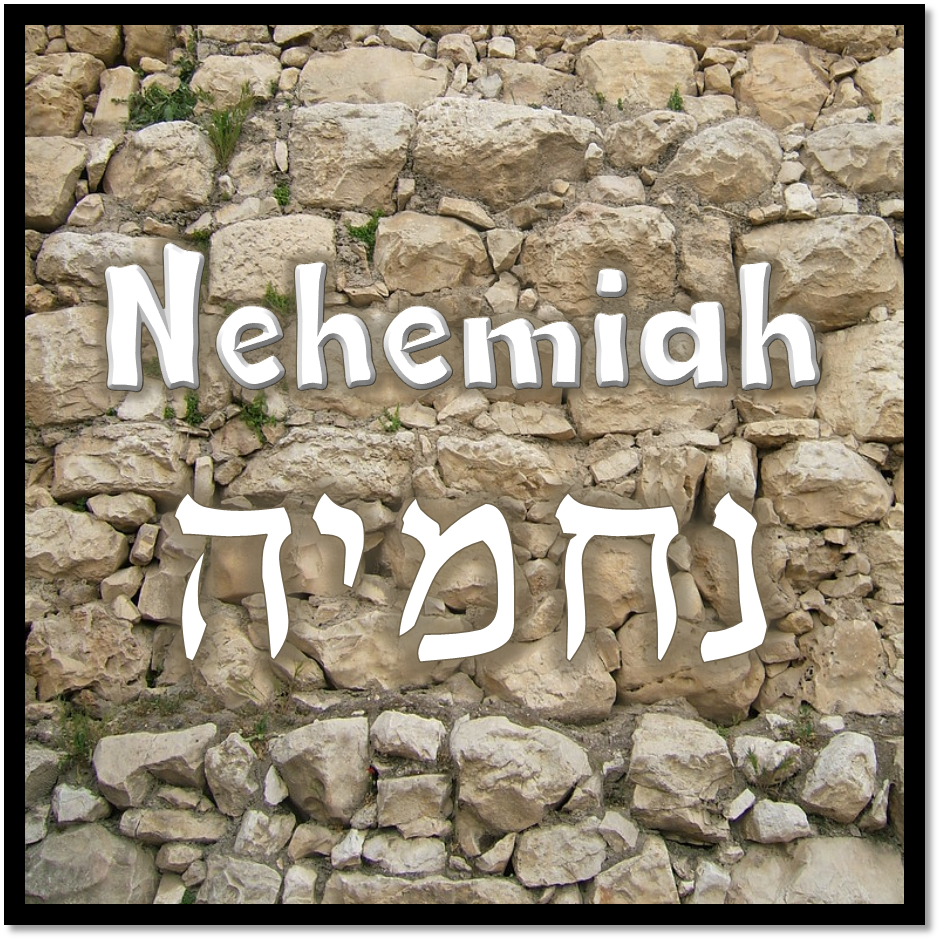
This is an image of a portion of the wall rebuilt by Nehemiah and company.
Today in the Bible, we’re meeting yet another man who donated his time and labor to the restoration of the wall of Jerusalem. Meshullam was one of those men. We’re in the midst of the 52 days that it took the people to make the needed repairs. Let’s learn what we can about Meshullam, the son of Berechiah.
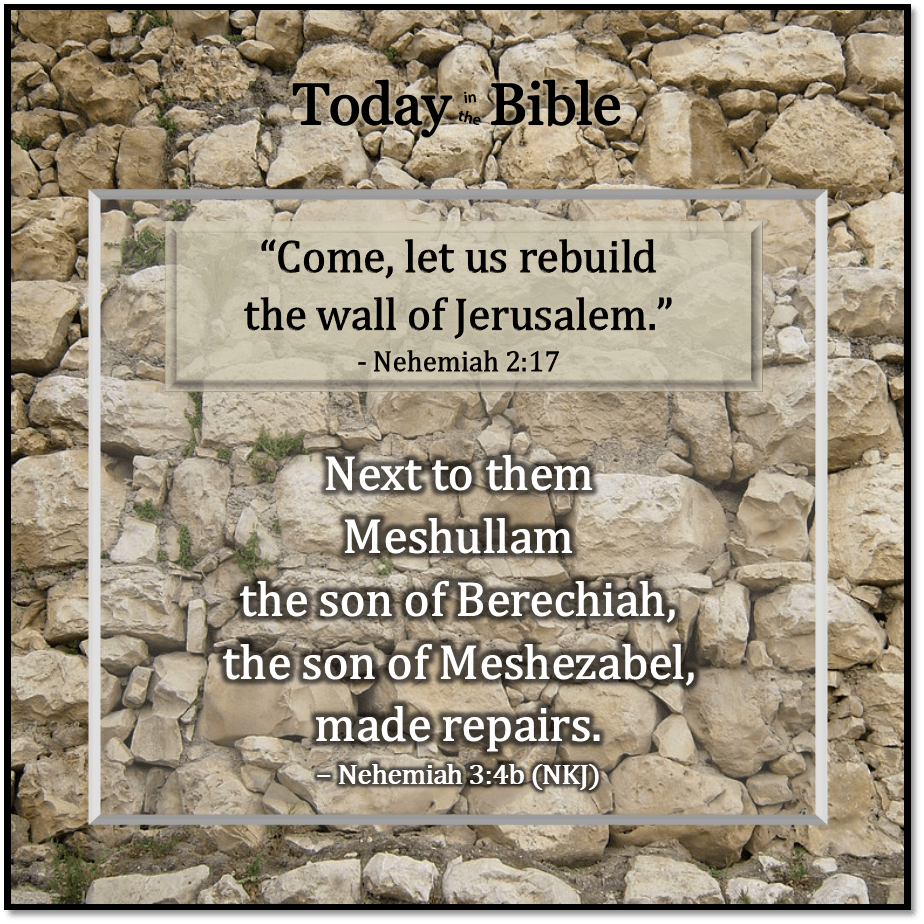
Next to them Meshullam the son of Berechiah, the son of Meshezabel, made repairs. – Nehemiah 3:4b (NKJ)
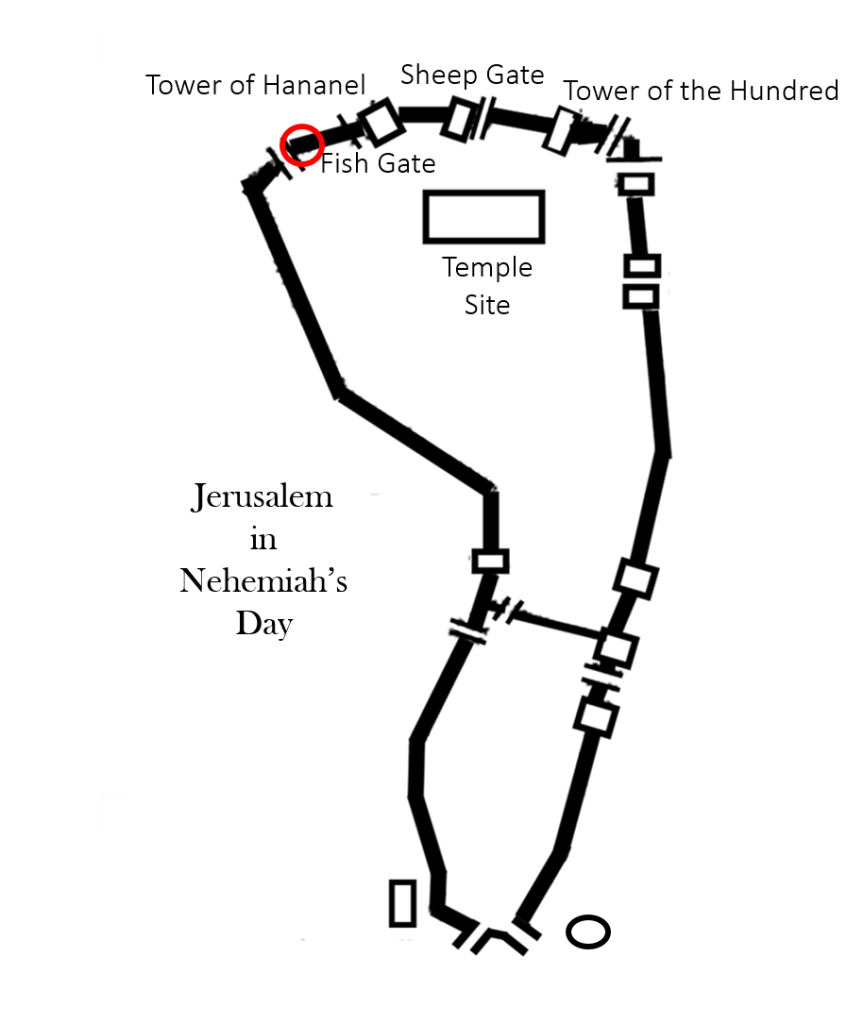
Meshullam is a very popular name in the Bible; it is mentioned a whopping 25 times. Three of them refer to our Meshullam, the son of Berechiah and are found in the book of Nehemiah. In addition to our verse for today, we’ll run into Meshullam as he repairs yet another section of the wall…it seems he pulled double duty. His third mention is actually in reference to his daughter. As with many women in the Bible, her name is not mentioned but we know that she was married to Jehohanan (Nehemiah 6:18), the son of Tobiah, the Ammonite, and a servant – probably to Sanballat, the governor of Samaria. We met Tobiah in an earlier article which followed Nehemiah’s journey from Babylon to Jerusalem.
Now that we know a little about Meshullam, let’s look into the meaning of his name.
מְשֻׁלָּם
Meshullam
Meshullam is a two-part word. The first part is the prefix letter מ (“mem”). Yesterday we studied how adding “mem” to the beginning of a word can add meaning to it; and we will probably run into it again before we’re through building the wall. As a prefix, the letter mem (m) can mean “from,” or it can denote an agent or instrument of the action of a verb, or it can indicate a special place.
Meshullam has been connected with the verb-root, “shalem” (שלם). Shalem means “to be complete, whole, or sound;” there is also an extended meaning of “recompense” or “retribution.” The familiar word “shalom” (“peace”) stems from this root.
| Prefix | Transliteration | Function |
| מ | m | inseparable preposition meaning “from” – or – |
| מ | m | denotes an agent or instrument of the action of a verb – or – |
| מ | m | denotes a special place |
| Verb Root | Transliteration | Meaning |
| שלם | shalem | to be complete, whole, or sound; there is also an extended meaning of “recompense” or “retribution.” |
The name “Meshullam” means something like “Peacemaker” or an “Instrument of Peace.” The NOBSE Study Bible Name List prefers to connect Meshullam to “Recompense” and Jones’ Dictionary of Old Testament Proper Names defines his name as “Retribution.”
בֶּרֶכְיָה
Berechyah = Berechiah
Berechiah is also a two-part name.
Berechiah begins with the verb-root “barak” (ברך) meaning “to kneel, bless, praise, or salute.”
The second part of Berechiah is a truncated form of God’s Holy Name. As in the name Urijah, which we studied yesterday, the first two letters of God’s Holy Name have been added to the ending of Berechiah’s name. We will become very familiar with the “Yah” name ending as we study out the restoration of the wall and gates of Jerusalem.
| Verb Root | Transliteration | Meaning |
| ברך | barak | to kneel, bless, praise, or salute |
| Prefix/Suffix | Transliteration | Comments |
| י | y, i | sometimes, just a “yod” (י), the first letter of God’s Holy Name, may serve as an indicator of its presence |
| ה | h | “yah” (יה) this combination of the 1st and 2nd letters of “The Name” is often translated as “iah” & is a very common name ending |
| ו | v, w, u, o | “yahu” (יהו) – the first three letters – is not quite as common but still found – as in “Elijah” – “Eliyahu” |
| ה | h | adding all four letters of “The Name” is not done |
These four letters represent God’s Holy Name. Many proper nouns use a combination of two or three of these letters as a prefix or a suffix to indicate an attachment to the Name of the LORD.
The name “Berechiah” means something like, “Blessed of the LORD.”
מְשֵׁיזַבְאֵל
Mesheizav’el = Meshezabel
Meshezabel is a three-part name.
The prefix letter מ (“mem”) can mean “from” or it can also denote an agent or instrument of the action of a verb or even a special place.
The root “sheizib” is not used in Hebrew and likely came from the Akkadian language where it means “to deliver.” Browns-Driver-Briggs connects our root to Aramaic, also meaning “to deliver.”
The ending of our word is “el” meaning “god” or “God.”
| Prefix | Transliteration | Function |
| מ | m | inseparable preposition meaning “from” – or – |
| מ | m | denotes an agent or instrument of the action of a verb – or – |
| מ | m | denotes a special place |
| Verb Root | Transliteration | Meaning |
| שיזיב | sheizib (Aramaic? Akkadian?) | to deliver |
| Prefix/Suffix | Transliteration | Meaning |
| אל | El/el | God/god |
“Meshezabel“ means something like “Delivered of God” or “God, the One Who Delivers.”
To read all of our posts on Nehemiah, click on the image above.

© 2026 Today in the Bible

 Today in the Bible
You must be logged in to post a comment.