Av 11, 5784; from sunset August 14, 2024, to sunset August 15, 2024
(The eleventh day of the fifth month)
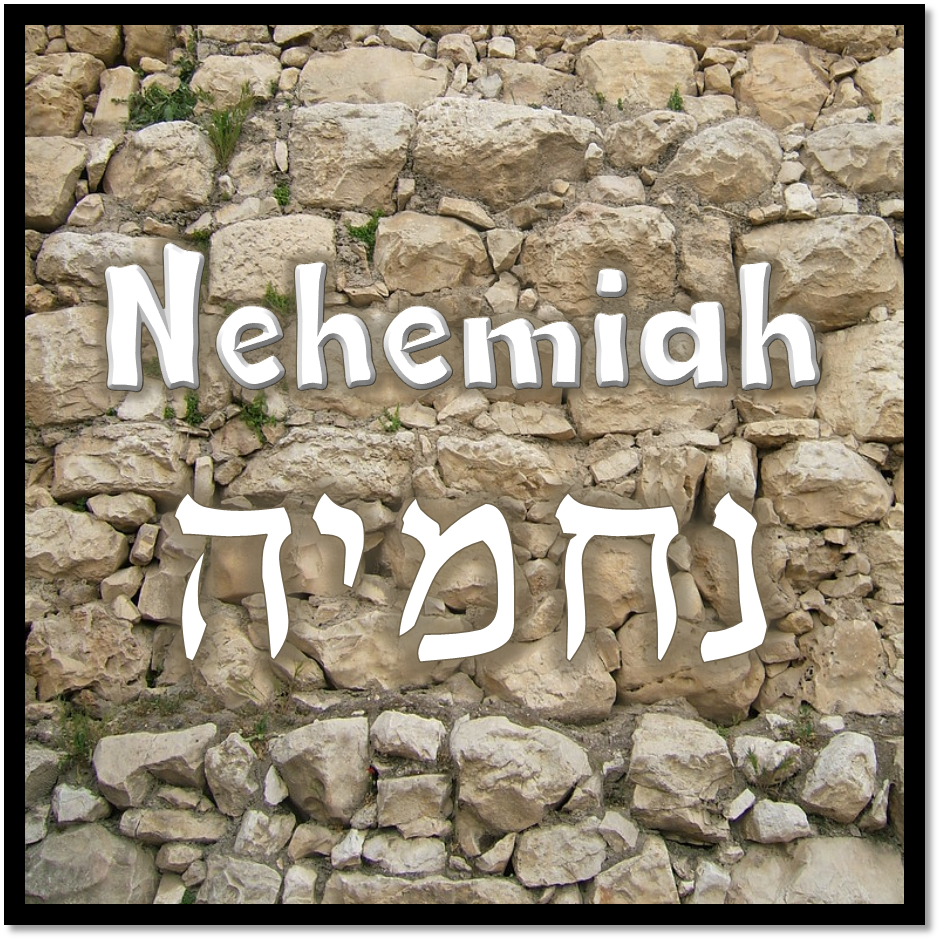
This is an image of a portion of the wall rebuilt by Nehemiah and company.
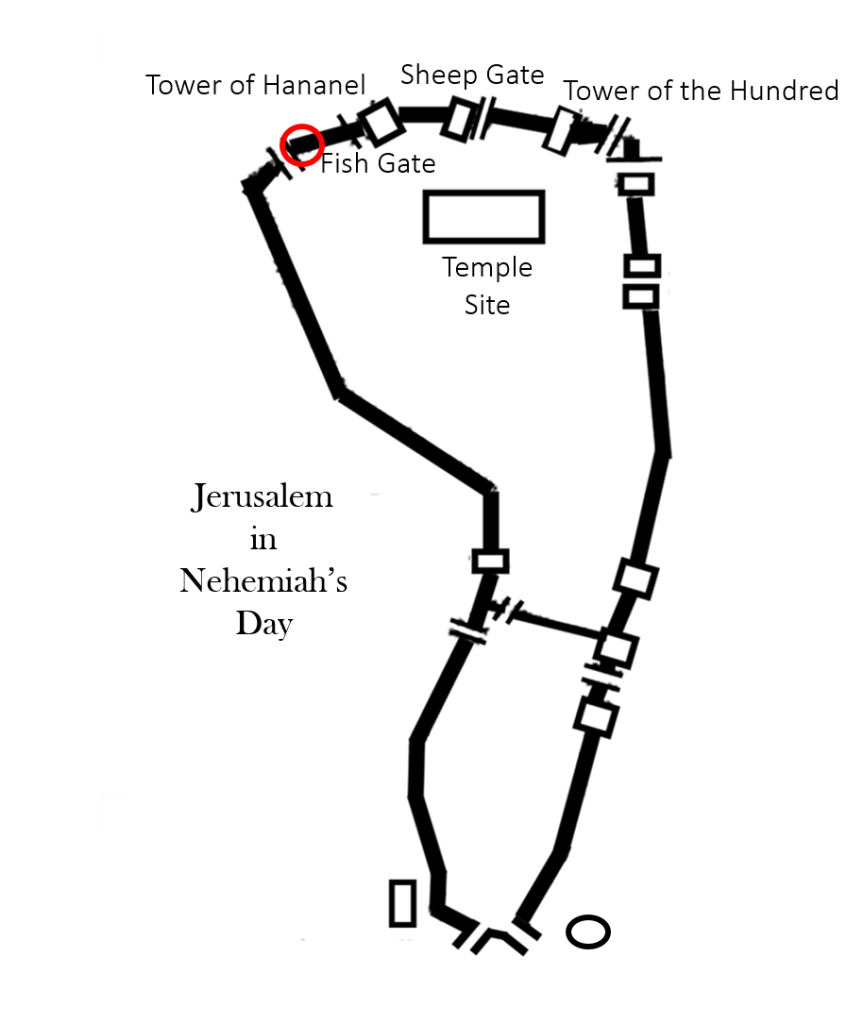
Today in the Bible, we’re continuing our look at the men and women who worked to rebuild the walls of Jerusalem after the return from the Babylonian captivity. We’re in the midst of the 52 days that the Bible says it took to complete their work. Today, we’ll remember the Tekoites and learn a little about who they are, where they’re from, and the significance of their name.
Next to them the Tekoites made repairs; but their nobles did not put their shoulders to the work of their Lord. – Nehemiah 3:5 (NKJ)
הַתְּקוֹעִים
Hateko’im = The Tekoites
The Tekoites were the people from the village of Tekoa. This village is mentioned several times in the Bible; its most famous resident was the prophet, Amos.
| Verb Root | Transliteration | Meaning |
| תקע | taka | to blow, clap, strike, or make a sound |
The root of the word Tekoa may be familiar to you if you’ve ever observed the Feast of Trumpets (Rosh Hashanah). Do you remember, the three main types of shofar blasts? The tekiah, the shevarim, and the teruah; and a fourth type, the tekiah gedolah, which is just a longer version of the regular tekiah blast.
- Tekiah – The tekiah blast is one long note that acts as a kind of summons. Others have suggested that it is the sound of a king’s coronation. (On Rosh Hashanah, we are traditionally called to reaffirm God’s sovereignty.)
- Shevarim – This word literally means “breaks” or “fractures.” The shevarim blast is three medium-length notes that have been compared to the sound of weeping.
- Teruah – The teruah blast is a series of very short, staccato sounds that have been compared to an urgent alarm, calling us to rouse from our spiritual slumber.
The three blasts are sounded in various combinations during the shofar service on Rosh Hashanah. They are traditionally concluded with one long tekiah gedolah (or “great tekiah”) which is similar to, but much longer than, the standard tekiah.[1]
The word “tekoa” itself means “trumpet.” A “teka” is a “sound.”
Josephus mentions a place on the Temple Mount where the priests stood and blew the trumpet:
…and the last was erected above the top of the Pastophoria, where one of the priests stood of course, and gave a signal beforehand with a trumpet, at the beginning of every seventh day, in the evening twilight, as also at the evening when that day was finished, as giving notice to the people when they were to stop work, and when they were to go to work again. – The Jewish War 4:582
In 1968, an inscribed stone, which was dated to the first century CE, was discovered near the southwest corner of the Temple Mount. It is believed to have been a signpost for the priests who blew a trumpet at the place mentioned by Josephus. It was likely thrown to the street below during the Roman destruction of Jerusalem where it lay unnoticed for nearly 1900 years.
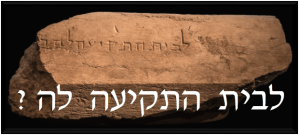
The stone shows just two complete words. The first word (on the right) is “lebeit” which means “to the house of” or “to the place of” and the second word (in the middle) is “hatekiah” which means “of trumpeting.” The rest of the inscription is incomplete; the next word (left) starting with either lamed, he, beit? (lhb) or lamed, he, kaf? (lhk). There are two main proposals for what the completed third word of the inscription might read.
- To the place of the trumpeting to … declare?
- To the place of the trumpeting to … distinguish?[2]
We’ll run into the Tekoites again as we study on through the next couple of months.
1 https://www.myjewishlearning.com/article/the-shofar-blasts/
To read all of our posts on Nehemiah, click on the image above.

© 2026 Today in the Bible

 Today in the Bible
You must be logged in to post a comment.