Av 21, 5784; from sunset August 24, 2024, to sunset August 25, 2024
(The twenty-first day of the fifth month)
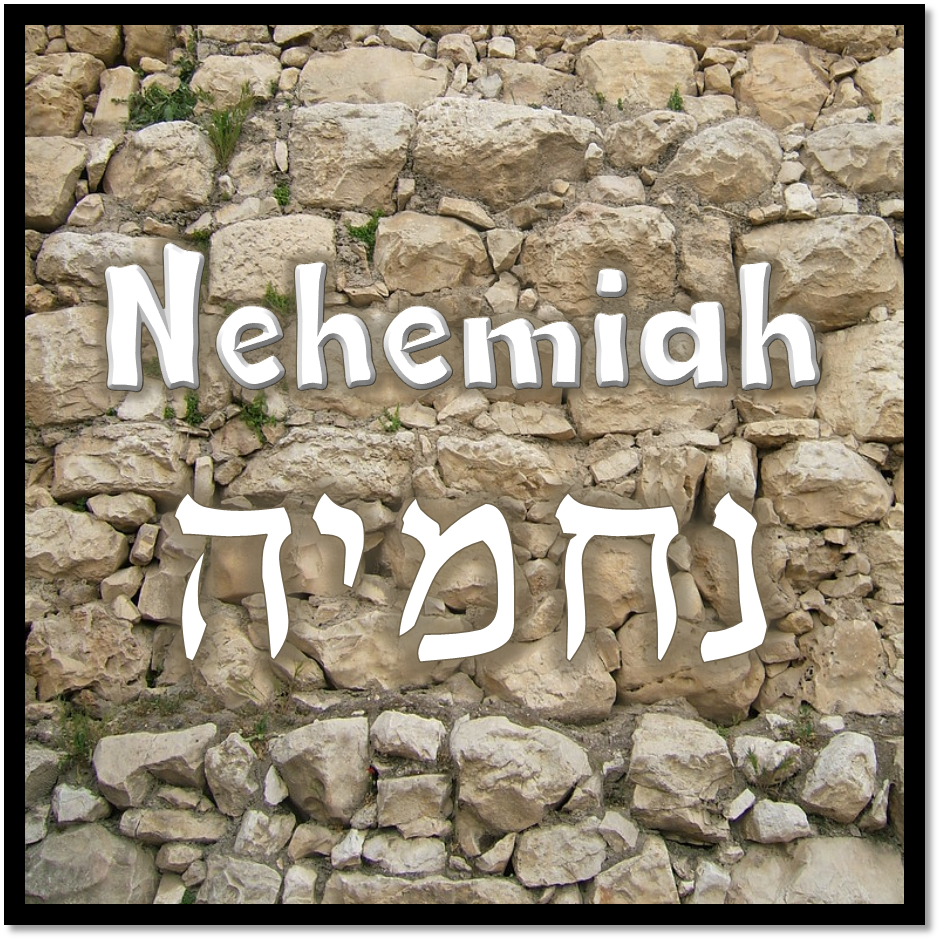
This is an image of a portion of the wall rebuilt by Nehemiah and company.
Today in the Bible, we run into another man going by the name of Malchijah. We’ve already studied out this name, it means “The LORD is King.” We’re in the midst of the 52 days that the Bible says the children of Israel worked to restore the walls and gates of the Holy City. Let’s review how we got the meaning of Malchijah’s name and learn about the meaning of the name of his father.
And the Dung Gate repaired Malchijah the son of Rechab, the ruler of the district of Beth-Cherem; he built it, and set up the doors thereof, the bolts thereof, and the bars thereof. – Nehemiah 3:14 (NJB)
מַלְכִּיָּה
Malkiyah = Malchijah
The beginning of the name Malchijah comes from the verb-root “malak” which means “to be or become a king or queen, to reign.” The ending of his name has become very familiar to us. When “iah” is found at the end of a word, it represents the Holy Name of our God.
| Verb Root | Transliteration | Meaning |
| מלך | malak | to be or become a king or queen, to reign |
| Prefix/Suffix | Transliteration | Comments |
| י | y, i | sometimes, just a “yod” (י), the first letter of God’s Holy Name, may serve as an indicator of its presence |
| ה | h | “yah” (יה) this combination of the 1st and 2nd letters of “The Name” is often translated as “iah” & is a very common name ending |
| ו | v, w, u, o | “yahu” (יהו) – the first three letters – is not quite as common but still found – as in “Elijah” – “Eliyahu” |
| ה | h | adding all four letters of “The Name” is not done |
These four letters represent God’s Holy Name. Many proper nouns use a combination of two or three of these letters as a prefix or a suffix to indicate an attachment to the Name of the LORD.
“Malchijah” means “The LORD is King.”
Malchijah was the son of Rechab.
רֵכָב
Rechav = Rechab
This name comes from the root-word “rachav” (רכב) which means “to mount and ride.” Other words stemming from this root revolve around driving, riding, and chariotry. The first use of this verb is in Genesis 24:11 when Rebekah and her maids mounted their camels. The name Rechab is found 13 times in the Bible. Four times in 2 Samuel 4, twice in 2 Kings 10, five times in Jeremiah 35, once in 1 Chronicles 2, and once in our verse for today.
| Root Word | Transliteration | Meaning |
| רכב | rechav | to mount and ride, to ride |
Various Bible dictionaries translate “Rechab“ as meaning “Rider,” “Horseman“, or “Band of Riders.”
בֵּית-הַכָּרֶם
“Beit-HaKarem” – “Beth-Cherem”
The word “beit” or “beth” is a common word meaning “tent of” or “house of.” One very well-known example of this is “Bethlehem.” In Hebrew, this would be pronounced like “Beit-Lechem” – “House of Bread.”
The second part of this name comes from the root “charam” (כרם). You may think we’ve already studied this root – but we haven’t. Even though “charam” (כרם) is transliterated into English the same as the root “charam” (חרם) that we studied earlier, in Hebrew the letter making the “ch” sound is different כ vs. ח. (Yes, there are two different Hebrew letters which make the “ch” sound.) This changes everything. In this case, our root “charam” means “to tend or dress vineyards or vines.” Other words coming from this root are “karmel” meaning “a plantation, garden-land, garden-growth, fruit, or an orchard.” This is the source of the name Mount Carmel (the famous site where Elijah faced off against the prophets of Ba’al) and it is also the name of a small mountain town west of the Dead Sea.
In between “beit” and “cherem” we find our little letter ה. Let’s review how it can be used when found as a prefix to a word.
| Prefix | Transliteration | Function |
| ה | h | indicates the “definite article” (“the”); an example of the definite article would be if I asked you to bring me a spoon, you may assume that any old spoon would do; but if I asked you to bring me “the” spoon, you would assume that I wanted a specific spoon |
| if used in combination with another prefix it is found in second place; it may even be omitted and assumed to be present; in which case the vowel associated with the other prefix is changed to indicate the presence of the ה | ||
| ה | h | may also mean “of” |
| הֲ | ha | when associated with the “chataf patach” vowel point, this combination indicates an interrogative form, in other words, a question |
| Verb Root | Transliteration | Meaning |
| כרם | charam | to tend or dress vineyards or vines |
| The “Other” Charam | The below is not a part of our word “cherem” that we are studying today | |
| חרם | charam (I) | to ban, devote, destroy utterly |
| חרם | charam (II) | to slit or mutilate |
“Beth-HaCherem” means “House of the Vineyard.”
שַׁעַר הָאַשְׁפֹּת
“Sha’ar Ha’Ashpot” – “The Refuse Gate”
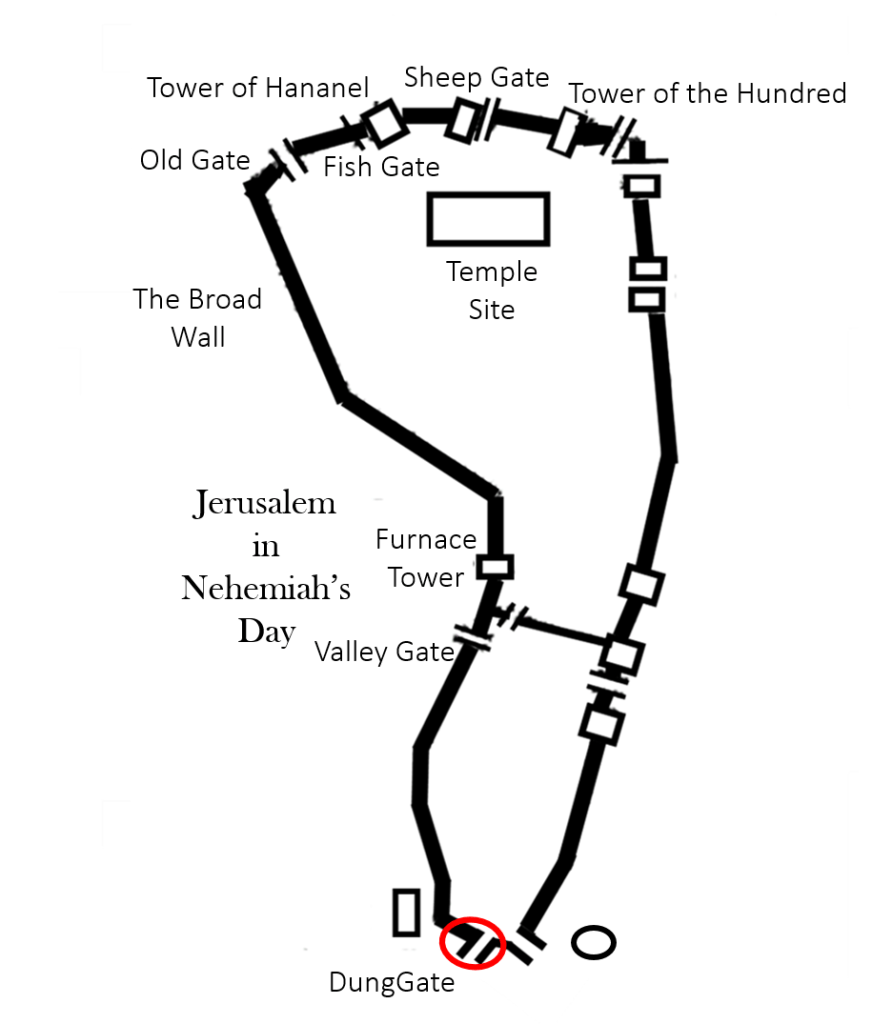
We studied the name of this gate yesterday, but it was also a part of our article on Nehemiah’s secret nighttime ride to inspect the walls and gates of the Holy City. The name of this gate comes from a word having to do with fire and ashes. Though it is most often rendered as the “Dung Gate,” “Refuse Gate” may be a better translation.
To read all of our posts on Nehemiah, click on the image above.

© 2026 Today in the Bible

 Today in the Bible
You must be logged in to post a comment.