
Av 27, 5784; from sunset August 30, 2024, to sunset August 31, 2024
(The twenty-seventh day of the fifth month)
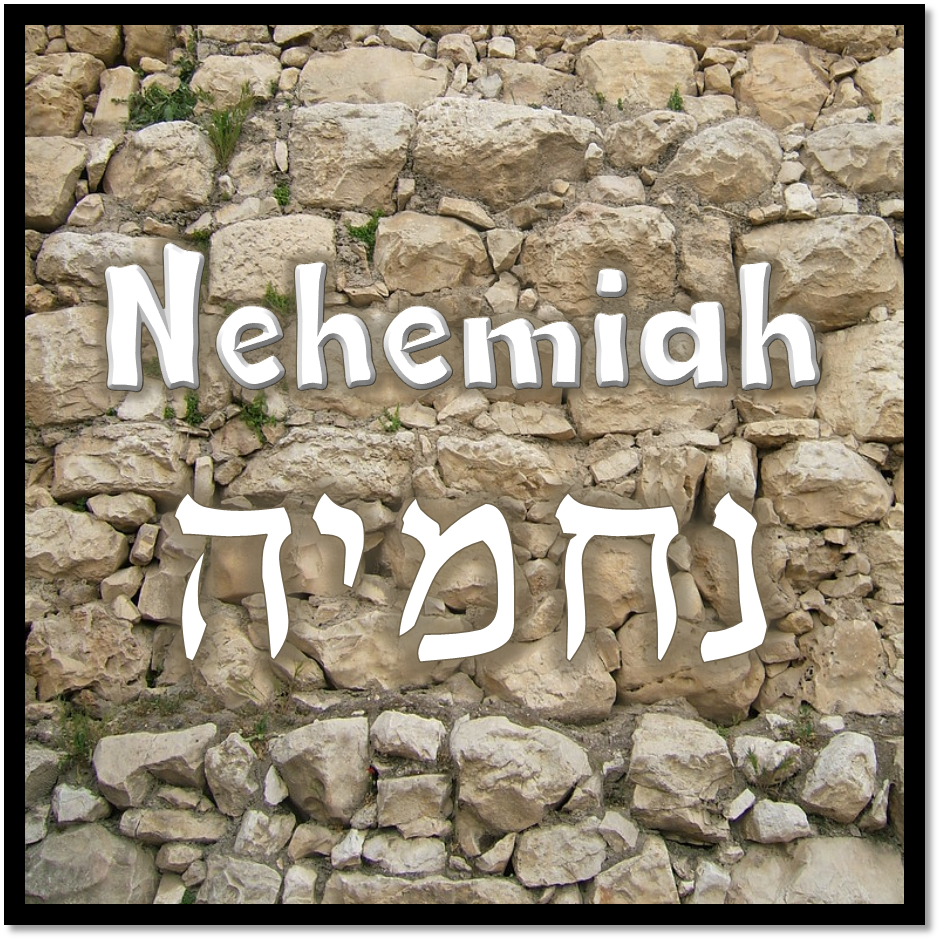
This is an image of a portion of the wall rebuilt by Nehemiah and company.
Today in the Bible we’ll meet Baruch the son of Zabbai. He was one among many who were mentioned by name as contributing their time and labor to restore the walls and gates of Jerusalem. Let’s dig in and explore the meaning of his name and that of his father.
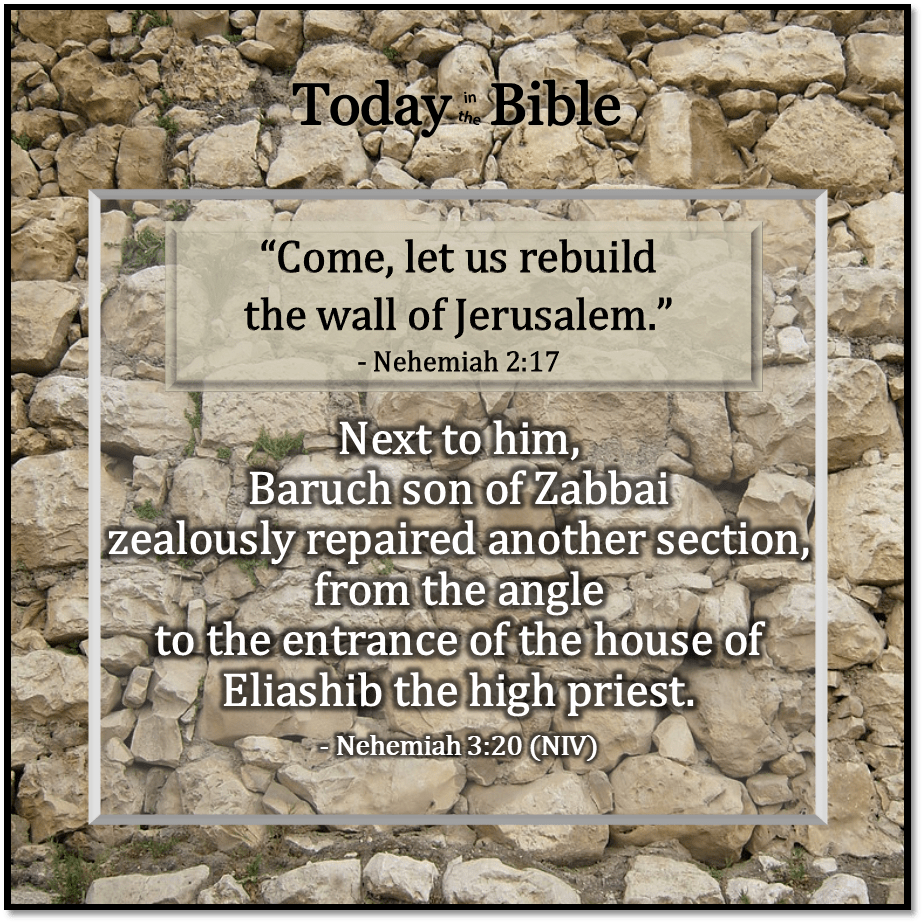
Next to him, Baruch son of Zabbai zealously repaired another section, from the angle to the entrance of the house of Eliashib the high priest. – Nehemiah 3:20 (NIV)
בָּרוּךְ
Baruch
This name comes from the verb root “barak” (ברך) meaning “to kneel, bless, praise, or salute.” The name Berechiah, which we studied earlier, also comes from this same root. The name Baruch is found 26 times in the Bible, however, they are making reference to only three or four men. In our verse, we have Baruch, the son of Zabbai. Nehemiah 11:5 refers to a Baruch, the son of Col-Hozeh. Nehemiah 10:6 also refers to someone named Baruch, but does not include his father’s name. The remaining 23 incidences of this name refer to one man, Baruch, ben Neriah, who was a close companion of Jeremiah.
| Verb Root | Transliteration | Meaning |
| ברך | barak | to kneel, bless, praise, or salute |
“Baruch” means “Blessed.”
Baruch was the son of Zabbai, or was he?
זַבַּי
Zabbai
The name Zabbai is only found twice in the Bible; once in our verse for today and once in Ezra 10. The meaning of Zabbai is uncertain. Some feel that it comes from the root “zabad” (זבד) which means “to bestow upon or to endow with,” however, the “d” sound from the root does not appear in the name Zabbai. Zabad is also used very sparingly in the Bible. Another possibility is “zabab” (זבב) from which the word “zebub” (flies) comes from (as in ba’al-zebub, lord of the flies).
The Complete Jewish Bible and the JPS version render this name as “Zakkai”/”Zaccai” (זַכַּי). They associate it with the Zakkai mentioned in Ezra 2:9 and Nehemiah 7:14.
זַכַּי זַבַּי
The Hebrew names above are Zabbai, on the left, and Zakkai, on the right. As you can see, they are almost identical in appearance. When handwritten, the middle letters can be hard to tell apart. The name Zakkai comes from the root “zakak” (זכך) which means “to be pure.” The “yod” (י) found at the end of each name may serve as an indicator of God’s Holy Name.
| Root Word | Transliteration | Meaning |
| זבד | zabad | to bestow upon or to endow with |
| זבב | zabab | assumed root of “zebub” – “flies” |
| זכך | zakak | to be pure |
Depending upon the associated vowel point, placing a “yod” (י) at the end of a word can indicate the following (the letter א has been used as a stand-in for any letter):
| Suffix | Transliteration | Function |
| אִי | i | changes singular noun to first-person singular possessive = “my” |
| אַי | ai | changes plural noun to first-person singular possessive = “my” |
| אֵי | ei | indicates masculine-plural noun construct = “of” |
| אִי | i | in verbs can indicate the imperfect form “you will do (the action of the verb)” or the imperative form “do (the action of the verb)!“ |
| י | y or i | a single yod at the end of a word may be an indicator of the presence of God’s Holy Name. |
The meaning of “Zabbai“ is uncertain, perhaps “Gift of the LORD?”
אֶלְיָשִׁיב
Elyashiv = Eliashib
Eliashib the high priest. This was the very first name that we dug into when we studied verse one of this chapter. Eliashib means “God Returns” or “God Restores.” Please refer to our article on Eliashib for the full story.
The text tells us that Baruch “zealously” repaired this section. The Hebrew word translated as “zealously” is “hecherah” (הֶחֱרָה), which means “he burned.” This man was on fire! We studied this word earlier in our article on the name Harhaiah (Charhayah), a man who worked on the wall on the other side of the city.
To read all of our posts on Nehemiah, click on the image above.

© 2026 Today in the Bible

 Today in the Bible
You must be logged in to post a comment.