
Av 29, 5784; from sunset September 1, 2024, to sunset September 2, 2024
(The twenty-ninth day of the fifth month)
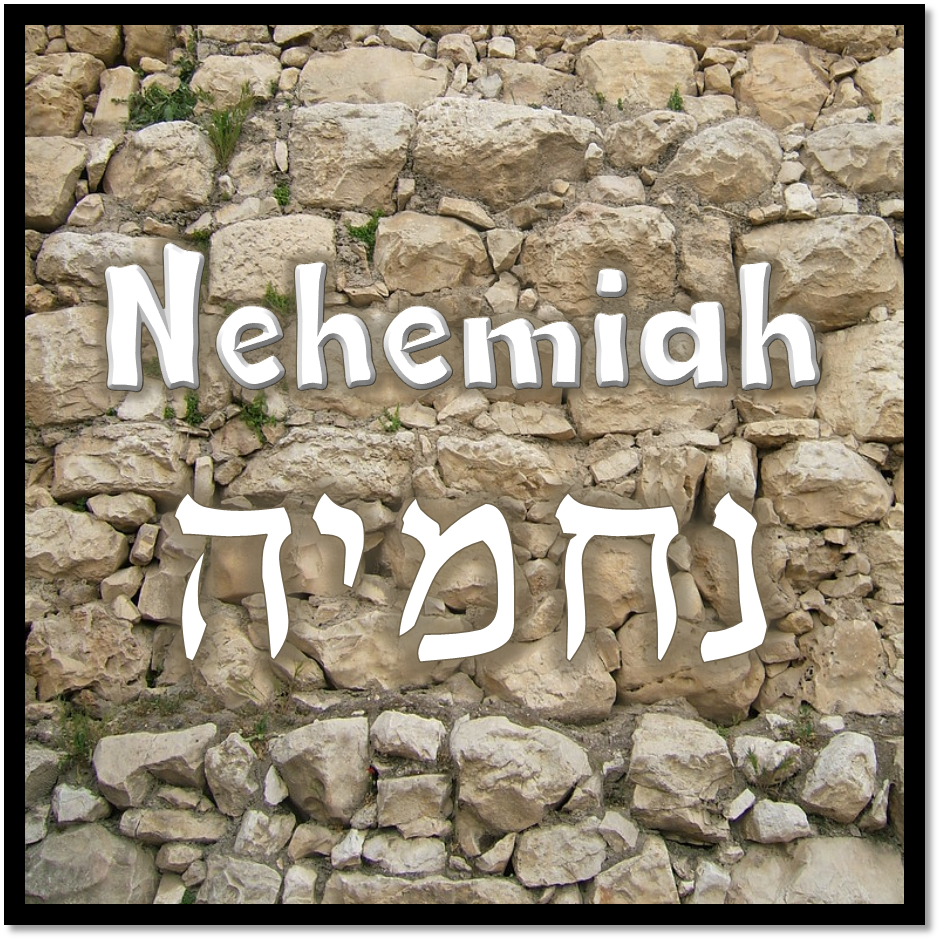
This is an image of a portion of the wall rebuilt by Nehemiah and company.
Today in the Bible, we are running into a verse that’s a bit of a mystery. Scholars can’t seem to agree who “the priests, the men of the plain” are…
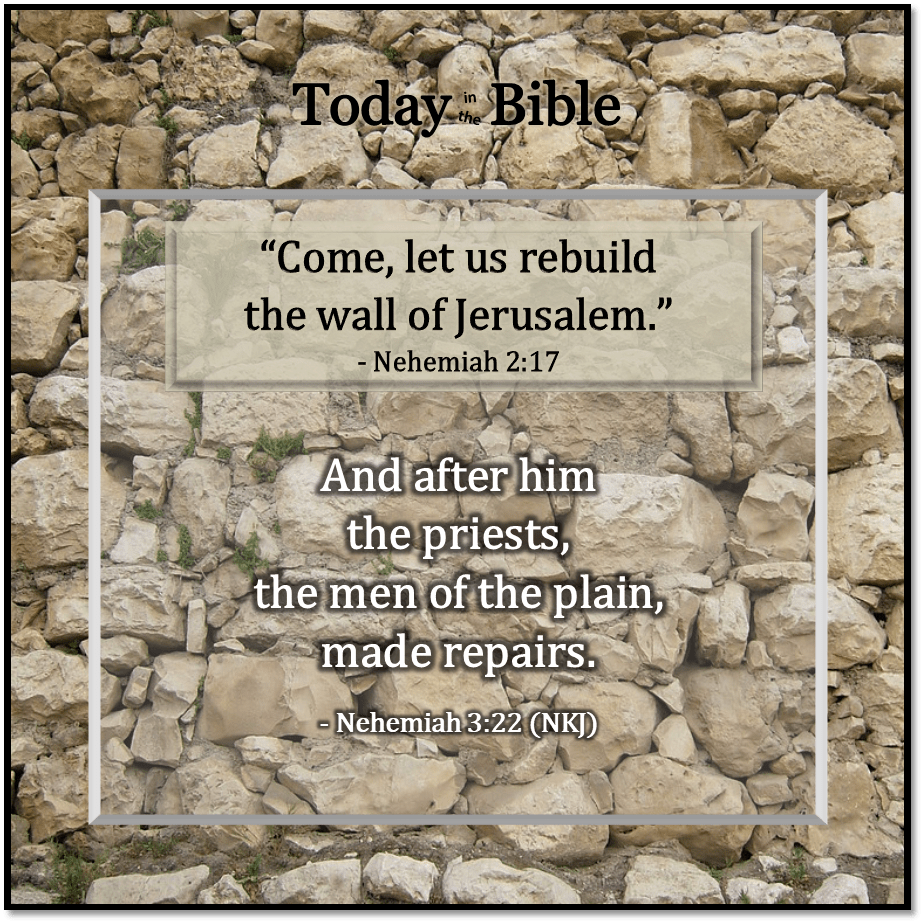
And after him the priests, the men of the plain, made repairs. – Nehemiah 3:22 (NKJ)
…they do, however, seem to narrow it down to two possibilities.
- The plains of the Jordan
- The area around Jerusalem
The word causing the confusion is “hakikar” (הַכִּכָּר).
הַכִּכָּר
Hakikar
Hakikar is associated with the root-word “karar” (כרר). This root is connected to the idea of circular dancing, a “whirling,” and only used in 2 Samuel 6 to describe David’s dance before the LORD when the Ark of the Covenant was brought into the City of David. Kikar is used to describe a round disk of gold or silver, usually weighing one talent. It is also used to describe a round loaf of bread and a circular lead lid. It is used in Nehemiah 12:28 to describe the circuit around Jerusalem.
And the sons of the singers gathered together from the countryside (kikar) around Jerusalem, from the villages of the Netophathites, from the house of Gilgal, and from the fields of Geba and Azmaveth; for the singers had built themselves villages all around Jerusalem. – Nehemiah 12:28-29 (NKJ)
From this information alone we may be inclined to side with the “area around Jerusalem” definition; but, of course, there’s more.
Kikar is used in several other verses which clearly refer to the plains of the Jordan Valley. First, when Lot chose that land for himself and later when he escaped from Sodom.
And Lot lifted his eyes and saw all the plain (“kikar”) of Jordan, that it was well watered everywhere (before the LORD destroyed Sodom and Gomorrah) like the garden of the LORD, like the land of Egypt as you go toward Zoar. – Genesis 13:10 (NKJ)
So it came to pass, when they had brought them outside, that he said, “Escape for your life! Do not look behind you nor stay anywhere in the plain (kikar). Escape to the mountains, lest you be destroyed.” – Genesis 19:17 (NKJ)
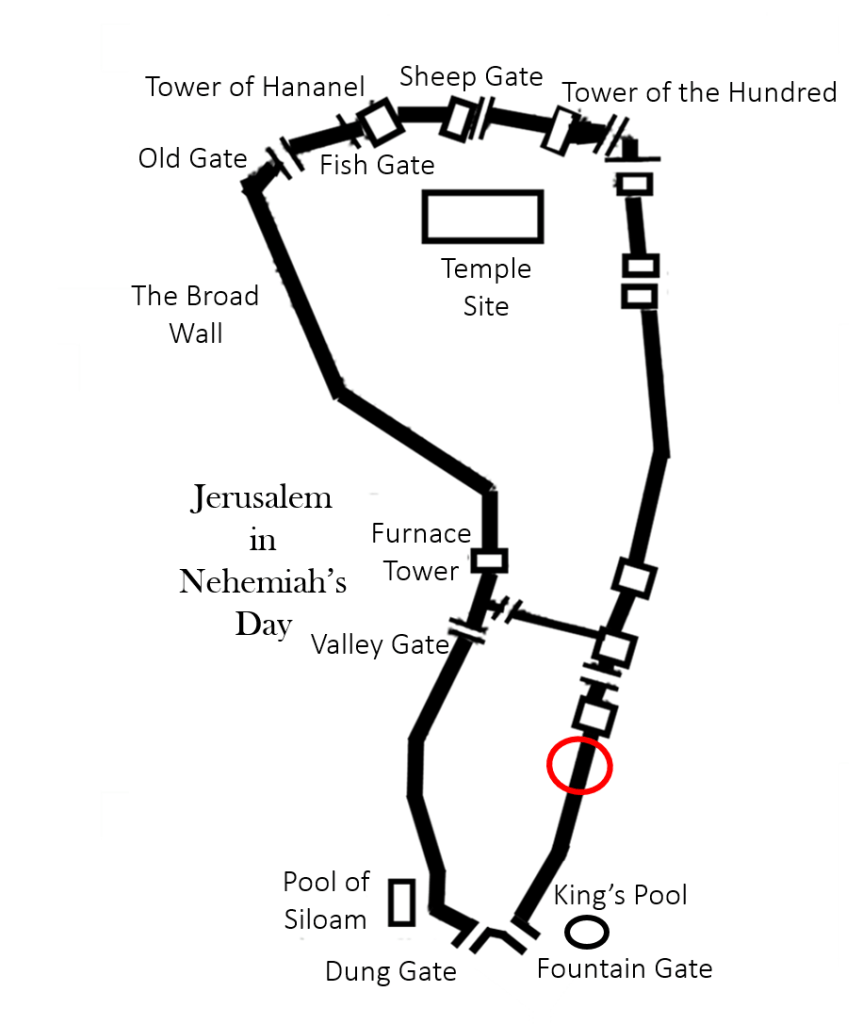
Let’s add one more thought to this dilemma. When we studied Nehemiah 3:2, we read that the “men of Jericho” worked next to Eliashib, the high priest. The city of Jericho is found on the plains of the Jordan.
Next to Eliashib the men of Jericho built. – Nehemiah 3:2a (NKJ)
So, are the “priests, the men of “hakikar” from Jericho, the plains of the Jordan, or the area surrounding Jerusalem? I guess we’ll never know for sure.
Let’s take a look at some of the ways translators have interpreted this word.
- NAS: And after him the priests, the men of the valley, carried out repairs.
- NET: After him the priests worked, men of the nearby district.
- NIV: The repairs next to him were made by the priests from the surrounding region.
- ROT: and, after him, repaired, the priests, the men of the Circuit;
- LEE: And next to him repaired the priests, the men of the plain of Jordan.
- YLT: And after him have the priests, men of the circuit, strengthened.
To read all of our posts on Nehemiah, click on the image above.

© 2026 Today in the Bible

 Today in the Bible
You must be logged in to post a comment.