

Elul 2, 5784; from sunset September 4, 2024, to sunset September 5, 2024
(The second day of the sixth month)
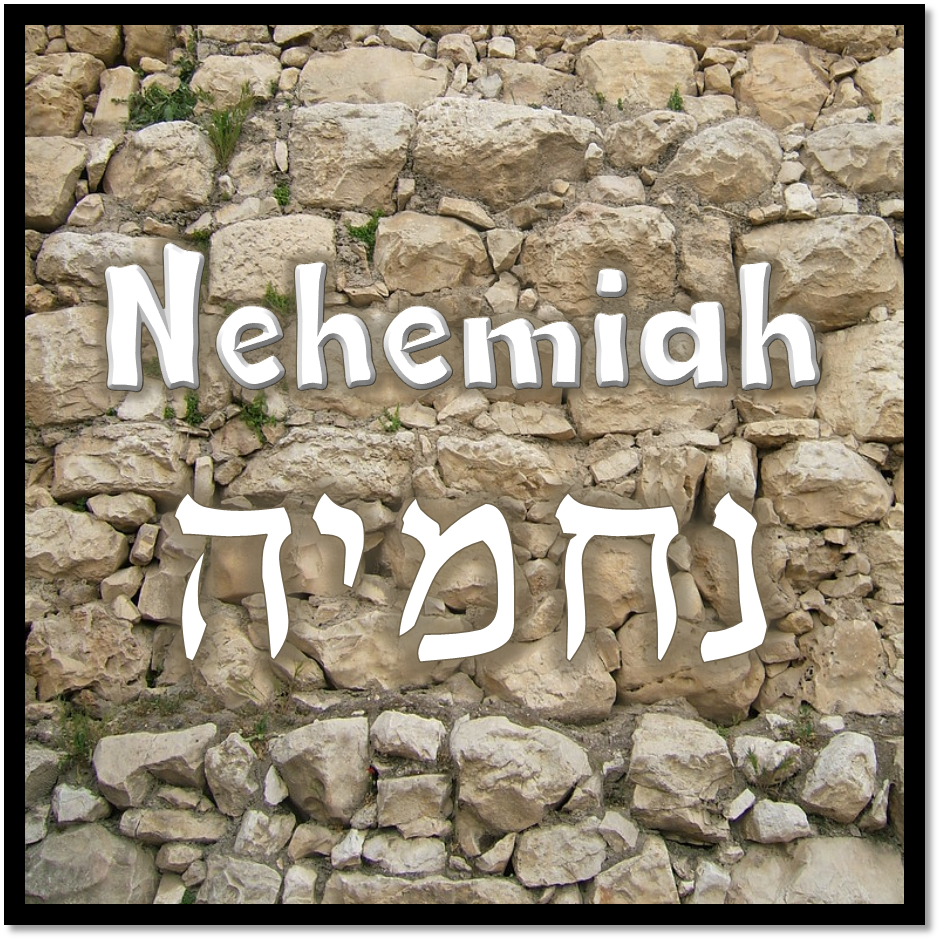
This is an image of a portion of the wall rebuilt by Nehemiah and company.
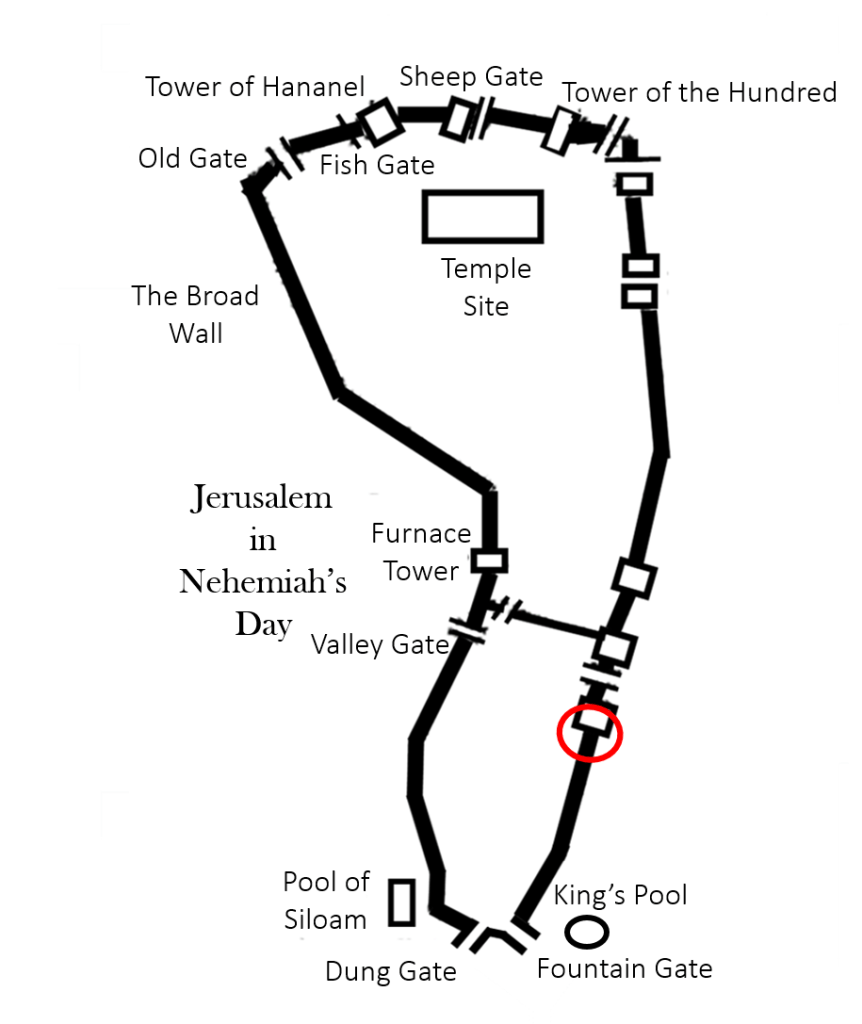
Today in the Bible, we’re catching back up with the men and women who worked to restore the walls and gates of Jerusalem. We’re in the midst of the days that the Bible tells us that they united to complete the job. Today, we’ll meet Azariah who made the repairs in front of his house.
After them Azariah the son of Maaseiah, the son of Ananiah, made repairs by his house. – Nehemiah 3:23b (NKJ)
עֲזַרְיָה
Azaryah = Azariah
Azariah is a very popular name in the Bible; it shows up 48 times in total. One of the men named Azariah was one of the kings of Judah. Another, a son of the famous priest, Zadok. Our name shows up multiple times in 1 & 2 Kings, 1 & 2 Chronicles, Ezra, Nehemiah, Jeremiah, and – in the book of Daniel – Azariah was a man who was renamed by Nebuchadnezzar to Abed-Nego. He was one of the men placed into the fiery furnace. The name Azariah is found six times in the book of Nehemiah, it’s unclear how many of them are the same as the Azariah in today’s verse.
This name comes from the same root as Ezra and Ezer – azar (עזר) – meaning “to help or support.” Add on our familiar “iah” ending (representing God’s Holy Name) and that makes Azariah mean “The LORD has Helped.”
מַעֲשֵׂיָה
Ma’aseiyah = Maaseiah
Maaseiah is also a popular one and found 23 times in the Bible. Maaseiah was the name of one of the sons of Ahaz, King of Judah. Maaseiah was murdered by a man of Ephraim at a time when Pekah, King of Israel, murdered and carried away many from the Kingdom of Judah. Another man named Maaseiah was a brother of King Hezekiah of Judah. Of course, our Maaseiah for today lived much later, in the days of Nehemiah.
Maaseiah stems from the verb-root “asah” (עשה) meaning “to work.” Once again, we’ll add on the “iah” ending which gives us a meaning of “Work of the LORD.”
עֲנָנְיָה
Ananyah = Ananiah
The name Ananiah is only found twice in the Bible, both of its occurrences are in the book of Nehemiah. We are finishing up our verse with a “heavenly” name (sort of). The verb-root “anan” (ענן) means “to bring clouds.” This is what the LORD did after the flood in Genesis 9:14.
“It shall be, when I bring a cloud (anan) over the earth, that the rainbow shall be seen in the cloud (anan).”
By adding on our familiar “iah” ending, you get the “Cloud of the LORD.” Some see the cloud as a covering and render “Covering of the LORD.” They are referencing the famous “cloud (anan) by day” by which God led the Israelites through the wilderness after the exodus.
And the LORD went before them by day in a pillar of cloud to lead the way, and by night in a pillar of fire to give them light, so as to go by day and night. – Exodus 13:21 (NKJ)
You can still find “clouds by day” in Israel (sort of). Mount Ben Tal is a popular stop for tourists on Israel’s northern border with Syria. There is a coffee shop on its summit which goes by the name “Coffee Anan” – or – “Coffee in the Clouds.” Perhaps the “clouds” in the coffee is the cream which “swirls up like a cloud.” (They have some pretty good hot chocolate too – which we enjoyed while watching the most beautiful sunset.)


Photo credit: Today in the Bible

Just a reminder that it’s tradition to read Psalm 27 daily through the Feast of Tabernacles. You can find it by clicking on the link.
To read all of our posts on Nehemiah, click on the image above.

© 2026 Today in the Bible

 Today in the Bible
You must be logged in to post a comment.