
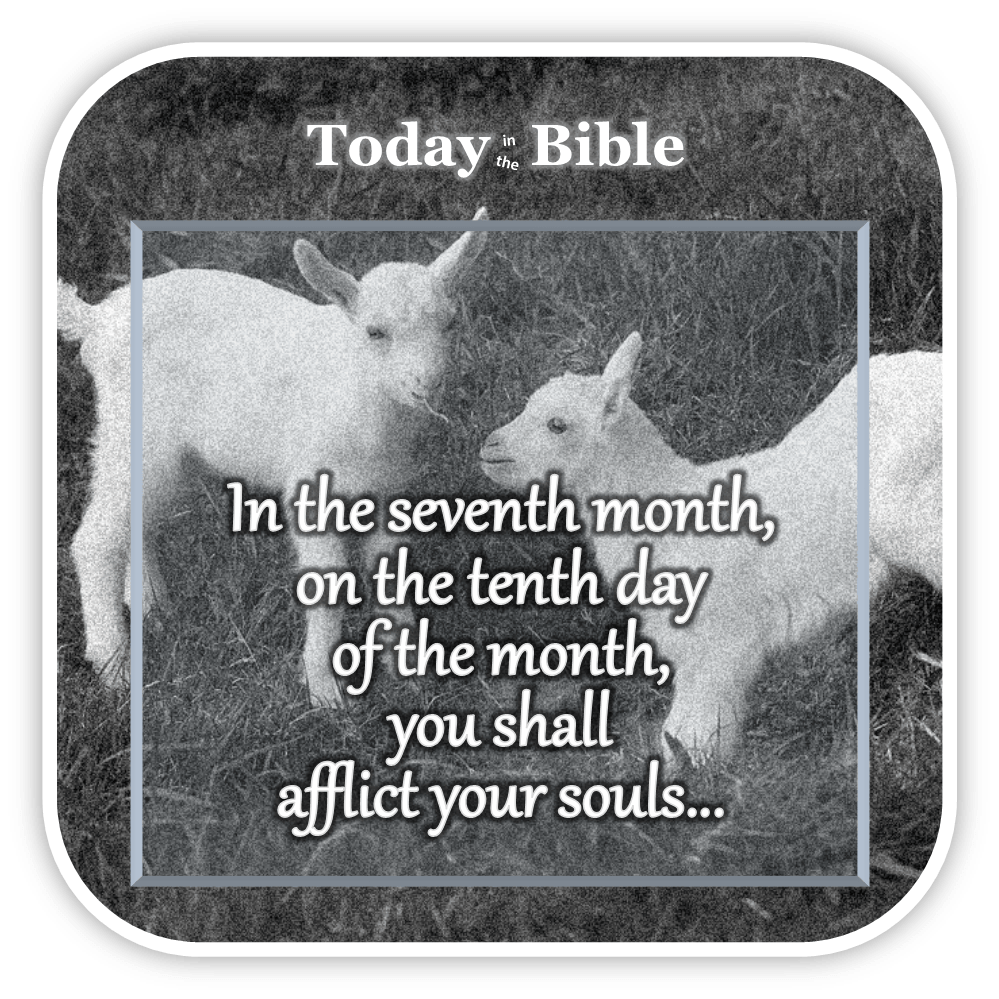
Tishrei 10, 5785; from sunset October 11, 2024, to sunset October 12, 2024
(The tenth day of the seventh month)
The Day of Atonement (Yom Kippur) falls upon the 10th day of the seventh month; but this post is being published a few days before, on the 5th day. We’re taking an early look at the instructions for this Appointed Time to help us understand what it’s all about.
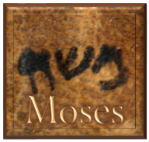
This is the name “Mosheh” (מֺשֶׁה – Moses) as seen in the Dead Sea Scrolls, written over two thousand years ago.
Instructions for the Day of Atonement
Yesterday, we dove into the Hebrew behind the word “atonement” (כפר). Today, we’ll put our new vocabulary to use. We’re going to read through the instructions God gave to Moses for how the High Priest should conduct the ceremony in the Tabernacle. But, in our version, we will plug in our newly learned words; plus add a few extra ones which will aid us in comparing the Day of Atonement to other events in the Bible. Along the way, we’ll call out some of the other key concepts of the ceremony. Let’s turn to Leviticus chapter 16 to begin.
Now the LORD spoke to Moses after the death of the two sons of Aaron, when they offered profane fire before the LORD, and died; and the LORD said to Moses: “Tell Aaron your brother not to come at just any time into the Holy Place inside the veil, before the mercy seat (“kapporet” – כַּפֹּרֶת) which is on the ark, lest he die; for I will appear in the cloud above the mercy seat (“kapporet” – כַּפֹּרֶת). – Leviticus 16:1-2
The “kapporet” (כַּפֹּרֶת) is the lid that “covers” the Ark of the Covenant; it is the earthly version of God’s heavenly throne. Kapporet is one of the words that we learned in yesterday’s article “Kafar.“
“Thus Aaron shall come into the Holy Place: with the blood of a young bull as a sin offering (“chata’ah” – חַטָאָה), and of a ram as a burnt offering. He shall put the holy linen tunic (“ketonet-bad kodesh” – כְּתֹנֶת-בַּד קֹדֶשׁ) and the linen trousers on his body; he shall be girded with a linen sash, and with the linen turban he shall be attired. These are holy garments. Therefore he shall wash his body (“basar” – בָּשָׂר) in water, and put them on (“lavash” – לבש). – Leviticus 16:3-4
We’re calling out the sin offering (“chata’ah” – pronounced like “khah-tah-ah” – חַטָאָה) as a key concept of the Day of Atonement and will continue to underline further references to sin.
A “ketonet” (כְּתֹנֶת) is a long, shirt-like garment with long-sleeves, reaching to the palm of the hand, and long in length, reaching to the “palm” of the foot. It is often referred to as a tunic. The word “bad” (בַּד – pronounced like “bahd”) means “white linen.” Kodesh (קֹדֶשׁ) is a word meaning “holy” or “set apart.” Together with the linen trousers, sash, and turban, they formed the High Priest’s clothing for the Day of Atonement. It was different from his normal, fancier clothing. Note that the priest puts on these garments after he has come into the Holy Place…they are holy garments. He had to wash his “body” (“basar” – literally “flesh”) before putting them on.
We’re also calling out the verb-root “lavash” (לבש) meaning “to dress” or “to be clothed” – translated here as “put on.” It may seem silly to be calling out this verb, but we’ll tie it out to another biblical story in our next post. So, for now, just remember that the High Priest was “lavash”-ed with a “ketonet.”
“And he shall take from the congregation of the children of Israel two kids of the goats as a sin offering, and one ram as a burnt offering. Aaron shall offer the bull as a sin offering, which is for himself, and make atonement (“vekipper” – וְכִפֶּר) for himself and for his house. He shall take the two goats and present them before the LORD at the door of the tabernacle of meeting. Then Aaron shall cast lots for the two goats: one lot for the LORD and the other lot for the scapegoat. – Leviticus 16:5-8
You can see our root כפר in the word translated as “atonement” – “vekipper.” The atonement referred to in this text is for the High Priest and his household.
“And Aaron shall bring the goat on which the LORD’s lot fell, and offer it as a sin offering. But the goat on which the lot fell to be the scapegoat shall be presented alive before the LORD, to make atonement (“lechafer” – לְכַפֵּר) upon it, and to let it go as the scapegoat into the wilderness. – Leviticus 16:9-10
Once again our root כפר has popped up, this time in the word “lechafer.” And, this time, in reference to the scapegoat; where atonement is made upon it.
And Aaron shall bring the bull of the sin offering, which is for himself, and make atonement (“vechifer” – וְכִפֶּר) for himself and for his house, and shall kill the bull as the sin offering which is for himself. Then he shall take a censer full of burning coals of fire from the altar before the LORD, with his hands full of sweet incense beaten fine, and bring it inside the veil. And he shall put the incense on the fire before the LORD, that the cloud of incense may cover the mercy seat (“kapporet” – כַּפֹּרֶת) that is on the Testimony, lest he die. – Leviticus 16:11-13
By now you’re probably becoming an expert in identifying our root כפר, here it is again in “vechifer” – which, for a second time, refers to the atonement for the High Priest and his household. The word takes on a slightly different appearance due to grammatical reasons. Our word “kapporet” has also shown up once more.
“He shall take some of the blood of the bull and sprinkle it with his finger on the mercy seat (“kapporet” – כַּפֹּרֶת) on the east side; and before the mercy seat (“kapporet” – כַּפֹּרֶת) he shall sprinkle some of the blood with his finger seven times. Then he shall kill the goat of the sin offering, which is for the people, bring its blood inside the veil, do with that blood as he did with the blood of the bull, and sprinkle it on the mercy seat (“kapporet” – כַּפֹּרֶת) and before the mercy seat (“kapporet” – כַּפֹּרֶת). So he shall make atonement (“vekipper” – וְכִפֶּר) for the Holy Place, because of the uncleanness of the children of Israel, and because of their transgressions, for all their sins; and so he shall do for the tabernacle of meeting which remains among them in the midst of their uncleanness. – Leviticus 16:14-16
So, the High Priest has dressed into his holy garments and has come before the Ark of the Covenant. He has brought the blood of the bull, which is to make atonement for the sins of himself and his household; and the blood of the goat, which is for the sins of the people. This time, atonement כפר is made for the Holy Place because it is in the midst of the uncleanness, sins, and transgressions of the children of Israel.
“There shall be no man in the tabernacle of meeting when he goes in to make atonement (“lechapper” – לְכַפֵּר) in the Holy Place, until he comes out, that he may make atonement (“vechipper” – וְכִפֶּר) for himself, for his household, and for all the assembly of Israel. And he shall go out to the altar that is before the LORD, and make atonement (“vechipper” – וְכִפֶּר) for it, and shall take some of the blood of the bull and some of the blood of the goat, and put it on the horns of the altar all around. Then he shall sprinkle some of the blood on it with his finger seven times, cleanse it, and consecrate it from the uncleanness of the children of Israel. – Leviticus 16:17-19
Here we learn that the High Priest is to be alone when the ceremony is performed. The Day of Atonement is viewed as the day when the holiest man in the world, enters the holiest place in the world, on the holiest day of the year. It’s a day on which “man seeks the face” of God. This time Aaron is making atonement for the altar.
And when he has made an end of atoning (“mikaper” – מִכַּפֵּר) for the Holy Place, the tabernacle of meeting, and the altar, he shall bring the live goat. Aaron shall lay both his hands on the head of the live goat, confess over it all the iniquities of the children of Israel, and all their transgressions, concerning all their sins, putting them on the head of the goat, and shall send it away into the wilderness by the hand of a suitable man. The goat shall bear on itself all their iniquities to an uninhabited land; and he shall release the goat in the wilderness. – Leviticus 16:20-22
In the Mishnah, Yoma 6 records the procedures of the man who takes the scapegoat out into the wilderness. Leviticus 16 instructs that “he shall release the goat” – which was interpreted as pushing the goat backwards off of a cliff to ensure that it would not return to the city.
Then Aaron shall come into the tabernacle of meeting, shall take off the linen garments which he put on when he went into the Holy Place, and shall leave them there. And he shall wash his body with water in a holy place, put on his garments, come out and offer his burnt offering and the burnt offering of the people, and make atonement (“vechipper” – וְכִפֶּר) for himself and for the people. The fat of the sin offering he shall burn on the altar. And he who released the goat as the scapegoat shall wash his clothes and bathe his body in water, and afterward he may come into the camp. – Leviticus 16:23-26
Now, after having made the atonements, Aaron returns to the Holy Place where he takes off the holy garments – that he had “lavash”-ed on himself – and leaves them in the Holy Place. Once again, he washes his “flesh” and then he “lavash”-es himself in his regular high-priestly clothing.
“The bull for the sin offering and the goat for the sin offering, whose blood was brought in to make atonement (“lechapper” – לְכַפֵּר) in the Holy Place, shall be carried outside the camp. And they shall burn in the fire their skins, their flesh, and their offal. Then he who burns them shall wash his clothes and bathe his body in water, and afterward he may come into the camp. – Leviticus 16:27-28
The remains of the bull and the goat are carried outside of camp and their “skin, flesh, and feces” are burned.
“This shall be a statute forever for you: In the seventh month, on the tenth day of the month, you shall afflict your souls, and do no work at all, whether a native of your own country or a stranger who dwells among you. For on that day the priest shall make atonement (“yechafer” – יְכַפֵּר) for you, to cleanse you, that you may be clean from all your sins before the LORD. It is a sabbath of solemn rest for you, and you shall afflict your souls. It is a statute forever.
“And the priest, who is anointed and consecrated to minister as priest in his father’s place, shall make atonement (“vechipper” – וְכִפֶּר), and put on the linen clothes, the holy garments; then he shall make atonement (“vechipper” – וְכִפֶּר) for the Holy Sanctuary, and for the tabernacle of meeting and for the altar, and he shall make atonement (“yachapper” – יְכַפֵּר) for the priests and for all the people of the assembly he shall make atonement (“yachapper” – יְכַפֵּר). “This shall be an everlasting statute for you, to make atonement (“lechapper” – לְכַפֵּר) for the children of Israel, for all their sins, once a year.” And he did as the LORD commanded Moses. – Leviticus 16:29-34
While the High Priest is making atonement, the people are to “afflict” their souls. The sages equate this to denying ourselves food and drink as well as other comforts. Exceptions are made for the young, old, pregnant women and those with certain medical issues. By denying ourselves food and drink, we are in essence rehearsing our own death.
For the wages of sin is death, but the gift of God is eternal life in Christ Jesus our Lord.
– Romans 6:23 (NKJ)
Let’s review the key concepts and imagery surrounding Yom Kippur:
| Holy Place | Mercy Seat | Sin |
| Ketonet – tunic | Lavash – to be clothed | Multiple Atonements |
| Blood of a Bull | Blood of a Goat | Scapegoat – sent away |
| Afflict Your Soul (fast from food/drink) | Do No Work | Wear White |
Some of the traditions for Yom Kippur include renouncing all vows on the evening before Yom Kippur; and wearing white as a reminder of the High Priest’s clothing. Wearing white also signifies the successful cleansing our sins, as stated in Isaiah chapter one.
Wash yourselves; make yourselves clean; remove the evil of your doings from before my eyes; cease to do evil, learn to do good; seek justice, correct oppression; defend the fatherless, plead for the widow. Come now, let us reason together, says the LORD: though your sins are like scarlet, they shall be as white as snow; though they are red like crimson, they shall become like wool. – Isaiah 1:16-18 (RSV)
In our next post, we’ll carry through some of our key concepts and see how they may apply to another biblical story.
Just a reminder that it’s tradition to read Psalm 27 daily through the Feast of Tabernacles. You can find it by clicking on the link.
Did you know that you can view any of our posts whenever you’d like?
Visit our home page at https://todayinthebible.com
where you can find them organized by month
in the “Archives” section on the right side of the page.

© 2026 Today in the Bible

 Today in the Bible
You must be logged in to post a comment.