Tishrei 17, 5785; from sunset October 18, 2024, to sunset October 19, 2024
(The seventeenth day of the seventh month)
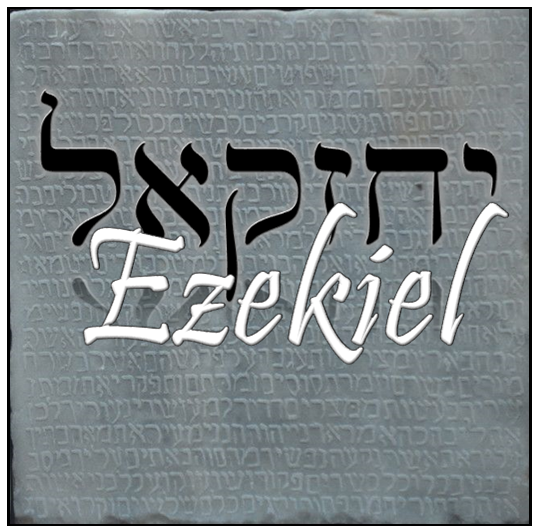
This is an image of one of the 66 stone tiles known as the “Ezekiel Plates” discovered in the 1800s at the traditional tomb site of the prophet Ezekiel. The tiles contain the entire book of Ezekiel and were placed inside the tomb with the letter-side facing toward the wall. There is an old Talmudic tradition that the original book of Ezekiel was buried with the prophet in his tomb and was left there to be revealed in the last days.
We’re beginning to get an understanding of how costly the offerings were for the Feast of Tabernacles. As we read in our article last night, King Hezekiah provided offerings from his own possessions…
And Hezekiah…the king also appointed a portion of his possessions for the burnt offerings: for the morning and evening burnt offerings, the burnt offerings for the Sabbaths and the New Moons and the set feasts, as it is written in the Law of the LORD. – 2 Chronicles 31:2-3 (NKJ)
Fourteen years after Solomon’s Temple was destroyed by the Babylonians, while Ezekiel was still in exile, the LORD took him on a journey back to the Land of Israel. He showed him a future restoration of the city of Jerusalem and the Holy Temple. In this vision, Ezekiel too, foresaw a time when the “prince” will once again supply the offerings for the Feast of Tabernacles…
In the seventh month, on the fifteenth day of the month and for the seven days of the feast, he shall make the same provision for sin offerings, burnt offerings, and cereal offerings, and for the oil. – Ezekiel 45:25 (RSV)
The Hebrew word translated as “prince” in this chapter is “nasi.” Nasi comes from the verb root “nasa” which means “to lift up, carry, or take.” A prince is one who has “been lifted up.” Many understand these visions of Ezekiel as referring to a future time when there will be a new Temple in Jerusalem, presided over by the Messiah, the One who has been lifted up.
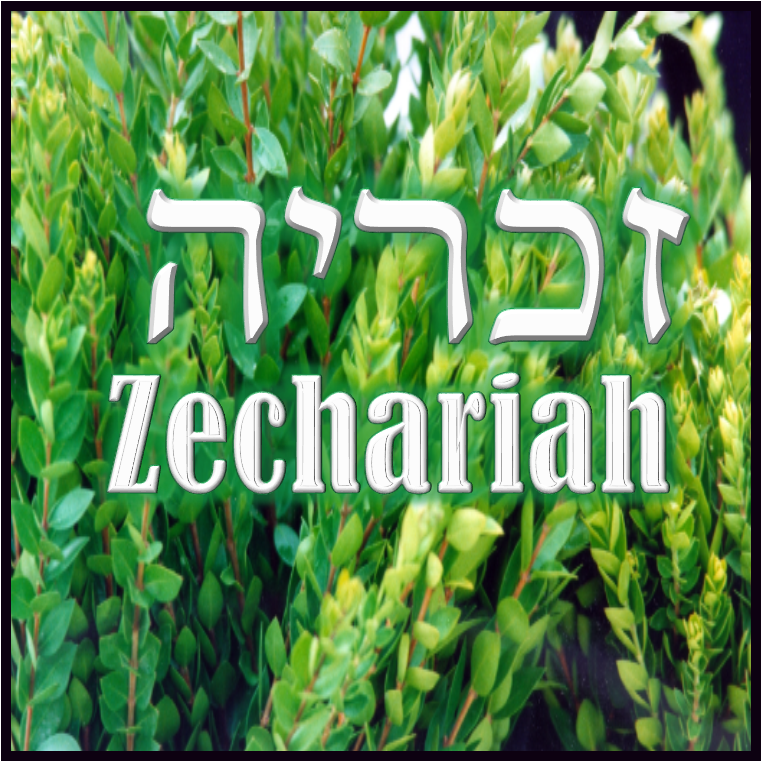
This is the name Zechariah, shown among the myrtle trees, a remembrance of his vision recorded in Zechariah chapter 1. Zechariah’s name means, “The LORD Remembers.”
Zechariah prophesied about the latter days. He foresaw a time when all nations will come up against Jerusalem and the city will be taken. Then the LORD, Himself, will go forth and fight against the nations; and in that day His feet shall stand on the Mount of Olives, splitting it in two. After this time the remnant of Israel will dwell safely in Jerusalem. Plagues and panic will be inflicted upon all of those who came against the city. Then…
…every one that survives of all the nations that have come against Jerusalem shall go up year after year to worship the King, the LORD of hosts, and to keep the feast of booths. And if any of the families of the earth do not go up to Jerusalem to worship the King, the LORD of hosts, there will be no rain upon them.
And if the family of Egypt do not go up and present themselves, then upon them shall come the plague with which the LORD afflicts the nations that do not go up to keep the feast of booths. This shall be the punishment to Egypt and the punishment to all the nations that do not go up to keep the feast of booths.
And on that day there shall be inscribed on the bells of the horses, “Holy to the LORD.” And the pots in the house of the LORD shall be as the bowls before the altar; and every pot in Jerusalem and Judah shall be sacred to the LORD of hosts, so that all who sacrifice may come and take of them and boil the flesh of the sacrifice in them. And there shall no longer be a trader in the house of the LORD of hosts on that day. – Zechariah 14:16-21 (RSV)
From a biblical perspective, the number seventy represents all nations. This is said to stem from the number of Noah’s descendants listed in Genesis 10. The Feast of Booths makes a connection to the number seventy by the number of bulls which are sacrificed throughout the seven-day feast. A strong animal, such as a bull, may be used symbolically to represent a nation or a people group. An example of this can be found in Numbers chapter seven when each of the tribal leaders brought a sacrificial bull at the dedication of the Tabernacle in the wilderness.
As we’ve been learning, God has prescribed the number and of types of animals to be presented as an offering each day during the Feast of Booths. The first day of the festival there are thirteen bulls prescribed for sacrifice. The second day, twelve bulls are offered. For each subsequent day the number of bulls sacrificed drops by one. The number of rams, lambs, and kids offered each day remains the same; only the number of bulls changes. If we add together the number of bulls sacrificed for each of the seven days, the total results in seventy (13 + 12 + 11 + 10 + 9 + 8 + 7 = 70).
In his prophecy, Zechariah connects the Feast of Booths with the “Nations.”
And it shall come to pass that everyone who is left of all the nations which came against Jerusalem shall go up from year to year to worship the King, the LORD of hosts, and to keep the Feast of Tabernacles. And it shall be that whichever of the families of the earth do not come up to Jerusalem to worship the King, the LORD of hosts, on them there will be no rain. – Zechariah 14:16-17 (NKJ)
Did you know that you can view any of our posts whenever you’d like?
Visit our home page at https://todayinthebible.com
where you can find them organized by month
in the “Archives” section on the right side of the page.
© 2026 Today in the Bible
 Today in the Bible
You must be logged in to post a comment.