October/November
Cheshvan (חֶשׁוָן) – 8th month; 29 or 30 days
Also in the day of your gladness, in your appointed feasts, and at the beginning of your months, you shall blow the trumpets over your burnt offerings and over the sacrifices of your peace offerings; and they shall be a memorial for you before your God: I am the LORD your God.” – Numbers 10:10 (NKJ)
Cheshvan is the eighth month of the biblical calendar. Typically, during this month, the rains begin to fall again in Israel, ending the long, dry spell that has lasted since late spring. Before the Babylonian exile, this month was also known as Bul. According to Wikipedia, Cheshvan’s full name is actually Marcheshvan, which is an Akkadian word for “eighth month.”
The first day of each month is known as “rosh chodesh” in Hebrew. The word “rosh” (רׄאשׁ) means “head.” “Chodesh” (“khoe-desh”- חׄדֶשׁ) is a word used throughout the Hebrew Scriptures for the word “Moon” or “month.” It comes from a verb meaning “to renew or repair.” “Rosh chodesh” means “head of the month.” To learn more about how a biblical month is defined, please see our post on months in the archives.
Now the LORD spoke to Moses and Aaron in the land of Egypt, saying, “This month (chodesh) shall be your beginning of months (chodesh); it shall be the first month (chodesh) of the year to you. – Exodus 12:1-2
In the Scripture above, God gave Moses the commandment to sanctify the crescent New Moon and establish a lunar calendar. This is considered to be the first commandment Israel was given as a nation.
It takes the Moon roughly 29½ days to cycle through all of its phases and be renewed again. You don’t need a calendar to know what day of the month it is; just look up at the sky and see what phase the Moon is in. On the Gregorian calendar, a month is not based upon the cycles of the Moon or any other natural phenomenon. It is simply an artificial division of the year into twelve portions.
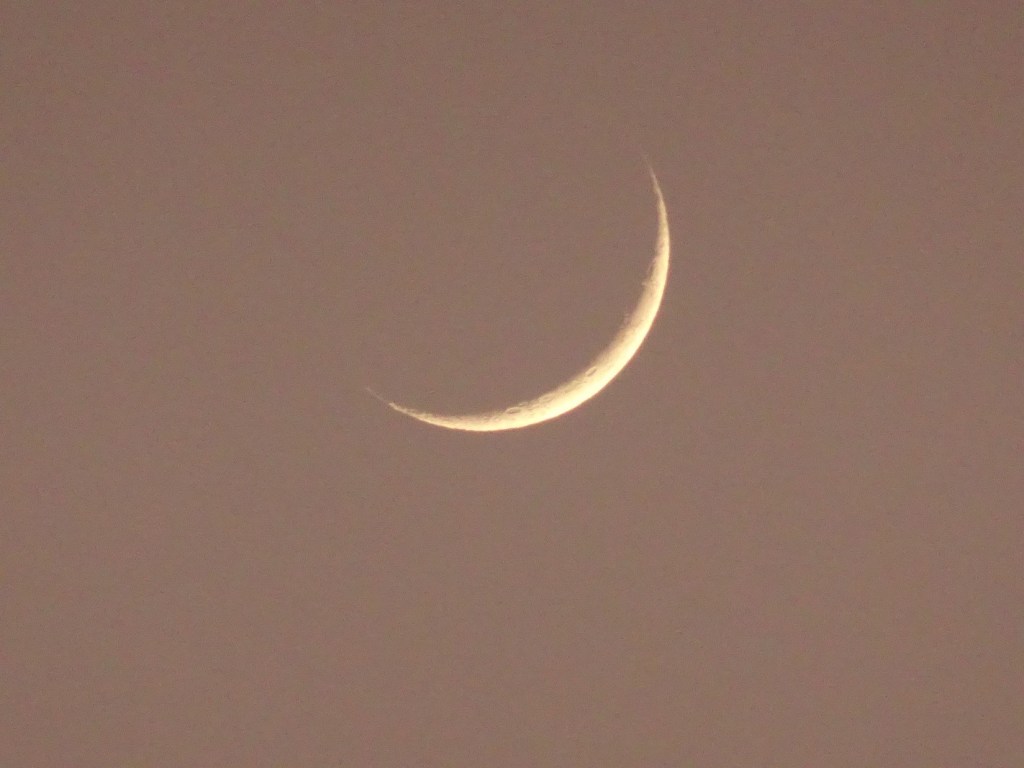
The Moon waxes and wanes from right to left; the same way Hebrew writings are read. The biblical New Moon is when the first visible sliver of the Moon is seen. This is not the same as the astronomical New Moon. The astronomical New Moon is defined as the phase of the Moon when “the lunar disk is not visible to the naked eye, except when it is silhouetted against the Sun during a solar eclipse.” The Hebrew New Moon is counted as the first day of the month; the astronomical New Moon, therefore, occurs on the last day of the Hebrew month. There are some who argue that the astronomical New Moon is the same as the biblical New Moon; however, the majority opinion is that the Moon must be seen in order to be sanctified. Therefore, if the astronomical New Moon cannot be seen on a monthly basis, it cannot be sanctified.
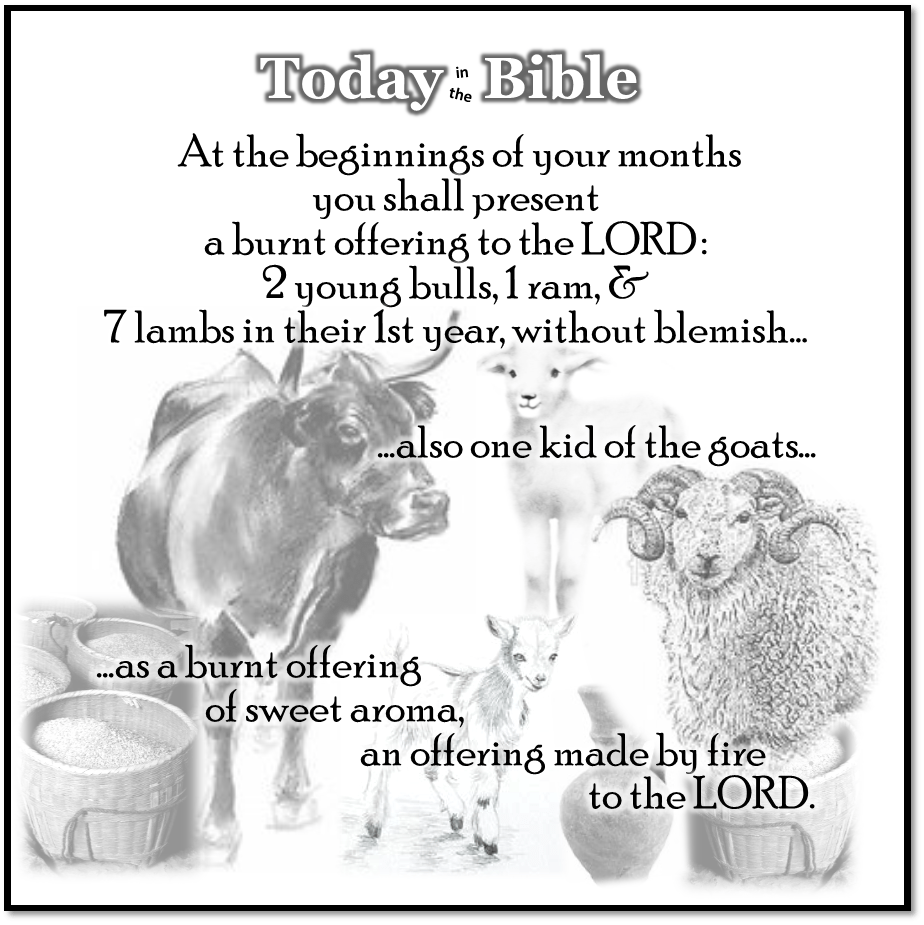
God prescribed special sacrifices to be made on the first day of each month.
At the beginnings of your months you shall present a burnt offering to the LORD: two young bulls, one ram, and seven lambs in their first year, without blemish; three-tenths of an ephah of fine flour as a grain offering, mixed with oil, for each bull; two-tenths of an ephah of fine flour as a grain offering, mixed with oil, for the one ram; and one-tenth of an ephah of fine flour, mixed with oil, as a grain offering for each lamb, as a burnt offering of sweet aroma, an offering made by fire to the LORD.
Their drink offering shall be half a hin of wine for a bull, one-third of a hin for a ram, and one-fourth of a hin for a lamb; this is the burnt offering for each month throughout the months of the year. Also one kid of the goats as a sin offering to the LORD shall be offered, besides the regular burnt offering and its drink offering. – Numbers 28:11-15 (NKJ)
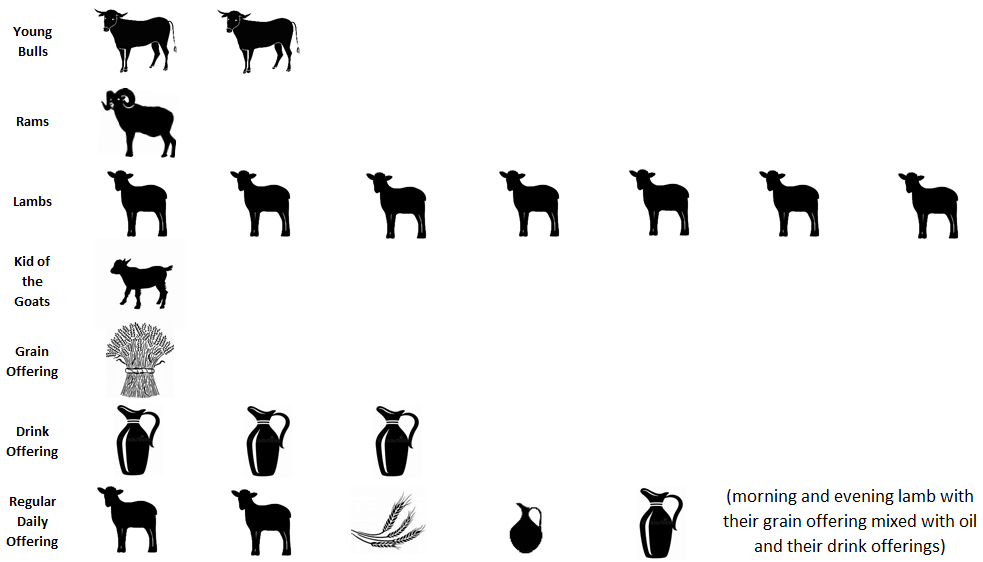
To welcome in each new month, God commanded trumpets be sounded over the burnt offerings.
Also at your times of rejoicing– your appointed festivals and New Moon feasts– you are to sound the trumpets over your burnt offerings and fellowship offerings, and they will be a memorial for you before your God. I am the LORD your God. – Numbers 10:10 (NIV)
Many congregations take the opportunity to bless the upcoming new month on the Sabbath before it begins. The blessing takes on different forms depending upon the congregation, below is a sample blessing.
Birkat Hachodesh
May it be Your will, LORD, our God and God of our fathers,
that You begin for us this month of Cheshvan
for goodness and for blessing.
May You give to us long life,
a life of peace,
a life of goodness,
a life of blessing,
a life of sustenance,
a life of physical health,
a life in which there is fear of heaven and fear of sin,
a life in which there is no shame or humiliation;
a life of wealth and honor,
a life in which we love Torah and fear God;
a life in which the LORD fulfills the requests of our hearts for good.
Amen. Selah.
On upcoming Rosh Chodeshes, we’ll look at some of the places where Rosh Chodesh is mentioned in the Bible. May this month be to you for goodness and for blessing.
Did you know that you can view any of our posts whenever you’d like?
Visit our home page at https://todayinthebible.com
where you can find them organized by month
in the “Archives” section on the right side of the page.

© 2026 Today in the Bible

 Today in the Bible
You must be logged in to post a comment.