
Kislev 24, 5785; from sunset December 24, 2024, to sunset December 25, 2024
(The twenty-fourth day of the ninth month)
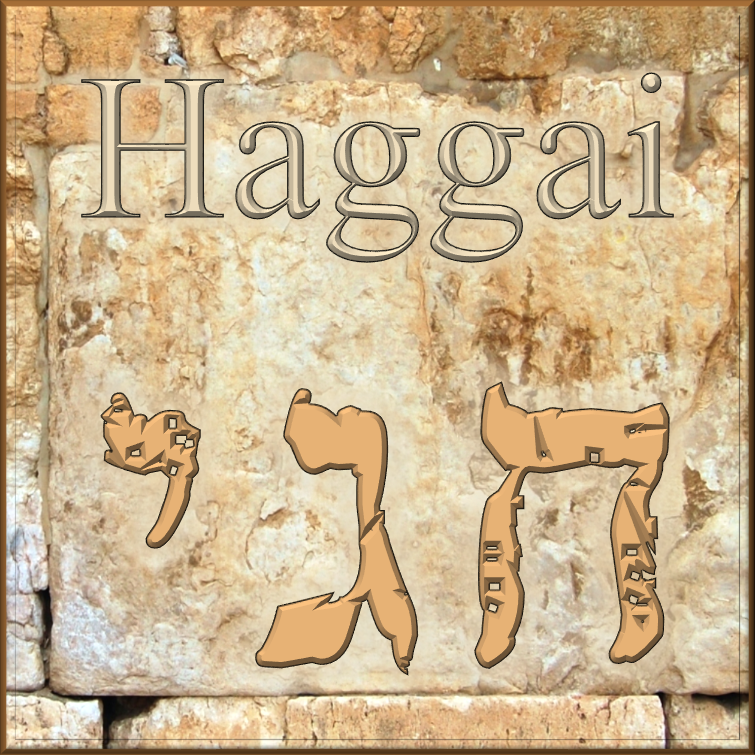
This is the name “Chaggai” (חַגַּי – Haggai). The word “chag” (pronounced like “khog”) means “feast”. Chaggai means “My Feast.”
Construction of the Second Temple Resumes
King Cyrus of Persia gave his approval for the Jewish people to return to Jerusalem and rebuild the Holy Temple in the first year of his reign. Zerubbabel, the leader of Judah, headed a group of more than 40,000 back to Israel. Together they laid the foundations and began the work of construction. However, they were falsely accused of planning a rebellion against Cyrus. Because of this, their work was paused for well over a decade. Now, in the second year of Darius, on the 24th day of the month of Kislev, the LORD encouraged them to begin again.
On the twenty-fourth day of the ninth month, in the second year of Darius, the word of the LORD came by Haggai the prophet, saying, “Thus says the LORD of hosts: `Now, ask the priests concerning the law, saying, “If one carries holy meat in the fold of his garment, and with the edge he touches bread or stew, wine or oil, or any food, will it become holy?”‘” Then the priests answered and said, “No.”
And Haggai said, “If one who is unclean because of a dead body touches any of these, will it be unclean?” So the priests answered and said, “It shall be unclean.”
Then Haggai answered and said, “`So is this people, and so is this nation before Me,’ says the LORD, `and so is every work of their hands; and what they offer there is unclean. And now, carefully consider from this day forward: from before stone was laid upon stone in the temple of the LORD–since those days, when one came to a heap of twenty ephahs, there were but ten; when one came to the wine vat to draw out fifty baths from the press, there were but twenty. I struck you with blight and mildew and hail in all the labors of your hands; yet you did not turn to Me,’ says the LORD.
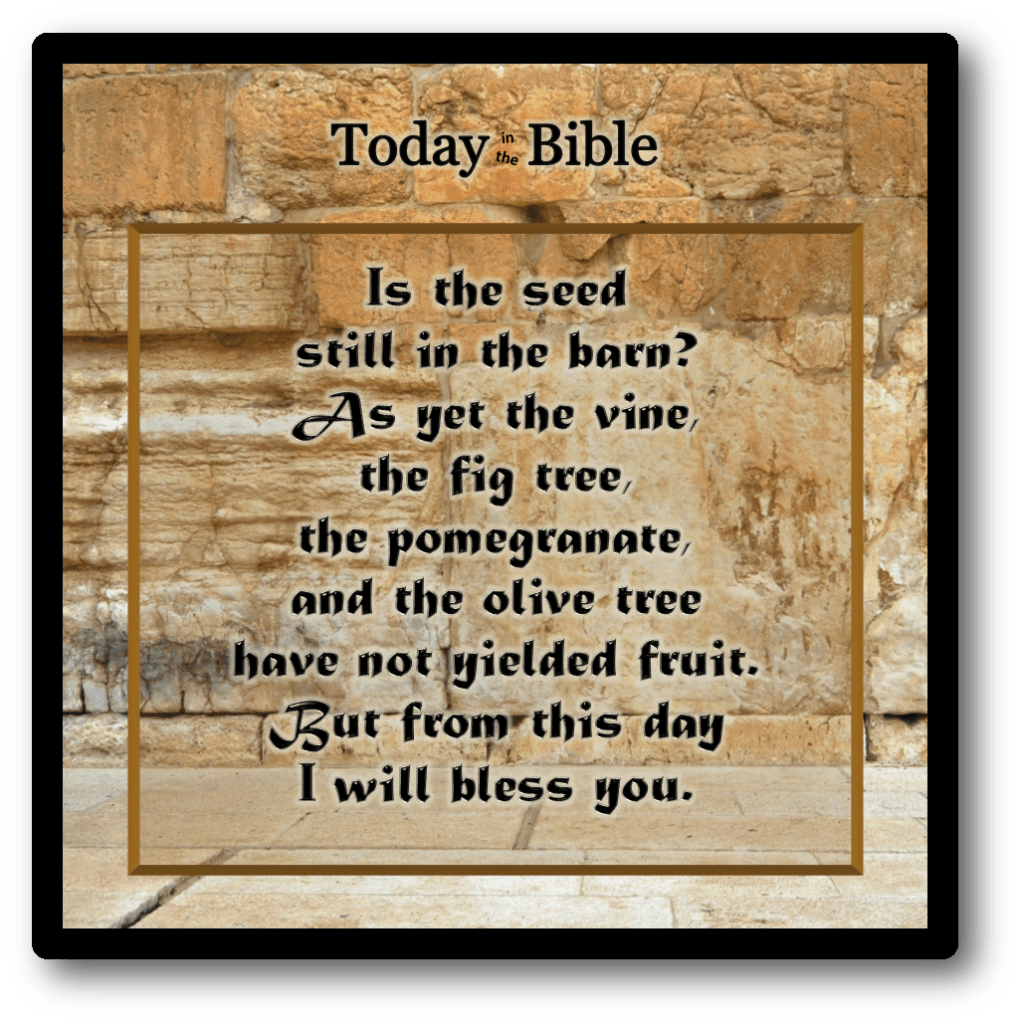
`Consider now from this day forward, from the twenty-fourth day of the ninth month, from the day that the foundation of the LORD’S temple was laid– consider it: Is the seed still in the barn? As yet the vine, the fig tree, the pomegranate, and the olive tree have not yielded fruit. But from this day I will bless you.’” – Haggai 2:10-19 (NKJ)
The discussion between Haggai and the priests is meant to show that a legally “unclean” person imparts his uncleanness to anything, whereas a legally holy thing cannot confer its sanctity on an “unclean” person (Numbers 19:11, Numbers 19:13, and Numbers 19:22). Just as one drop of filth will defile a vase of water, yet many drops of clean water will not purify a vase of filth. God wanted to encourage them to resume building the Temple and not return to the disobedience that led up to the exile. You can’t be holy if you’re being disobedient.
To the pure all things are pure, but to those who are defiled and unbelieving nothing is pure; but even their mind and conscience are defiled. They profess to know God, but in works they deny Him, being abominable, disobedient, and disqualified for every good work. – Titus 1:15-16 (NKJ)
Is the seed yet in the barn? — The implication is that it is not. As Haggai is speaking these words in Israel at this time of year, the seed has been taken out of the barn and it has already been sown in the fields. The month of Kislev is a time for planting. At this point in the cycle of sowing and reaping there are no more signs of its bearing a good crop, much less of its being safely stored in the barn than there were in the past season, when there was such a massive failure.
Yet our God chose this time of year to make a promise to His people; to the ones who have returned from an exile which was imposed due to disobedience. He’s saying to them, “I brought you back from exile so you could obey Me. I’m planting you in the soil of My Land and promising you My blessing for your obedience. I am promising you from this day a blessing in the form of an abundant harvest. So also, the vine, etc., which heretofore have borne little or nothing, shall be blessed with productiveness. Thus, it will be made evident that the blessing is due to Me, not to nature.”
If you think about it, it’s rather a scary thing to take perfectly good seed that is in your storehouse – seed which can be eaten – and then just throw it on the ground, hoping that everything will come together perfectly and you will receive a hundred-fold in return. But if you don’t have trust that it will grow, and all you do is eat up what you have, what is your destiny? At this point, I wonder if God is feeling the same way. I’m planting these people back in my Land…will they produce a harvest for Me this time????
Those who sow in tears shall reap in joy. He who continually goes forth weeping, bearing seed for sowing, shall doubtless come again with rejoicing, bringing his sheaves with him. – Psalm 126:5-6 (NKJ)
The Ultimate Fruit of the nation of Israel is our Messiah and, by extension, those (both Jews and Gentiles), who follow Him in His obedience to the word of the Father. And this productivity only comes about by the hand of our Father.
We pray that the “seed” of Abraham (faith, belief, obedience) is sown into the “adamah” (ground)/”Adam” (mankind) and that the LORD brings about a bountiful crop.
(Portions of the above are from preceptaustin.org commentary on Haggai.)
Did you know that our posts are categorized and tagged by content?
When you visit our home page at https://todayinthebible.com and select any post,
you can find the associated categories and tags just to the right of the title.
Simply click on any tag and you will be taken to all related posts.

© 2026 Today in the Bible

 Today in the Bible
You must be logged in to post a comment.