Kislev 30, 5785; from sunset December 30, 2024, to sunset December 31, 2024
(The thirtieth day of the ninth month)
There is a lot of text in the Bible dedicated to describing the building and the furnishing of the Tabernacle / Temple. Below is a simple layout of how the furnishings were to be placed.
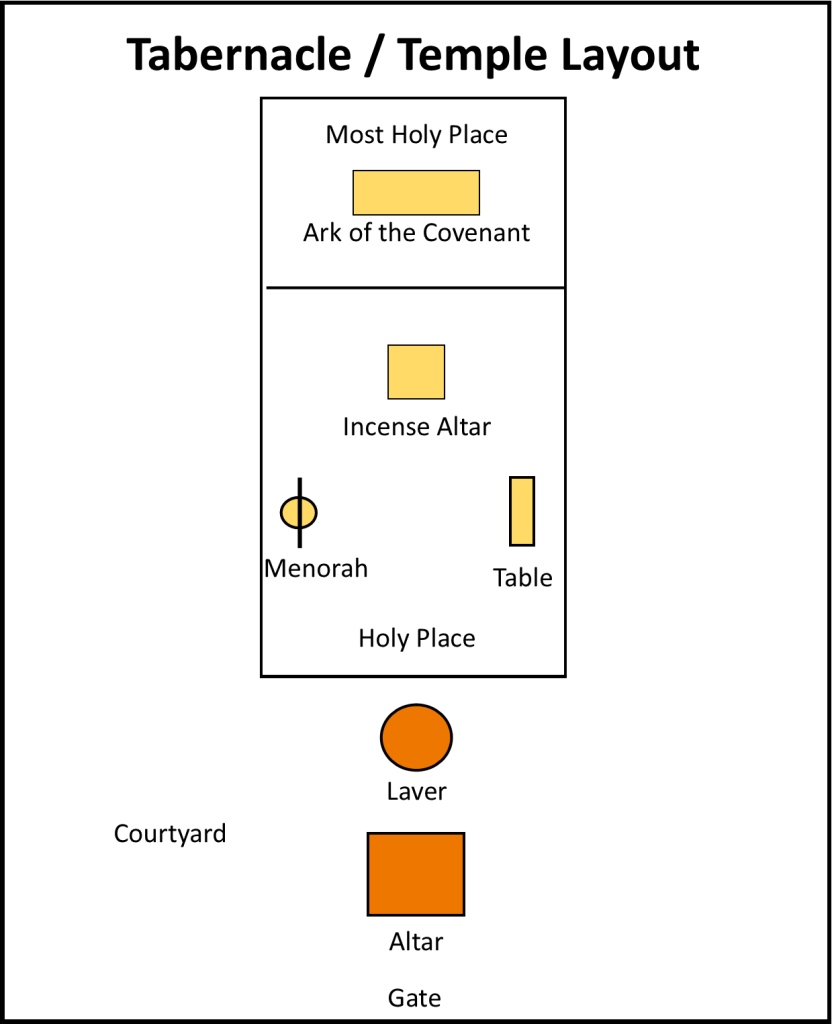
The furnishings of the outer courtyard were the sacrificial altar and the laver. Both of these were made of copper or bronze. As we move forward into the Holy Place, the material of the furnishings was upgraded to gold. Here we find the menorah, the table for showbread and the incense altar. A veil separated the Holy Place from the Most Holy Place. Behind the veil were the Ark of the Covenant with the atonement cover or mercy seat which covered it. Two cherubim sat atop the mercy seat. Once again, the furnishings were covered in pure gold. This is where the presence of the LORD would dwell in a cloud over the mercy seat.
There is another place in the Bible where we start with a sacrifice and end with the dwelling presence of God. It’s found in the LORD’s Appointed Times from Leviticus 23. These are holy convocations – specific times to gather and meet. We start with Passover and the Firstfruits of the barley harvest and move through the springtime with the Feast of Unleavened Bread and the Feast of Weeks. In late summer or early autumn, we gather together again for the Feast of Trumpets, the Day of Atonement, the Feast of Tabernacles, and finish up with the Eighth Day Assembly. These are the “Appointed Times” and the Temple is the “Appointed Place.”
This leaves us wondering, “Could there be a parallel between the LORD’s Appointed Times and the Temple furnishings?” It’s a question worth exploring. The altar for sacrifice seems to correspond with the Appointed Time of Passover. The Mercy Seat, the Atonement Cover, seems to correspond with the Day of Atonement. The Feast of Tabernacles could correspond with the dwelling presence of God in the Most Holy Place and in the Tablets of Testimony.
So why are we studying this now, during Hanukkah? I believe there is a connection between the golden menorah and the Feast of Weeks. In Hebrew, the Feast of Weeks is called “Shavu’ot.” A shavu’ah = one week. Shavu’ot is the plural form. Shavu’ot = “weeks.” In Greek it’s called Pentecost, meaning 50th day. Shavu’ot is when we count seven weeks – seven sevens – from the day after the Sabbath of the Feast of Unleavened Bread. On the 50th day, an offering of two loaves of leavened bread was offered. So, how does this correspond to the menorah??
Judaism places the date of the covenant at Mount Sinai on Shavu’ot. The day that God gave them the Ten Commandments. The Torah. Psalm 119 has been attributed to King David. In it he writes about his love for the Torah and how it provides understanding – illumination – a lamp – a light.
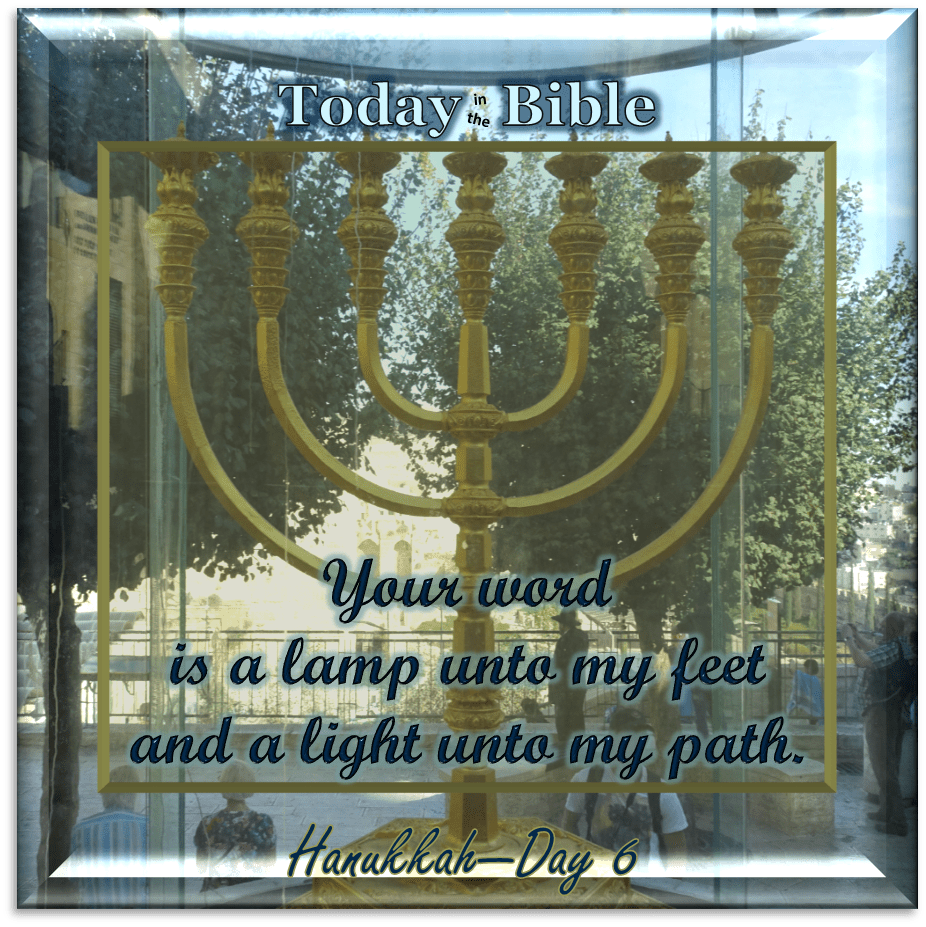
Through Your precepts I get understanding; therefore I hate every false way. Your word is a lamp to my feet and a light to my path. – Psalm 119:104-105 (NKJ)
On the day of Shavu’ot, God gathered everyone at the foot of Mount Sinai. It was there that He spoke the words of the Ten Commandments. Tradition states that when He spoke, His words thundered out in all of the languages of the world at once. Each word took on the form of a spark or a flame that landed on the heads of everyone standing at the foot of the mountain. Does this sound familiar? Yes! On that same day, the one that many of us know as Pentecost, the Apostles were gathered in Jerusalem, and they experienced the loud rushing wind and flames landing on the heads of those gathered there in prayer. The disciples began speaking in all the languages of the world. They received the gift of the Holy Spirit.
Yesterday, we read how Betzalel made the menorah out of pure gold. It was of one piece of pure gold. And its purpose was to give light. At Sinai, the people were gathered in unity (Exodus 19:8) – they answered as one. On Pentecost, the people were gathered together with one accord (Acts 2:1).
In the Temple, the menorah is what provided illumination. The Torah is the lamp that illuminates our path. On Pentecost, the Holy Spirit began writing the words of the Torah upon our hearts. Illuminating us from within. It is said that the windows of the Temple were constructed in a manner so that the light would shine outward from it. This was in opposition to most buildings where the windows were angled so that the light from outside would spread out and shine within the building. The “temple” of our body should function in the same way as “The Temple.” Our good deeds (keeping the commandments) are meant to be seen so that their light can shine to others.
You are the light of the world. A city that is set on a hill cannot be hidden. Nor do they light a lamp and put it under a basket, but on a lampstand, and it gives light to all who are in the house. Let your light so shine before men, that they may see your good works and glorify your Father in heaven. – Matthew 5:14-16 (NKJ)
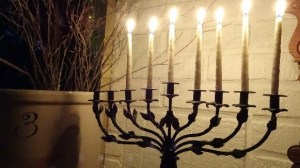
Hanukkah – Day 6
Did you know that our posts are categorized and tagged by content?
When you visit our home page at https://todayinthebible.com and select any post,
you can find the associated categories and tags just to the right of the title.
Simply click on any tag and you will be taken to all related posts.
© 2026 Today in the Bible
 Today in the Bible
You must be logged in to post a comment.