Tevet 9, 5785; from sunset January 8, 2025, to sunset January 9, 2025
(The ninth day of the tenth month)
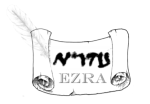
This is the name “Ezra” (עֶזְרָא) the Scribe as seen in the Dead Sea Scrolls; written by a scribe over two thousand years ago.
עֶזְרָא
Ezra the Scribe
According to tradition, today is the day that Ezra the scribe died. Let’s take a look at what the name Ezra means.
עזר
Ezra comes from the verb azar which means to help or support.
Ezra was a priest as well as a scribe. That means he was a descendant of Moses’ brother, Aaron. In fact, according to Ezra 7:1-5, he was the great, great, great, great, great, great, great, great, great, great, great, great, great grandson of Aaron. That’s great x 13!
Ezra the son of Seraiah, the son of Azariah, the son of Hilkiah the son of Shallum, the son of Zadok, the son of Ahitub, the son of Amariah, the son of Azariah, the son of Meraioth, the son of Zerahiah, the son of Uzzi, the son of Bukki, the son of Abishua, the son of Phinehas, the son of Eleazar, the son of Aaron the chief priest– – Ezra 7:1-5 (NKJ)
However, Ezra was likely a few more generations down from Aaron than what was listed in the genealogy above. 1 Chronicles 6:4-15 includes an additional six names between Azariah and Meraioth – which would push Ezra back to the 19th great grandson of Aaron.
Yet, scholars question if Ezra was the actual son of Seraiah or if the word “son” here implies a “descendant” of Seraiah. Why is this questioned? In 2 Kings 25, the story of Nebuchadnezzar’s siege of Jerusalem is recounted. It encompasses the last two and a half years of Zedekiah’s reign, from the siege of Jerusalem until the destruction of the Temple. These verses identify Seraiah as the chief priest at the time. And this is where we read about his fate.
And the captain of the guard took Seraiah the chief priest, Zephaniah the second priest, and the three doorkeepers…So Nebuzaradan, captain of the guard, took these and brought them to the king of Babylon at Riblah. Then the king of Babylon struck them and put them to death at Riblah in the land of Hamath. Thus Judah was carried away captive from its own land. – 2 Kings 25:18-21 (NKJ)
If Seraiah was killed shortly after the destruction of the Temple, it is questionable that he fathered Ezra – who was among those who returned from the Babylonian captivity. It’s not impossible, but it would have to mean that Ezra was a baby or even still in the womb when exiled and that he was an old man when he returned. Ezra, himself, was not listed as the high priest when he returned; instead it was Joshua who was the son of Jehozadak, the son of Seraiah. Ezra may have been a brother, nephew, or even a great nephew of Jehozadak. Ezra did not join the first wave of those returning from Babylon. Some scholars believe this was so as not to compete, even involuntarily, with Joshua son of Jozadak for the office of chief priest.
If we can trace Ezra’s lineage to Aaron that means that we can follow it clear back to Adam. According to my reckoning, Ezra is around the 46th generation of mankind, with Adam being the first. If you’d like to reconstruct his heritage for yourself, you can do so by employing these verses: Ezra 7:1-5, Exodus 6:16-20, Genesis 29:34, Genesis 25:26, Genesis 17:19, Genesis 11:10-26, Genesis 10:21-32, and Genesis 5:2-32.
My favorite picture of the person of Ezra comes from Ezra 7:10:
For Ezra had prepared his heart to seek the Law of the LORD, and to do it, and to teach statutes and ordinances in Israel. – Ezra 7:10
The Sages liken Ezra unto Moses; compare Ezra 7:10 to Deuteronomy 4:14.
And the LORD commanded me at that time to teach you statutes and judgments, that you might observe them in the land which you cross over to possess. – Deuteronomy 4:14 (NKJ)
Just as Moses was the “lawgiver” when the people came out of Egypt; so, too, Ezra was the “lawgiver” when the people came out of Babylon. The Sages say that Ezra the Scribe was worthy of having the Torah given through him, had Moses not preceded him (San. 21b). And just like Moses, he cared for the people of Israel and bore the burden of leading them.
Traditionally Judaism credits Ezra with establishing the Great Assembly of scholars and prophets, the forerunner of the Sanhedrin, as the authority on matters of religious law. The Great Assembly is credited with establishing many of the facets of contemporary traditional Judaism. This includes the weekly Torah portion readings, the Amidah prayer, and the celebration of the feast of Purim. (Wikipedia)
In addition to the book of Ezra, he is also credited with writing the books of 1 and 2 Chronicles – and many believe that he is the author of the book of Malachi. Malachi means “My Messenger” and it has long been debated on whether it is a personal name or a title.
There are several legends surrounding the death and burial of Ezra.
- According to one tradition, Ezra died at the age of 120 in Babylonia. Benjamin of Tudela was shown his grave on the Shaṭṭ al-‘Arab, near the point where the Tigris flows into the Euphrates (“Itinerary,” 1:73).
- According to another legend, he was at the time of his death in Babylon, as a courtier in the entourage of Artaxerxes (see Vigouroux, “Dictionnaire de la Bible,” 2:1931).
- And Josephus records Ezra’s death as occurring in Jerusalem.
So it came to pass, that after he [Ezra] had obtained this reputation among the people, he died an old man, and was buried in a magnificent manner at Jerusalem. About the same time it happened also that Joiakim, the high priest, died; and his son Eliashib succeeded him in the high priesthood. – Antiquities 11:158
Did you know that our posts are categorized and tagged by content?
When you visit our home page at https://todayinthebible.com and select any post,
you can find the associated categories and tags just to the right of the title.
Simply click on any tag and you will be taken to all related posts.

© 2026 Today in the Bible

 Today in the Bible
You must be logged in to post a comment.