
Shevat 1, 5785; from sunset January 29, 2025, to sunset January 30, 2025
(The first day of the eleventh month)

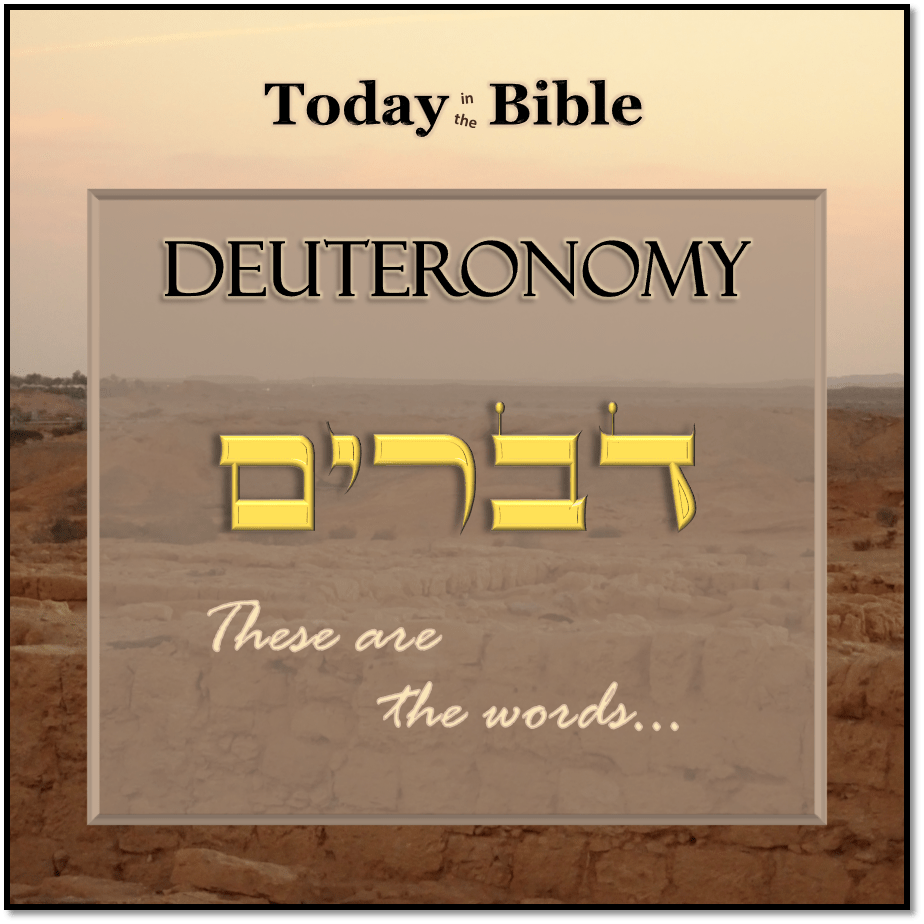
Every post we make for the book of Deuteronomy will contain a featured image from the Land of Israel. This is the Promised Land that the children of Israel will cross into at the end of the book. Today’s image is of the desert at dusk, near Tamar in the Wilderness, south of the Dead Sea. (Photo credit: Today in the Bible)
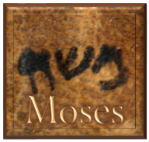
This is the name “Mosheh” (מֺשֶׁה – Moses) as seen in the Dead Sea Scrolls, written over two thousand years ago.
Moses Repeats the Torah
On the first of Shevat, Moses assembled the people and began a 37-day long “review of the Torah” or what we know as the book of Deuteronomy. Tradition states that he concluded this repetition on the day he died, Adar 7. The structure of the book of Deuteronomy has long been identified as that of a covenant renewal document; specifically, a suzerain-vassal treaty.
A suzerain treaty is a type of covenant between a superior ruler (suzerain) and a subordinate ruler (vassal). These treaties were common in the Ancient Near East and involved promises of blessings for loyalty and obedience, and curses for rebellion. The suzerain would provide benefits such as military protection and land grants to the vassal, and the vassal would owe the suzerain financial tribute and consummate loyalty. The vassal would retain autonomy within their own borders and ally with the suzerain in wars. [1]
Below is a high-level outline:
- Preamble (1:1–5)
- Historical Prologue (1:6—4:43)
- Stipulations of the Covenant (4:44—26:19)
- Supplementary Requirements (chs. 12–26)
- Ratification; Curses and Blessings (chs. 27–30)
- Leadership Succession under the Covenant (chs. 31–34)
We’ll spend the next month reading through the book of Deuteronomy, experiencing the repetition of the Law, just as the children of Israel would have done during this timeframe. Get ready to sit down with Moses to listen and learn as he reviews the history of the children of Israel over the last 40 years.
Preamble
“These are the words” (“devarim”) which Moses spoke to all Israel across the Jordan in the wilderness, in the Arabah opposite Suph, between Paran and Tophel and Laban and Hazeroth and Dizahab.
It is eleven days’ journey from Horeb by the way of Mount Seir to Kadesh-barnea. And it came about in the fortieth year, on the first day of the eleventh month, that Moses spoke to the children of Israel, according to all that the LORD had commanded him to give to them, after he had defeated Sihon the king of the Amorites, who lived in Heshbon, and Og the king of Bashan, who lived in Ashtaroth and Edrei.
Across the Jordan in the land of Moab, Moses undertook to expound this law, saying, “The LORD our God spoke to us at Horeb, saying, ‘You have stayed long enough at this mountain. Turn and set your journey, and go to the hill country of the Amorites, and to all their neighbors in the Arabah, in the hill country and in the lowland and in the Negev and by the seacoast, the land of the Canaanites, and Lebanon, as far as the great river, the river Euphrates.
Historical Prologue
‘See, I have placed the land before you; go in and possess the land which the LORD swore to give to your fathers, to Abraham, to Isaac, and to Jacob, to them and their descendants after them.’
“And I spoke to you at that time, saying, ‘I am not able to bear the burden of you alone. The LORD your God has multiplied you, and behold, you are this day as the stars of heaven for multitude. May the LORD, the God of your fathers, increase you a thousand-fold more than you are, and bless you, just as He has promised you! How can I alone bear the load and burden of you and your strife? Choose wise and discerning and experienced men from your tribes, and I will appoint them as your heads.’
“And you answered me and said, ‘The thing which you have said to do is good.’
“So I took the heads of your tribes, wise and experienced men, and appointed them heads over you, leaders of thousands, and of hundreds, of fifties and of tens, and officers for your tribes. Then I charged your judges at that time, saying, ‘Hear the cases between your fellow countrymen, and judge righteously between a man and his fellow countryman, or the alien who is with him. You shall not show partiality in judgment; you shall hear the small and the great alike. You shall not fear man, for the judgment is God’s. And the case that is too hard for you, you shall bring to me, and I will hear it.’
“And I commanded you at that time all the things that you should do. Then we set out from Horeb, and went through all that great and terrible wilderness which you saw, on the way to the hill country of the Amorites, just as the LORD our God had commanded us; and we came to Kadesh-barnea. – Deuteronomy 1:1-19
So Moses set up a system of fair and impartial justice. Join us again tomorrow when we’ll finish out chapter one.
[1] cf. thebiblesays.com; russmeek.com; ancient-hebrew.org
To read all of our posts on the book of Deuteronomy, click on the image above.

© 2026 Today in the Bible

 Today in the Bible
You must be logged in to post a comment.