
Av 5, 5785; from sunset July 29, 2025, to sunset July 30, 2025
(The fifth day of the fifth month)
This is an image of a portion of the wall rebuilt by Nehemiah and company.
Today in the Bible, we’re remembering the men and women who had a “heart to work” (Nehemiah 4:6) to rebuild the wall around Jerusalem. We’re in the midst of the 52 days that they donated their labor to do just that. The Hebrew word behind the word “heart,” mentioned above, is “lev.” Lev means more than just the blood-pumping organ inside of our bodies, it’s used to refer to our inner-being, our mind, our will. We’re taking a look at these individuals to learn what we can about them and remember their contributions to the rebuilding of the walls and gates of Jerusalem.
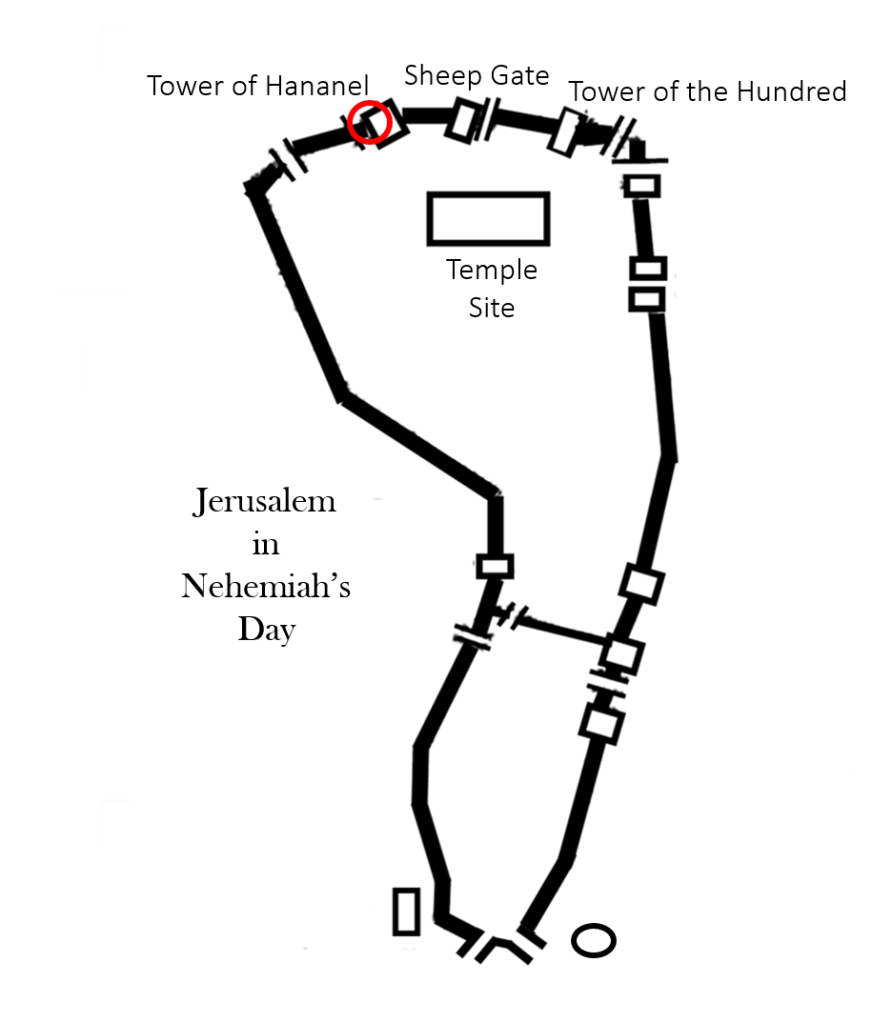
Yesterday we learned that the priests restored the northern portion of the wall, near the Sheep Gate. Next to them were the men from Jericho and Zaccur, the son of Imri.
Next to Eliashib the men of Jericho built. And next to them Zaccur the son of Imri built. – Nehemiah 3:2 (NKJ)
יְרֵחוֹ
Yerecho = Jericho
Ezra chapter 2 contains a list of people who came back from Babylon. Among them are 345 who are referred to as “the people of Jericho.”
Now these are the people of the province who came back from the captivity, of those who had been carried away, whom Nebuchadnezzar the king of Babylon had carried away to Babylon, and who returned to Jerusalem and Judah, everyone to his own city… – Ezra 2:1 (NKJ)
…the people of Jericho, three hundred and forty-five; – Ezra 2:34 (NKJ)
Nehemiah makes a record of them again in chapter 7 when he records the genealogies of those who had returned in the first wave. We don’t know much more about the men from Jericho than that.
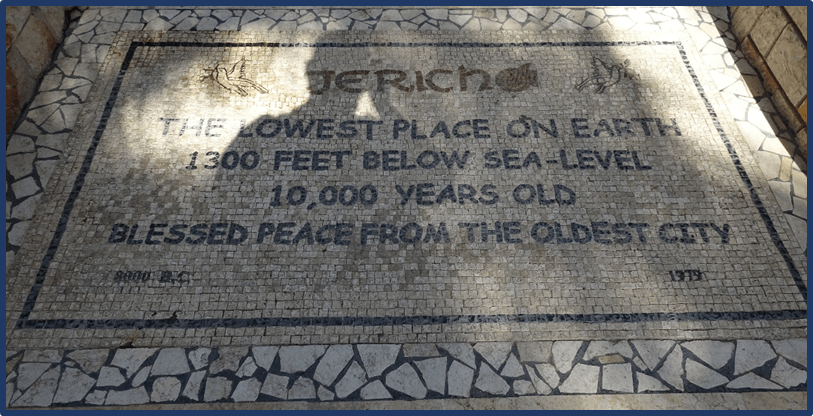
Jericho bills itself as the “oldest city.” Wikipedia recognizes it as one of the oldest cities and the city with the oldest known defensive wall. It is on UNESCO’s list of World Heritage Sites and described as the “oldest fortified city in the world.” Back in the days of Joshua, the wall of Jericho must have been something the city could brag about. We all know how the story goes, that wall was nothing against the God of Abraham, Isaac, and Israel! Jericho is 15-20 miles northeast of Jerusalem, which doesn’t seem very far; but, if you have to make the trek, you’re facing a 3,000+ ft. difference in elevation in a hot, dry, wilderness area. The men who came from Jericho to help build the wall were definitely not doing it for themselves. Jerusalem was too far away for them to be able to seek shelter in an emergency; and for them to make this journey at the height of the summer shows that they really did have a “heart to work.”
There are two thoughts as to the meaning of the name Jericho (“Yeh-ray-kho”). Let’s look at both of them.
רִיחַ
Riach. This root is pronounced like “ree-ahkh.” It means “smell, scent, or accept.” As a verb it means “to breathe an odor.” Other words stemming from this root include, “ruach” (רוּחַ – “roo-ahkh”) which may be familiar to you if you’ve studied Hebrew roots. It is a word meaning “wind, breath, mind, or spirit.” The “Ruach Hakodesh” means the “Holy Spirit.” Another word from this root is “reiach” (רֵיחַ – “ray-ahkh”) which means “scent, fragrance, or aroma.” The NOBSE Study Bible Name List and Easton’s Bible Dictionary define the name Jericho as “A Place of Fragrance.”
ירח
These three letters are the assumed root for the word “yareach” (יׇרֵחַ – “yah-ray-ahkh”). Yareach means “moon.” “Yarach” (יֶרַח – “yah-rahkh”) is another word from this root, it means “month.” Jericho was the seat of worship for the Canaanite moon god, Yarikh. The Jones Dictionary of Old Testament Proper Names defines Jericho as “City of the Moon.” Fausett’s Bible Dictionary lists both “fragrance” and “moon” for the meaning of Jericho.
If you’d like to read all of our articles mentioning Jericho, please click on this hyperlink: JERICHO
זַכּוּר
Zakur = Zaccur
Zaccur the son of Imri is another person of whom not much is known. The name Zaccur comes from the Hebrew root word “zakar” (זכר) meaning “to think about, meditate upon, remember, recollect, mention, etc.” Some of the other words stemming from this root are a “zecher” (זֵכֶר – “zay-kher”), a remembrance, “zikaron” (זִכׇּרוֹן – “zee-ka-rone”), a memorial, and Zechariah (זְכַרְיׇהוּ – “Zeh-kha-rah-hoo”), whose name means “The LORD Remembers.”
| Verb Root | Transliteration | Meaning |
| זכר | zakar | to think (about), meditate (upon), pay attention (to); remember, recollect; mention, declare, recite, proclaim, invoke, commemorate, accuse, or confess. |
The NOBSE Study Bible Name List says “Zaccur” means “Remembered;” Easton’s Bible Dictionary renders, “Mindful.”
Zaccur was the son of Imri.
אִמְרִי
Imri
Imri (“Eem-ree”) comes from the verb root “amar” meaning “to say, speak, promise, command, etc.” The name Imri only appears one other time in scripture, 1 Chronicles 9:4.
| Verb Root | Transliteration | Meaning |
| אמר | amar | to say, speak, command, promise |
Depending upon the associated vowel point, placing a “yod” (י) at the end of a word can indicate the following (the letter א has been used as a stand-in for any letter):
| Suffix | Transliteration | Function |
| אִי | i | changes singular noun to first-person singular possessive = “my” |
| אַי | ai | changes plural noun to first-person singular possessive = “my” |
| אֵי | ei | indicates masculine-plural noun construct = “of” |
| אִי | i | in verbs can indicate the imperfect form “you will do (the action of the verb)” or the imperative form “do (the action of the verb)!“ |
| י | y or i | a single yod at the end of a word may be an indicator of the presence of God’s Holy Name. |
Imri means “My Utterance,” “My Word,” or “My Promise.”
Even though we don’t know much about this man, God “remembered” Zaccur and his contribution to the security of His Holy City.
We hope you’ll join us again tomorrow as we continue working our way through the story of the men and women who contributed their time, skills, and labor to the restoration of the walls and gates of Jerusalem. As always, you can find all of our articles on Nehemiah by clicking on the image below.
To read all of our posts on Nehemiah, click on the image above.

© 2026 Today in the Bible

 Today in the Bible
You must be logged in to post a comment.