
Av 13, 5785; from sunset August 6, 2025, to sunset August 7, 2025
(The thirteenth day of the fifth month)
This is an image of a portion of the wall rebuilt by Nehemiah and company.
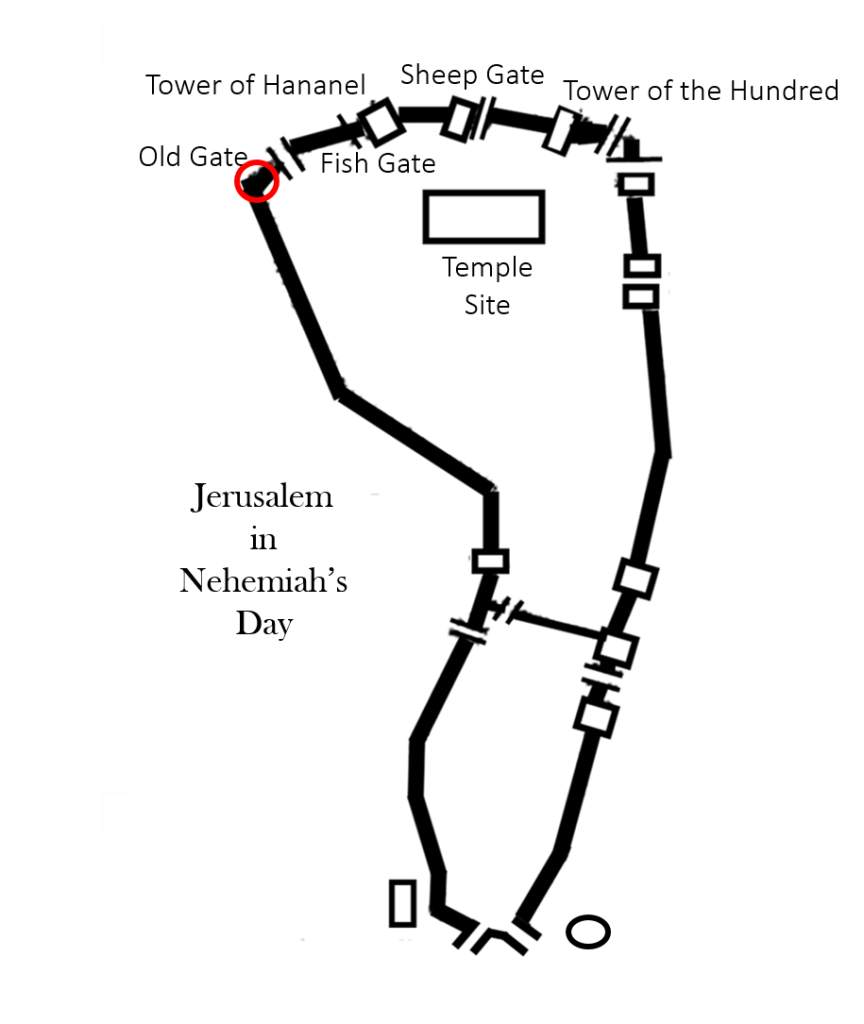
Today in the Bible, we’re continuing our look at the men and women who contributed their time and labor to the rebuilding of the walls and gates of Jerusalem. The Bible tells us that it took 52 days to complete the job and we’re in the midst of those days. Let’s read the text for today.
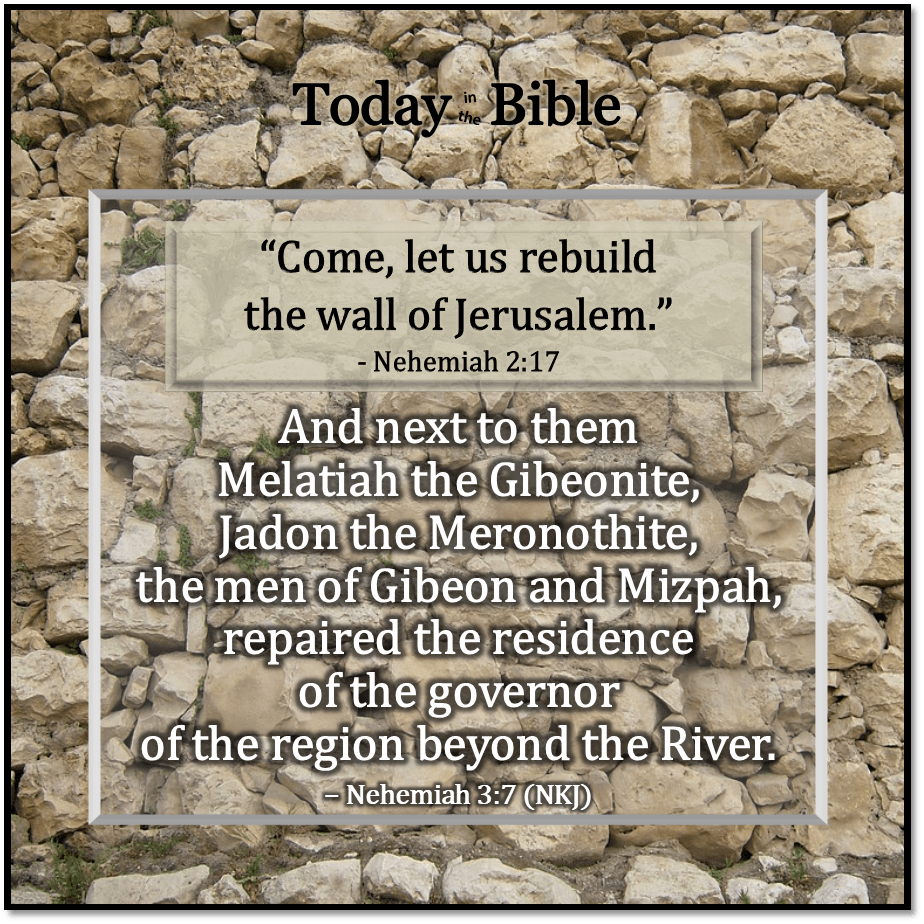
And next to them Melatiah the Gibeonite, Jadon the Meronothite, the men of Gibeon and Mizpah, repaired the residence of the governor of the region beyond the River. – Nehemiah 3:7 (NKJ)
מְלַטְיָה
Melatyah = Melatiah
The name “Melatiah” is unique to this verse in Nehemiah; it is found nowhere else in the Bible. The first part of the name comes from the verb “malat” (מלט) meaning “to be delivered, saved, or escape.” This root is used in different ways in the Bible, but mainly to express deliverance at the hand of the LORD from the threat of death, from an enemy, or from sickness. The last part of this name is “Yah,” a truncated form of God’s Holy Name.
| Verb Root | Transliteration | Meaning |
| מלט | malat | to be delivered, saved, or escape |
| Prefix/Suffix | Transliteration | Comments |
| י | y, i | sometimes, just a “yod” (י), the first letter of God’s Holy Name, may serve as an indicator of its presence |
| ה | h | “yah” (יה) this combination of the 1st and 2nd letters of “The Name” is often translated as “iah” & is a very common name ending |
| ו | v, w, u, o | “yahu” (יהו) – the first three letters – is not quite as common but still found – as in “Elijah” – “Eliyahu” |
| ה | h | adding all four letters of “The Name” is not done |
These four letters represent God’s Holy Name. Many proper nouns use a combination of two or three of these letters as a prefix or a suffix to indicate an attachment to the Name of the LORD.
The name “Melatiah” means “The LORD Has Delivered.”
Melatiah was a Gibeonite.
הַגִּבְעֹנִי
HaGiv’oni = The Gibeonite
A Gibeonite is someone from Gibeon. The name Gibeon comes from “gibeah” (גִּבעׇה) which means “hill.” One fun word that comes from the same root is “migba’ot” which means “turban.” I guess if you’re wearing a turban, you have a “hill” on your head. 🙂
Back in the days of Joshua, the Gibeonites pretended to be wanderers…strangers in the Land. They dressed in worn out clothes and really put on a show. The Israelites were fooled by this and made a covenant with them. Once they were found out, the Gibeonites were turned into woodcutters and water carriers and given to the Levites to help them serve the LORD. (Joshua 9)
In Nehemiah 7:22, 95 men from Gibeon were recorded as being among those who returned from the Babylonian captivity. According to our verse today, more than one of them accompanied Melatiah to put their hand to the restoration of the governor’s home.
| Word | Transliteration | Meaning |
| גִּבעׇה | giv’ah | hill |
“Gibeon” means “Hill Town.”
יָדוֹן
Yadon = Jadon
The name Jadon is also unique to this verse in Nehemiah. It is not found any other place in the Bible. Jadon is a combination of the prefix “yod” (י), which, when prefixed to a verb-root means “he” – and – the verb-root “din” (דִּין), meaning “to judge.”
| Prefix | Transliteration | Function |
| י | y | when prefixed to a verb stem, it indicates the third person (generally masculine singular), future tense — “he will ___”; however, the number and gender can differ depending upon the suffix |
| Verb Root | Transliteration | Meaning |
| דִּין | din | to judge, contend, or plead |
Jadon means “He Will Judge.” (The name “Daniel” also comes from the root “din” and means “Judgment of God.”)
הַמֵּרֹנֹתִי
HaMeronoti = The Meronothite
A Meronothite is an inhabitant of a place called Meronoth. Though it’s tempting to try to place Meronoth near Gibeon and Mizpah on the map, its location is unknown. This word is not given a definition by most Bible dictionaries. The IBSE Bible Dictionary gives it a meaning of “fertility” but offers no explanation. In the days of King David, Jehdeiah is also identified as a Meronothite. He is listed as a caretaker of the king’s donkeys (1 Chronicles 27:30).
The meaning of the name “Meronothite” remains unknown.
מִצְפָּה
Mitzpah = Mizpah
Mizpah is a combination of the prefix “mem” (מ) and the verb root “tzapah” (צפה), meaning “to look out or about, to watch.” As its name suggests, this biblical town is found upon a high hill.
| Prefix | Transliteration | Function |
| מ | m | inseparable preposition meaning “from” – or – |
| מ | m | denotes an agent or instrument of the action of a verb – or – |
| מ | m | denotes a special place |
| Verb Root | Transliteration | Meaning |
| צפה | tzapah | to look out or about, to watch |
“Mizpah“ means “Watchtower” – a special place for watching.
To read all of our posts on Nehemiah, click on the image above.

© 2026 Today in the Bible

 Today in the Bible
You must be logged in to post a comment.