
Av 25, 5785; from sunset August 18, 2025, to sunset August 19, 2025
(The twenty-fifth day of the fifth month)
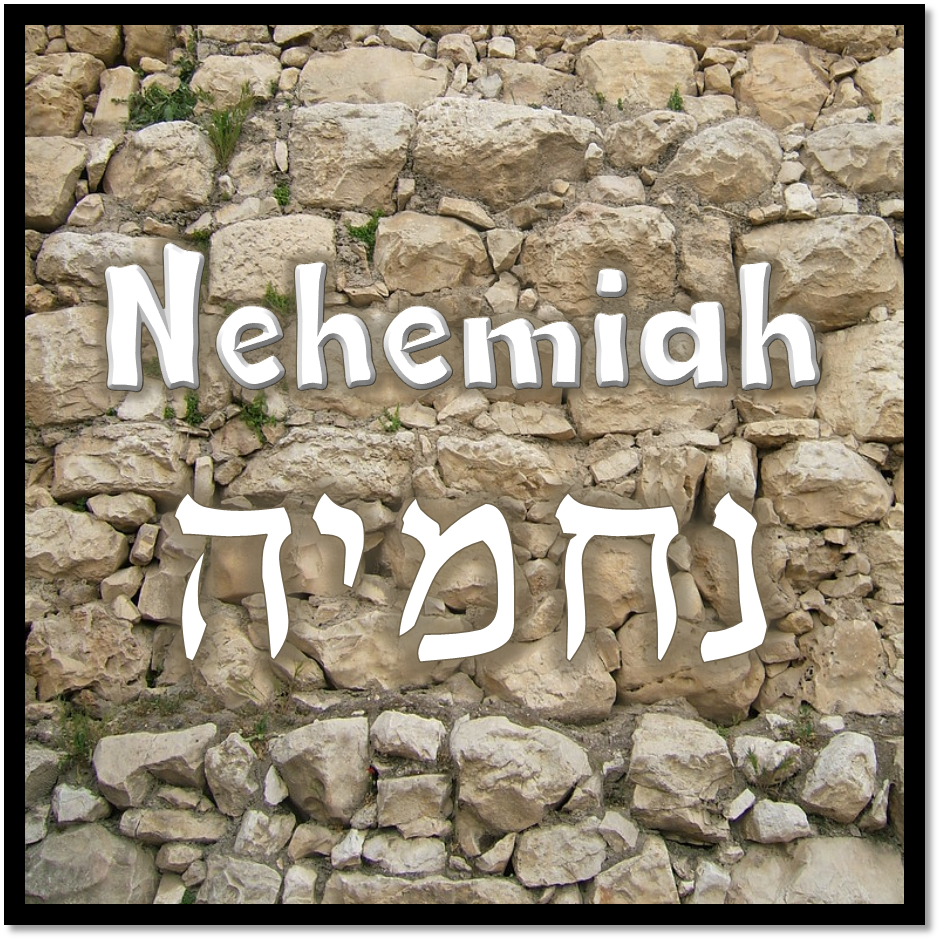
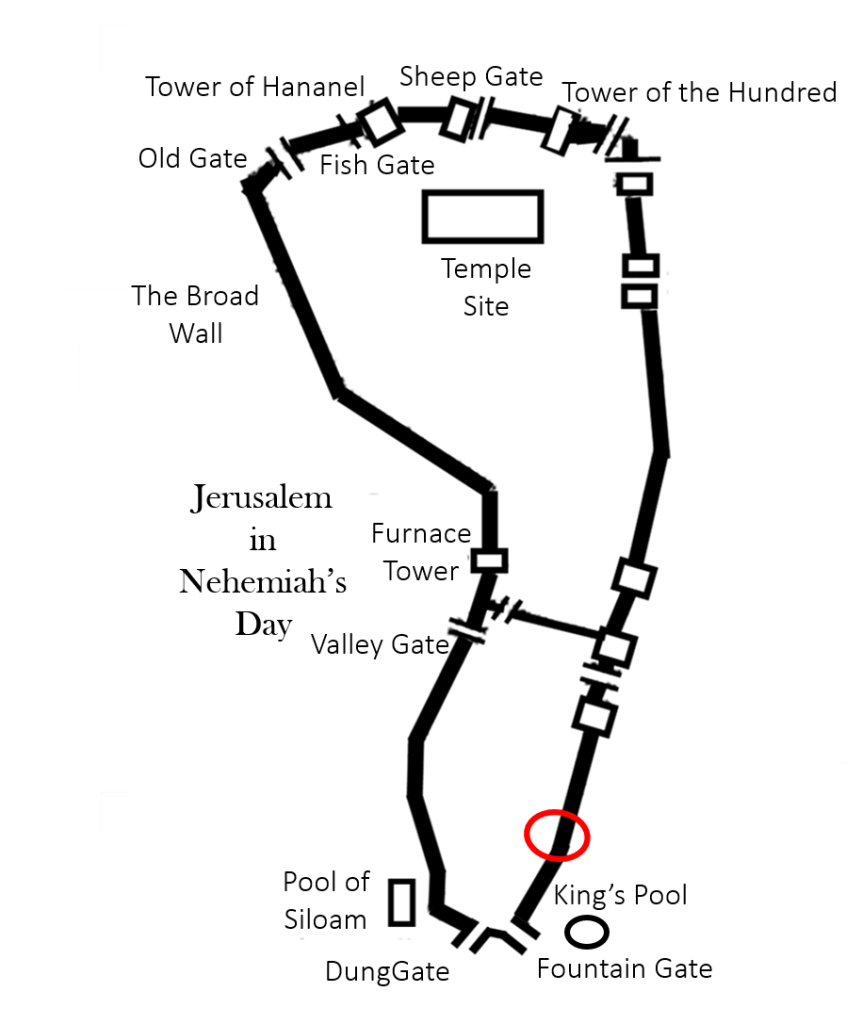
This is an image of a portion of the wall rebuilt by Nehemiah and company.
Today in the Bible, we’re still in the midst of the 52 days that the Bible says the children of Israel worked to restore the walls and gates of Jerusalem. Yesterday we met Hashabiah who was ruler of half the district of Keilah. Today we’ll meet the guy who ruled over the “other” half, Bavai.
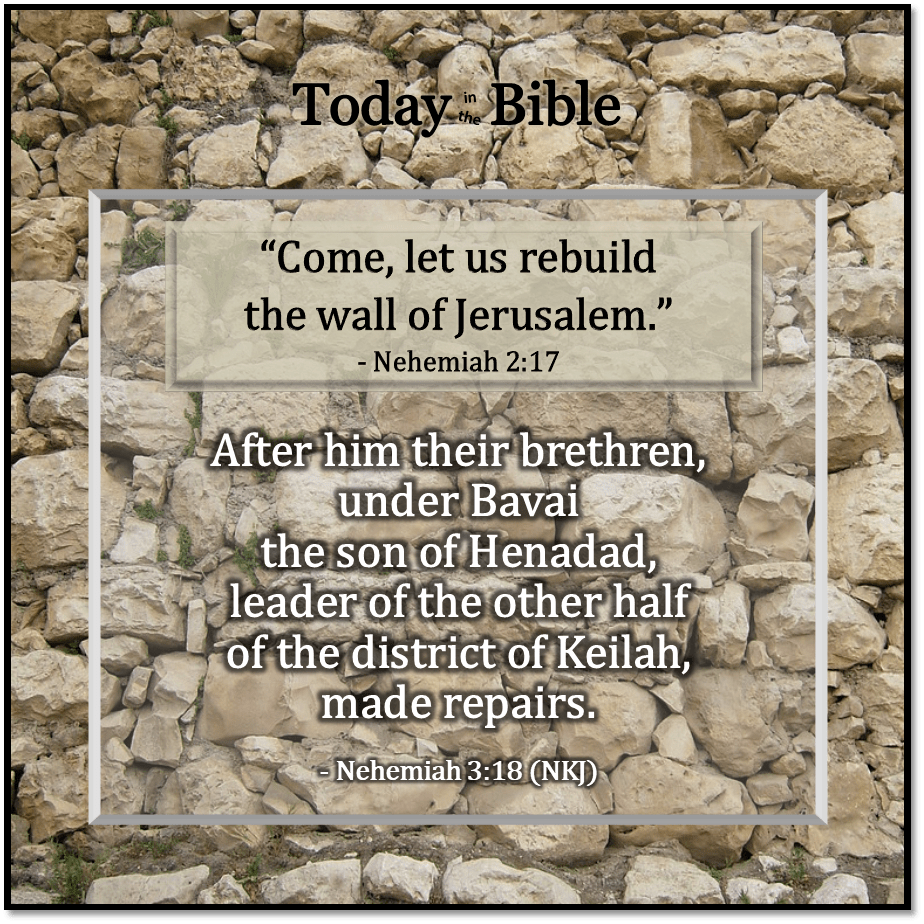
After him their brethren, under Bavai the son of Henadad, leader of the other half of the district of Keilah, made repairs. – Nehemiah 3:18 (NKJ)
בַּוַּי
Bavai
Some versions of the Bible translate this name as Binnui. Why? In Nehemiah 3:24 there is a man named Binnui who is the son of Henadad. There are some who believe that Bavai is actually Binnui. One man, son of Henadad. They feel that the text may be missing a letter. Believe it or not, there is only one letter difference in the Hebrew spelling of Bavai and Binnui. Binnui contains the letter נ (“nun” – pronounced like “noon”) where Bavai does not. The letter ו (“vav”) makes a “v” sound in Bavai but makes a “u” sound in Binnui. The chart below shows how each name is spelled in both Hebrew and English. Each Hebrew letter is split out and transliterated into the Latin letters that we use in English.
| Name | Letter | Letter | Letter | Letter |
| בַּוַּי | י | ו | ב | |
| Bavai | y/i | v/w, o, u | b/v | |
| בִּנּוּי | י | ו | נ | ב |
| Binnui | y/i | v/w, o, u | n | b/v |
Just a reminder, Hebrew is read from right to left and, in the original text, there are no vowel points…none of those little dots and dashes that we use to aid us in pronunciation today. About a thousand years ago, a group of Jews known as the “Masoretes” invented these “nikkudim” to preserve the oral tradition of how to properly pronounce the original Hebrew text. Masorete means “tradition keeper.” Looking at these letters without their nikkudim, we can see just how similar these names are. But, what if Bavai and Binnui are brothers? Twins maybe? Henadad could easily have had more than one son. Well, if we skip ahead to verse 24, we see “another” reason why some scholars believe that Bavai and Binnui could be one and the same person.
After him Binnui the son of Henadad repaired another section, from the house of Azariah to the buttress, even as far as the corner. – Nehemiah 3:24 (NKJ)
Binnui, the son of Henadad, is said to have repaired “another” section. Binnui is not mentioned anywhere else in the list of individuals who worked on the wall. Another clue? The name Bavai does not show up anywhere else in the entire Bible, whereas Binnui is listed seven times. The truth is, we just really don’t know for sure. Since the actual biblical text records “Bavai” as the worker in our verse, let’s look at the meaning of this name.
When the letter ב (beit) is prefixed to another word, it is known as an inseparable preposition. We’ve run into these inseparable prepositions before. An inseparable preposition means that the letter is actually attached to the word – it’s “inseparable” – it becomes a part of it. The verb-root associated with this name is אוה (“avah”). Avah is another one of those root words which has multiple meanings. Avah I means “to desire, long, lust, covet, wait longingly, wish, sigh, crave, want, be greedy, or prefer.” Avah II means “to sign, mark, or describe with a mark.” The last letter י (“yod”) has several possibilities, we’ve compiled all of these pieces of the name Bavai in the charts below.
| Prefix | Transliteration | Function |
| ב | b or v | inseparable preposition meaning “in, at, by, with, or among” |
| Verb Root | Transliteration | Meaning |
| אוה | avah I | to desire, long, lust, covet, wait longingly, wish, sigh, crave, want, be greedy, or prefer |
| אוה | avah II | to sign, mark, or describe with a mark |
Depending upon the associated vowel point, placing a “yod” (י) at the end of a word can indicate the following (the letter א has been used as a stand-in for any letter):
| Suffix | Transliteration | Function |
| אִי | i | changes singular noun to first-person singular possessive = “my” |
| אַי | ai | changes plural noun to first-person singular possessive = “my” |
| אֵי | ei | indicates masculine-plural noun construct = “of” |
| אִי | i | in verbs can indicate the imperfect form “you will do (the action of the verb)” or the imperative form “do (the action of the verb)!“ |
| י | y or i | a single yod at the end of a word may be an indicator of the presence of God’s Holy Name. |
“Bavai” means, per Jones’ Dictionary, “With the Desire of the LORD” or “Wisher,” according to the NOBSE.
Bavai was the son of Henadad.
חֵנָדָד
Chenadad = Henadad
Henadad is understood by scholars to be comprised of two Hebrew words. The first portion is from the verb-root “chanan” (חנן), meaning “to be gracious,” we’ve already run into this root a couple times. The second portion has a few possibilities. It may be from the root “hadad” (הדד) which is not utilized in Hebrew, however, it is present in its sister languages where it means “to thunder, make a loud noise.” There is an ancient semitic storm god named Hadad. Another possibility is “chadad” (חדד), meaning “to be sharp, keen.” And, one last possibility is that this name stems from the root “yadad” (ידד) which means “to be greatly loved.” Words related to this root are largely used to describe God’s great love for Israel, but are not isolated to that. There is a beautiful song called Yedid Nefesh which means “beloved of the soul.” It is sung by many who want to draw near to our Heavenly Father in an approach to prayer time. We’ve placed the first verse at the bottom of this article.
The name Henadad is found four times in the Bible, all in Ezra and Nehemiah. They probably all refer to our Henadad, but we can’t say for sure.
| Root Word | Transliteration | Meaning |
| חנן | chanan | to be gracious, to show favor |
| הדד | hadad | to thunder, make a loud noise |
| חדד | chadad | to be sharp, keen |
| ידד | yadad | to be greatly loved |
The majority of Bible dictionaries list the meaning of “Henadad“ as “Favor of Hadad,” however, Abarim Publications sees “Favor of the Beloved” as a possibility. Today in the Bible prefers that idea over the possible association with an ancient semitic storm god.
קְעִילָה
Ke’ilah = Keilah
Keilah means “fortress.” We just looked at the history of this city yesterday; if you’d like to review, please see our article for Av 24.
Yedid Nefesh
יְדִיד נֶפֶשׁ אַב הָרַחְמָן
Yedid nefesh Av Harachaman
Beloved of the soul, the Father of Compassion
מְשׁוֹךְ עַבְדְּךָ אֶל רְצוֹנֶךָ
meshoch Avdecha el Retzonecha
draw Your servant to Your Will
יָרוּץ עַבְדְּךָ כְּמוֹ אַיָּל
yarutz Avdecha kemo ayyal
Your servant will hurry like a hart
יִשְׁתַּחֲוֶה מוּל הֲדָרֶךָ
yishtachaveh mul Hadarecha
to bow before Your majesty
כִּי יֶעֱרַב לוֹ יְדִידוֹתֶךָ
ki ye’erav lo Yedidotecha
to him Your friendship will be sweeter
מִנוֹפֶת צוּף וְכָל טָעַם
minofet tzuf vekhol ta’am
than the dripping of the honeycomb and any taste
To read all of our posts on Nehemiah, click on the image above.

© 2026 Today in the Bible

 Today in the Bible
You must be logged in to post a comment.