

Elul 3, 5785; from sunset August 26, 2025, to sunset August 27, 2025
(The third day of the sixth month)
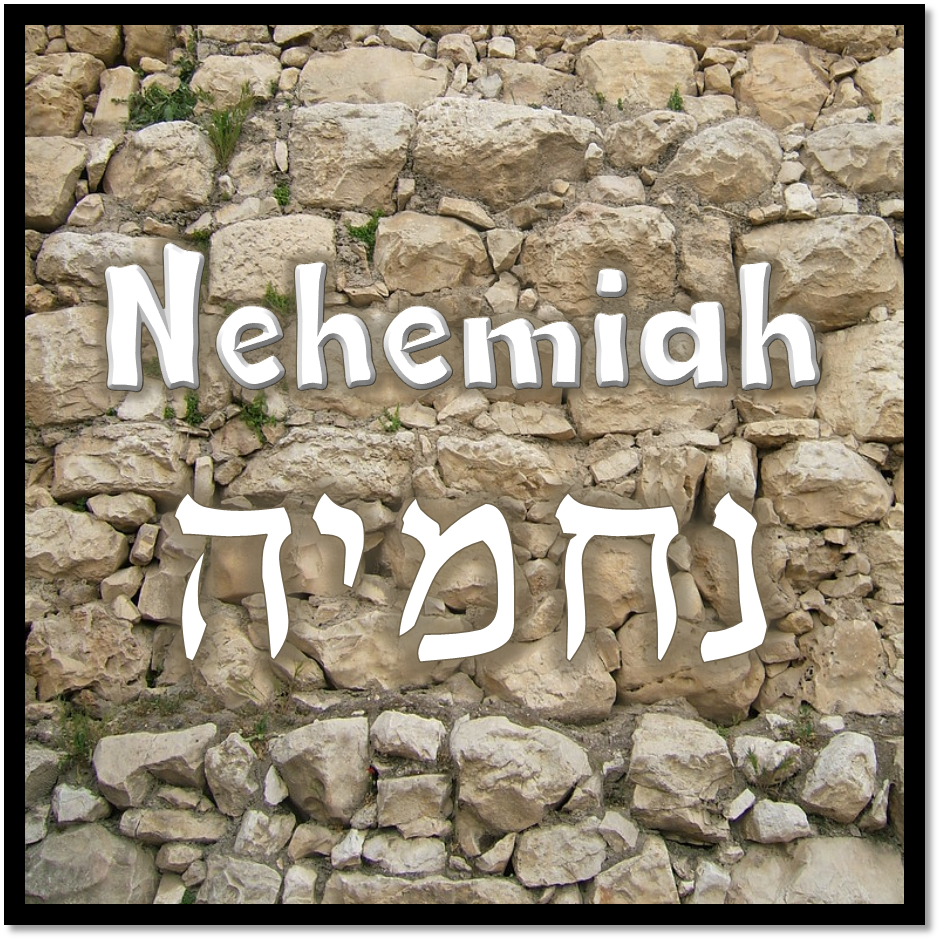
This is an image of a portion of the wall rebuilt by Nehemiah and company.
We mentioned Binnui a few days ago when we studied Bavai, son of Henadad. We wondered if perhaps they were one and the same man or, just maybe, they were brothers. Today, the text reads that he repaired “another” section. In Hebrew, the word is actually “sheni” which means “second.” This seems to support that Binnui and Bavai may indeed be the same person.
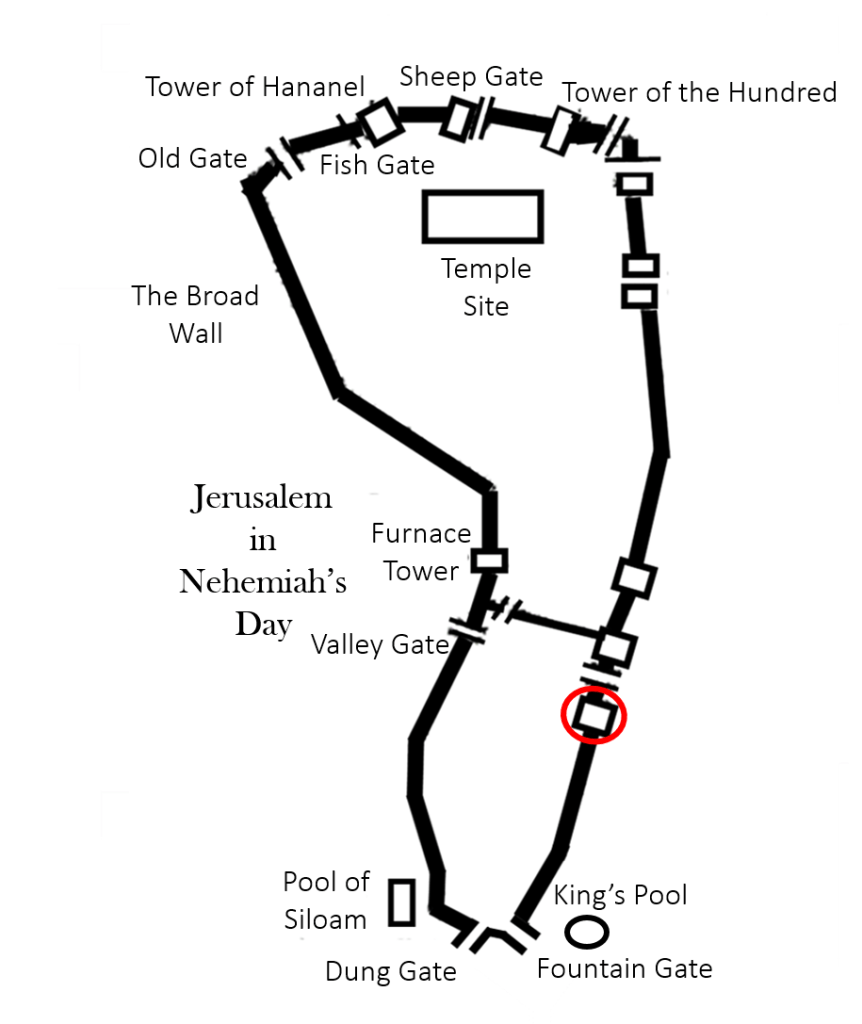
After him Binnui the son of Henadad repaired another section, from the house of Azariah to the buttress, even as far as the corner. – Nehemiah 3:24 (NKJ)
בִּנּוּי
Binnui
Let’s make a quick review of our comparison of the names Binnui and Bavai. Believe it or not, there is only one letter difference in the Hebrew spelling of Bavai and Binnui. Binnui contains the letter נ (“nun” – pronounced like “noon”) where Bavai does not. The letter ו (“vav”) makes a “v” sound in Bavai but makes a “u” sound in Binnui. The chart below shows how each name is spelled in both Hebrew and English. Each Hebrew letter is split out and transliterated into the Latin letters that we use in English.
| Name | Letter | Letter | Letter | Letter |
| בִּנּוּי | י | ו | נ | נ |
| Binnui | y/i | v/w, o, u | n | b/v |
| בַּוַּי | י | ו | ב | |
| Bavai | y/i | v/w, o, u | b/v |
Binnui comes from the verb-root “banah” meaning “to build.”
“Binnui” means, “Built.”
Binnui was the son of Henadad.
חֵנָדָד
Chenadad = Henadad
Henadad is understood by scholars to be comprised of two Hebrew words. The first portion is from the verb-root “chanan” (חנן), meaning “to be gracious,” we’ve already run into this root a couple times. The second portion has a few possibilities. It may be from the root “hadad” (הדד) which is not utilized in Hebrew; however, it is present in its sister languages where it means “to thunder, make a loud noise.” There is an ancient semitic storm god named Hadad. Another possibility is “chadad” (חדד), meaning “to be sharp, keen.” And one last possibility is that this name stems from the root “yadad” (ידד) which means “to be greatly loved.” Words related to this root are largely used to describe God’s great love for Israel but are not isolated to that.
The name Henadad is found four times in the Bible, all in Ezra and Nehemiah. They probably all refer to our Henadad, but we can’t say for sure.
| Root Word | Transliteration | Meaning |
| חנן | chanan | to be gracious, to show favor |
| הדד | hadad | to thunder, make a loud noise |
| חדד | chadad | to be sharp, keen |
| ידד | yadad | to be greatly loved |
The majority of Bible dictionaries list the meaning of “Henadad“ as “Favor of Hadad,” however, Abarim Publications sees “Favor of the Beloved” as a possibility. Today in the Bible prefers that idea over the possible association with an ancient semitic storm god.
Just a reminder that it’s tradition to read Psalm 27 daily through the Feast of Tabernacles. You can find it by clicking on the link.
To read all of our posts on Nehemiah, click on the image above.

© 2026 Today in the Bible

 Today in the Bible
You must be logged in to post a comment.