Elul 15, 5785; from sunset September 7, 2025, to sunset September 8, 2025
(The fifteenth day of the sixth month)
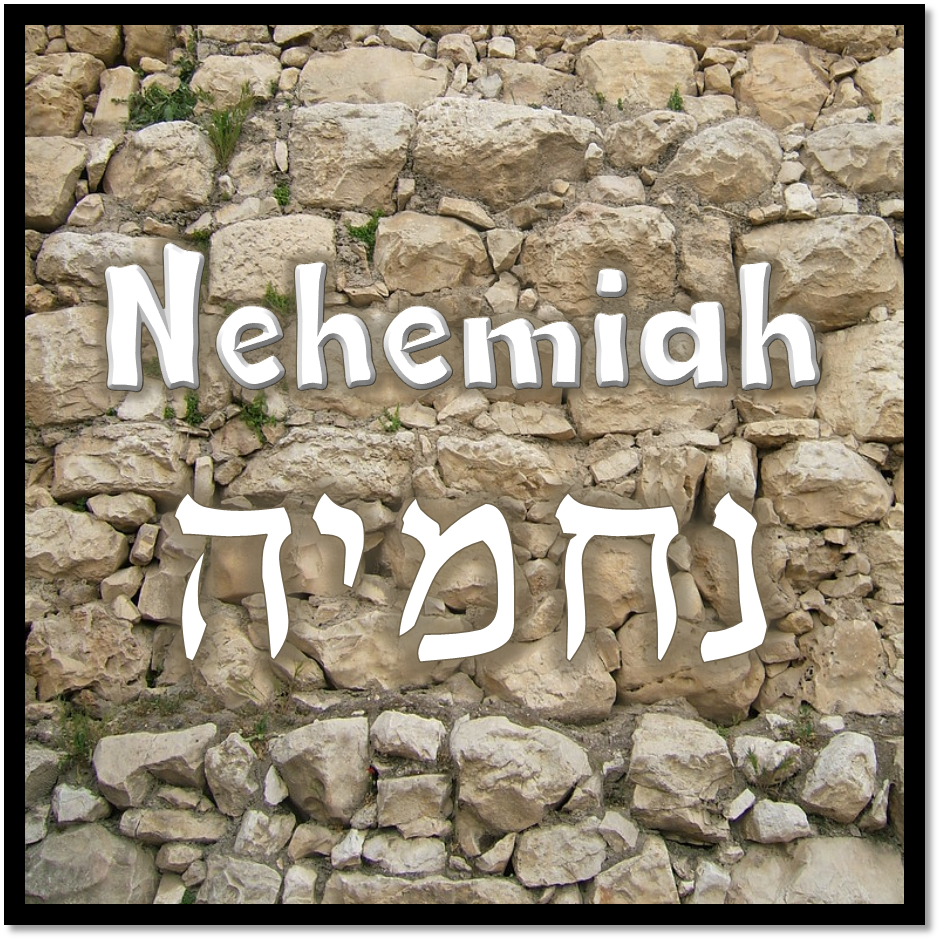
This is an image of a portion of the wall rebuilt by Nehemiah and company.
Today in the Bible, we’re meeting up with Meshullam the son of Berechiah. If these names sound familiar to you, congratulations, you’ve been paying attention! We have run into Meshullam before. Let’s review what we’ve learned about this man.
After him Meshullam the son of Berechiah made repairs in front of his dwelling – Nehemiah 3:30b (KJV)
מְשֻׁלָּם
Meshullam
This is the third time we’ve run into the name Meshullam in the third chapter of Nehemiah alone. The name is found a total of 25 times in the Bible, 13 times in the book of Nehemiah. At least three of these mentions are listed as the son of Berechiah. We first met him in verse four laboring alongside Meremoth, today he is working on the area in front of his own home. He is also mentioned in Nehemiah 6:18 as his daughter married Jehohanan, the son of Tobiah, the Ammonite. His name comes from the verb-root “shalem” (שלם) which means “to be complete, whole, or sound.” The first part of his name “me” (מְ) seems to denote an agent or instrument of the verb. We’ve pulled apart the name Meshullam below:
| Prefix | Transliteration | Function |
| מ | m | inseparable preposition meaning “from” – or – |
| מ | m | denotes an agent or instrument of the action of a verb – or – |
| מ | m | denotes a special place |
| Verb Root | Transliteration | Meaning |
| שלם | shalem | to be complete, whole, or sound; there is also an extended meaning of “recompense” or “retribution.” |
The name “Meshullam” means something like “Peacemaker” or an “Instrument of Peace.” The NOBSE Study Bible Name List prefers to connect Meshullam to “Recompense” and Jones’ Dictionary of Old Testament Proper Names defines his name as “Retribution.”
Meshullam was the son of Berechiah.
בֶּרֶכְיָה
Berechyah = Berechiah
Berechiah is found a total of eleven times in the Bible. 1 Chronicles lists him as one of the five sons of Zerubbabel (3:20); we find a man going by this name from Netophath, a small town thought to be near Bethlehem of Judea (9:16); Berechiah was one of the singers appointed by the Levites in the days of King David (15:17); and another Berechiah is listed as a doorkeeper for the ark (15:23). In the book of Zechariah, we find that the prophet’s father was a man named Berechiah. The remaining mentions are found in 2 Chronicles 28:12 and Matthew 23:35, which is also referring to the father of the prophet Zechariah who was murdered between the temple and the altar.
Berechiah is also a two-part name. Berechiah begins with the verb-root “barak” (ברך) meaning “to kneel, bless, praise, or salute.”
The second part of Berechiah is a truncated form of God’s Holy Name. We probably know this portion of his name by heart.
| Verb Root | Transliteration | Meaning |
| ברך | barak | to kneel, bless, praise, or salute |
| Prefix/Suffix | Transliteration | Comments |
| י | y, i | sometimes, just a “yod” (י), the first letter of God’s Holy Name, may serve as an indicator of its presence |
| ה | h | “yah” (יה) this combination of the 1st and 2nd letters of “The Name” is often translated as “iah” & is a very common name ending |
| ו | v, w, u, o | “yahu” (יהו) – the first three letters – is not quite as common but still found – as in “Elijah” – “Eliyahu” |
| ה | h | adding all four letters of “The Name” is not done |
These four letters represent God’s Holy Name. Many proper nouns use a combination of two or three of these letters as a prefix or a suffix to indicate an attachment to the Name of the LORD.
The name “Berechiah” means something like, “Blessed of the LORD.”
Just a reminder that it’s tradition to read Psalm 27 daily through the Feast of Tabernacles. You can find it by clicking on the link.
To read all of our posts on Nehemiah, click on the image above.

© 2026 Today in the Bible

 Today in the Bible
You must be logged in to post a comment.