
Tishrei 10, 5786; from sunset October 1, 2025, to sunset October 2, 2025
(The tenth day of the seventh month)
We’re publishing this article on the 9th of Tishrei; with so much to study for Yom Kippur — the 10th of Tishrei — we want to take our time and learn all of the facets of this Appointed Time.

Today in the Bible, we’re just one day away from the beginning of Yom Kippur. The book of Jonah is read in the synagogue each year on Yom Kippur. In our article for today, we’ll explore some of the connections between Jonah and what we’ve been learning about the Day of Atonement over the past few days.
Dealing with Sin
The main point of Yom Kippur is how God deals with our sin. In the story of Jonah, we can see this in many different ways.
The Sin of the Northern Kingdom of Israel
2 Kings 14:25 tells us that Jonah was being used by God as a prophet to the northern kingdom of Israel during the reign of Jeroboam II. One hundred-fifty years earlier, Jeroboam II’s predecessor, Jeroboam I was the one who caused the beginning of the divided kingdom. He rebelled against Solomon’s son, Rehoboam, and founded his own kingdom, taking ten of the tribes with him. He created two golden calves and encouraged the people to worship them at Dan and Bethel instead of making the pilgrimage to Jerusalem. After 150 years, nothing had changed. This is where we find Jonah.
We know that the northern kingdom did not repent, and they were eventually carried off into exile. King Tiglath-Pileser of Assyria and his successors Shalmaneser, Sargon, and Sennacherib, all took their turn raiding both Israel and Judah, confiscating booty, and carrying off the people. 2 Kings 19:36 and Isaiah 37:37 tell us that Sennacherib reigned from Nineveh. Nineveh was the largest city in the world in this era and its ruins still occupy an area of about 60 miles in circumference. It is located on the east bank of the Tigris River near the modern-day city of Mosul, Iraq.
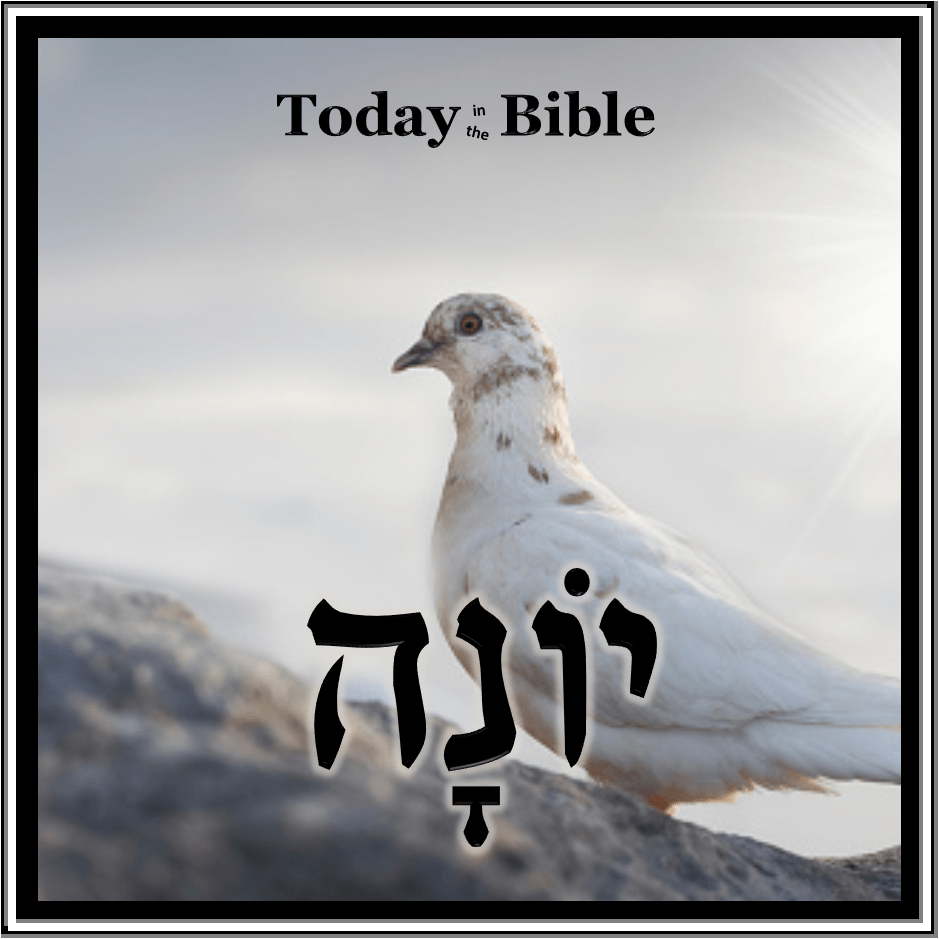
In Hebrew, Jonah’s name is pronounced like “Yonah.” Yonah means “dove.” When God commanded Jonah to go to Nineveh, we can now see the picture painted by the meaning of his name. God sent a dove to Nineveh. The dove has become a symbol of the Holy Spirit and of peace.
Scholars place Jonah’s journey to Nineveh around 760 BCE and the fall of the northern kingdom around 720 BCE. By sending Jonah to Nineveh, which caused the people of that city to repent, God, in essence, gave the people of the northern kingdom another 40 years to show penitence.
The Sin of Jonah
It turns out that our little “Dove” did not want to fly to Nineveh. Jonah disobeyed the LORD’s command and went in the completely opposite direction. He hopped on a boat headed for Tarshish. The LORD stirred up the waters with a big storm. In the Hebrew, the text says that the LORD cast a great “ruach” into the sea.” The word “ruach” in this verse is usually translated as “wind;” but in Hebrew, “ruach” can be used to describe wind, breath, or spirit. The word for “great” is “gadol.”
While Jonah lay sleeping in the boat, those sailing with him became very afraid and actually turned from their own gods to the LORD, God of Israel, and prayed to Him. Jonah was tossed into the sea, which immediately eased the tempest. While the sea was calmed, Jonah sank and was swallowed up by a “big fish” – in Hebrew the Bible says the fish was “gadol” — “great” (just like the “ruach”). While inside of the “great fish” – Jonah, himself, finally prayed to the LORD — fervently — for his own salvation. He was answered by being vomited out of the fish onto the dry ground. So Jonah repented, he turned around and went to Nineveh.
The Sin of Nineveh
Now the word of the LORD came to Jonah the son of Amittai, saying, “Arise, go to Nineveh, that great city, and cry out against it; for their wickedness has come up before Me.” – Jonah 1:1-2 (NKJ)
Jonah’s story begins by telling us that the people of Nineveh were wicked; so wicked that it had come up before the LORD. We already learned that the city of Nineveh was large. In fact, it was called “great” which equals another “gadol” in Hebrew — “gadol” like the fish! Perhaps we can compare the wickedness of the people of Nineveh to the great sinfulness of the world at the time of Noah. If you remember, the Bible tells us that the people were always, only, continually having evil thoughts. We get the same sort of feeling about Nineveh — their wickedness was “gadol.”
So Jonah arose and went to Nineveh, according to the word of the LORD. Now Nineveh was an exceedingly great (“gadol”) city, a three-day journey in extent. And Jonah began to enter the city on the first day’s walk. Then he cried out and said, “Yet forty days, and Nineveh shall be overthrown!” – Jonah 3:1-4 (NKJ)
Now, the funny thing about the name “Nineveh” is the picture painted when written in cuneiform. Wikipedia states that in cuneiform, which is a type of a picture-language (technically a “logo syllabic” language), the image for Nineveh is a fish within a house. Nineveh was the “House of Fish.” In Hebrew’s sister languages, “nuna” and “ninâ” (the root of Nineveh) mean “fish.” With its location on the Tigris River, Nineveh was known for its abundance of fish. With Nineveh being called a “gadol” city, perhaps we could say that Nineveh, too, was a “gadol fish.” It seems as if the “great fish” in the sea was not the only “great fish” that the LORD had prepared for Jonah!
In fact, we could say that the “great tempest” causing chaos in the sea was symbolic of the “great tempest” of wickedness causing chaos in the sea of people of Nineveh. The “great fish” in the sea was symbolic of the “great city of fish, Nineveh.” Jonah found himself in the middle of both of these “great fish.” When he was tossed into the chaotic sea, it was calmed. When he was “tossed” into the chaotic, wickedness of Nineveh, the people repented of their evil ways and Nineveh became “calm” as well. Jonah, the “Dove” of peace.
So the people of Nineveh believed God, proclaimed a fast, and put on sackcloth, from the greatest to the least of them. Then word came to the king of Nineveh; and he arose from his throne and laid aside his robe, covered himself with sackcloth and sat in ashes. And he caused it to be proclaimed and published throughout Nineveh by the decree of the king and his nobles, saying, “Let neither man nor beast, herd nor flock, taste anything; do not let them eat, or drink water.
But let man and beast be covered with sackcloth, and cry mightily to God; yes, let every one turn from his evil way and from the violence that is in his hands. Who can tell if God will turn and relent, and turn away from His fierce anger, so that we may not perish?” Then God saw their works, that they turned from their evil way; and God relented from the disaster that He had said He would bring upon them, and He did not do it. – Jonah 3:5-10 (NKJ)
When we studied God’s commandments for the Yom Kippur ceremony, we read that He commanded us to “afflict our souls.” This is understood to mean fasting from food, water, and comforts. We should confess our sins and pray for forgiveness. The people of Nineveh believed God and made an effort to admit their sin and repent of their evil ways. They fasted from food and drink and comfort. (Even the cattle were to “afflict their souls!”) How Yom-Kippur-like is that?
But it displeased Jonah exceedingly, and he became angry (“charah”). So he prayed to the LORD, and said, “Ah, LORD, was not this what I said when I was still in my country? Therefore I fled previously to Tarshish; for I know that You are a gracious and merciful God, slow to anger and abundant in lovingkindness, One who relents from doing harm. Therefore now, O LORD, please take my life from me, for it is better for me to die than to live!” – Jonah 4:1-3 (NKJ)
It seems like Jonah was angry that the people of Nineveh repented. In fact, the text indicates that he “burned” (“charah”) with anger. We aren’t privy to the conversation that Jonah had with the LORD while he was still in Israel, but it seems like he understood full well that, if God was sending him to Nineveh with a message of repentance, those people would repent — while his own people refused to do so. It’s easy to understand his anger.
From his choice of words in the first few verses of chapter four, Jonah seems to be calling to mind the promise of atonement that God gave to Moses after the sin of the golden calf. In fact, the word used to describe Jonah’s anger in the verse above is the same word used to describe the LORD’s anger with Israel below.
And the LORD said to Moses, “I have seen this people, and indeed it is a stiff-necked people! Now therefore, let Me alone, that My wrath may burn hot (“charah”) against them and I may consume them. And I will make of you a great nation.” Then Moses pleaded with the LORD his God, and said: “LORD, why does Your wrath burn hot (“charah”) against Your people whom You have brought out of the land of Egypt with great power and with a mighty hand? – Exodus 32:9-11 (NKJ)
And, just as He did for the people of Nineveh, the LORD relented from the harm which He said He would do.
So the LORD relented from the harm which He said He would do to His people. -Exodus 32:14 (NKJ)
But when Moses came down and saw the people sinning, he too “burned with anger” (Exodus 32:19) — the same word “charah” — just like the LORD — just like Jonah. Moses broke the tablets there at the foot of the mountain.
Now it came to pass on the next day that Moses said to the people, “You have committed a great sin. So now I will go up to the LORD; perhaps I can make atonement for your sin.” Then Moses returned to the LORD and said, “Oh, these people have committed a great sin, and have made for themselves a god of gold! Yet now, if You will forgive their sin– but if not, I pray, blot me out of Your book which You have written.”
And the LORD said to Moses, “Whoever has sinned against Me, I will blot him out of My book. Now therefore, go, lead the people to the place of which I have spoken to you. Behold, My Angel shall go before you. Nevertheless, in the day when I visit for punishment, I will visit punishment upon them for their sin.” So the LORD plagued the people because of what they did with the calf which Aaron made. – Exodus 32:30-35 (NKJ)
A few verses later, after Moses smoothed things over with God, he made the request, “Show me Your Glory.” God responded by telling Moses about His character. It’s like God said, “My Glory is Who I Am!” Let’s read the verses from Exodus and compare them to Jonah’s conversation with the LORD.
And the LORD passed before him and proclaimed, “The LORD, the LORD God, merciful and gracious, longsuffering, and abounding in goodness and truth, keeping mercy for thousands, forgiving iniquity and transgression and sin, by no means clearing the guilty, visiting the iniquity of the fathers upon the children and the children’s children to the third and the fourth generation.” – Exodus 34:6-7 (NKJ)
In our story, Jonah reminded God of the attributes which He had revealed to Moses. Then, just as Moses said, “blot me out of your book” (i.e., “I might as well die”) — Jonah said, “it is better for me to die than to live.” Perhaps Jonah’s anger wasn’t directed at the repentance of those living in Nineveh after all? Given the parallels to the sin of the golden calf, perhaps his anger was directed at the people of Israel — who were still sinning with a golden calf — actually, two of them! Perhaps Jonah was pleading with God for the atonement of his own peoples’ sins, just as Moses did. And, as we pondered earlier, perhaps by sending Jonah, a “dove,” to Nineveh, God was actually showing His mercy, graciousness, and long suffering to Israel. Perhaps the repentance of the people of Nineveh gave Israel another forty years to turn around before their punishment.
The people of the northern kingdom never did repent. You could say that they suffered the same fate as Jonah. They, too, were “swallowed up” by the “great fish” of Nineveh when they were carried off into exile by their kings.
The book of Jonah contains layer after layer of symbolism. We’ve just scratched the surface, but we’ve covered most of the references to the Day of Atonement. Now we can understand why it is read in the synagogue on Yom Kippur. And even though we don’t always see it at first glance, we worship a God who is…
…merciful and gracious, longsuffering, and abounding in goodness and truth, keeping mercy for thousands, forgiving iniquity and transgression and sin, by no means clearing the guilty…
He is always working behind the scenes and extending to us a chance to repent. That’s His desire. But He, by no means, clears the guilty. If we do not repent, we will eventually pay the price.
Just a reminder that it’s tradition to read Psalm 27 daily through the Feast of Tabernacles. You can find it by clicking on the link.
Did you know that our posts are categorized and tagged by content?
When you visit our home page at https://todayinthebible.com and select any post,
you can find the associated categories and tags just to the right of the title.
Simply click on any tag and you will be taken to all related posts.

© 2026 Today in the Bible

 Today in the Bible
You must be logged in to post a comment.