
Cheshvan 29, 5786; from sunset November 19, 2025, to sunset November 20, 2025
(The twenty-ninth day of the eighth month)
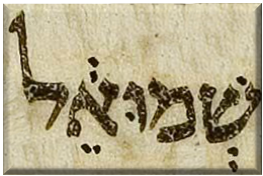
This is the name “Shemu’el” (שְׁמוּאֵל – Samuel) as seen in the Aleppo Codex, written over one thousand years ago.
Today was chosen at random to remember an event that occurred sometime during the seven months the Philistines had possession of the Ark of the Covenant. The Bible tells us that they returned the Ark during the wheat harvest. The wheat harvest occurs during the months of May and June in Israel; by backing up ~seven months we arrive somewhere around now.
Over the past month or so, we’ve studied the story of Eli and Samuel and the battle that took the lives of Hophni and Phinehas. We watched as Ichabod was born and the “Glory of the LORD departed” – i.e., the Ark of the Covenant was captured and taken away by the Philistines. We now pick up the story where we left off.
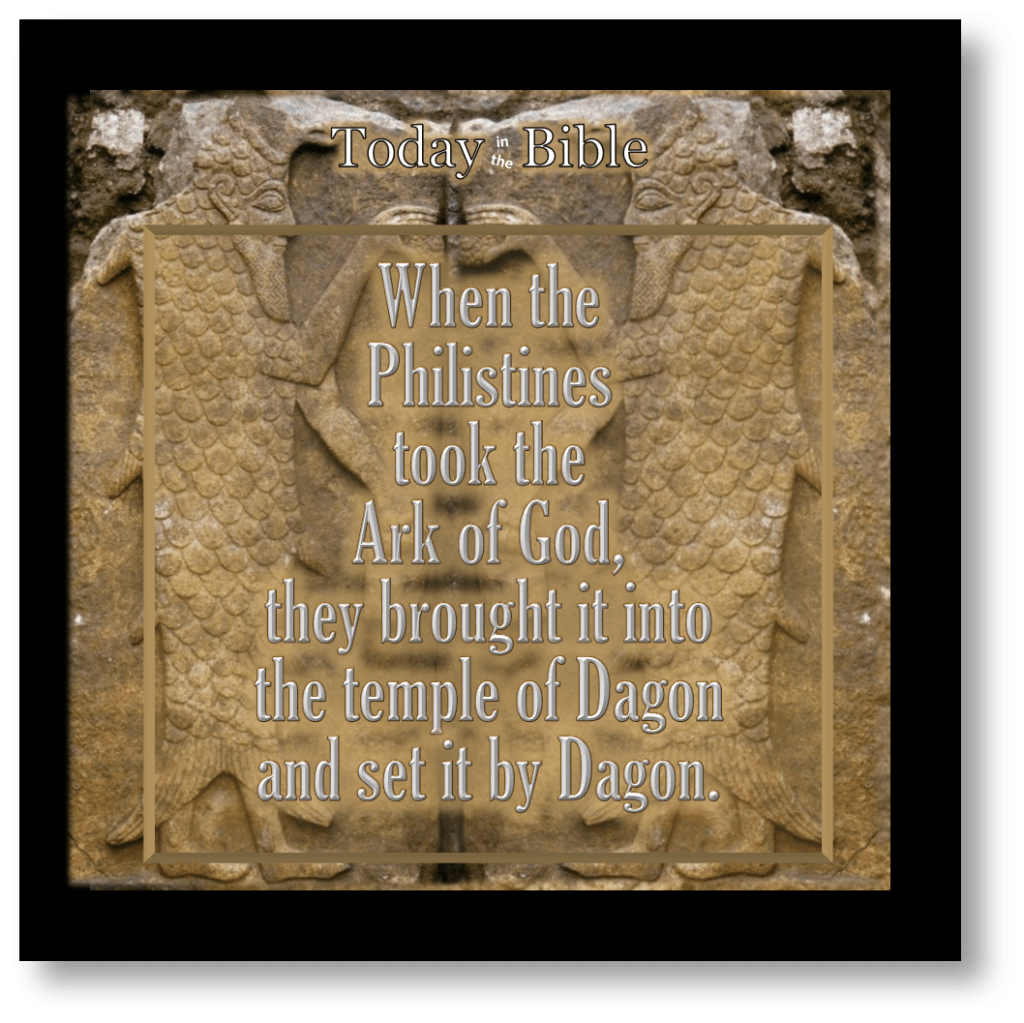
Then the Philistines took the ark of God and brought it from Ebenezer to Ashdod. When the Philistines took the ark of God, they brought it into the temple of Dagon and set it by Dagon.
And when the people of Ashdod arose early in the morning, there was Dagon, fallen on its face to the earth before the ark of the LORD. So they took Dagon and set it in its place again. And when they arose early the next morning, there was Dagon, fallen on its face to the ground before the ark of the LORD. The head of Dagon and both the palms of its hands were broken off on the threshold; only Dagon’s torso was left of it. Therefore neither the priests of Dagon nor any who come into Dagon’s house tread on the threshold of Dagon in Ashdod to this day. – 1 Samuel 5:1-5 (NKJ)
Some scholars see a connection between 1 Samuel 5:5…
Therefore neither the priests of Dagon nor any who come into Dagon’s house tread on the threshold of Dagon in Ashdod to this day.
…and Zephaniah 1:9:
In the same day I will punish all those who leap over the threshold, who fill their masters’ houses with violence and deceit.
The Ark was taken from the battlefield of Ebenezer to the city of Ashdod and placed in the temple of Dagon. Dagon was a major god of the Philistines. Many people want to connect this god with the Hebrew word “dag” (pronounced like “dog”), which means fish. This would make Dagon a fish-god. Dag comes from the verb root “dagah” meaning to multiply or increase.
However, there are other possibilities for the origin of the name Dagon. The Hebrew word “dagan” means grain. It is used throughout the Hebrew Scriptures and is often translated as corn – corn is the Old English word for cereal grains. This would make Dagon a god of the harvest.
Another possibility links the name to the Arabic “dagana” which means to be cloudy or rainy – making him a storm god. There is actually more support in ancient literature for this thought. An early Akkadian text says, “Dagan is Enlil” – Enlil is the Sumerian storm-god and there are several other similar mentions in ancient texts that relate Dagon to the storm-gods of other cultures. There may be a connection between storms and grains, which multiply or increase when there is an abundance of rain.
Whatever the meaning of his name, Dagon could not escape the heavy hand of the LORD!
We’ll catch up with the Philistines again next month and learn more about the consequences of capturing the Ark of the Covenant.
To read all of our posts on Samuel, the Philistines, and the Ark of the Covenant, click on the name Shemu’el above.

© 2026 Today in the Bible

 Today in the Bible
You must be logged in to post a comment.