Kislev 25, 5786; from sunset December 14, 2025, to sunset December 15, 2025
(The twenty-fifth day of the ninth month)
In the 145th year – the altar in the Holy Temple was defiled by the swine that was sacrificed upon it. Three years later, in the 148th year, after running the army of Antiochus out of Jerusalem, Judah Maccabee and his men finished cleansing the Temple. They built a new altar of unhewn stones. And today, three years to the day after the swine had begun to be sacrificed, the new altar for burnt offerings was dedicated to the LORD…and the festival of Hanukkah began. They celebrated for eight days and decided that this should be remembered every year. It’s a time for joy and gladness. And since the word Hanukkah (“Chanukkah”) means “dedication” (“chanach”) – we can use this time to rededicate ourselves, our temples, to the LORD. And like Jesus we can be the light of the world.
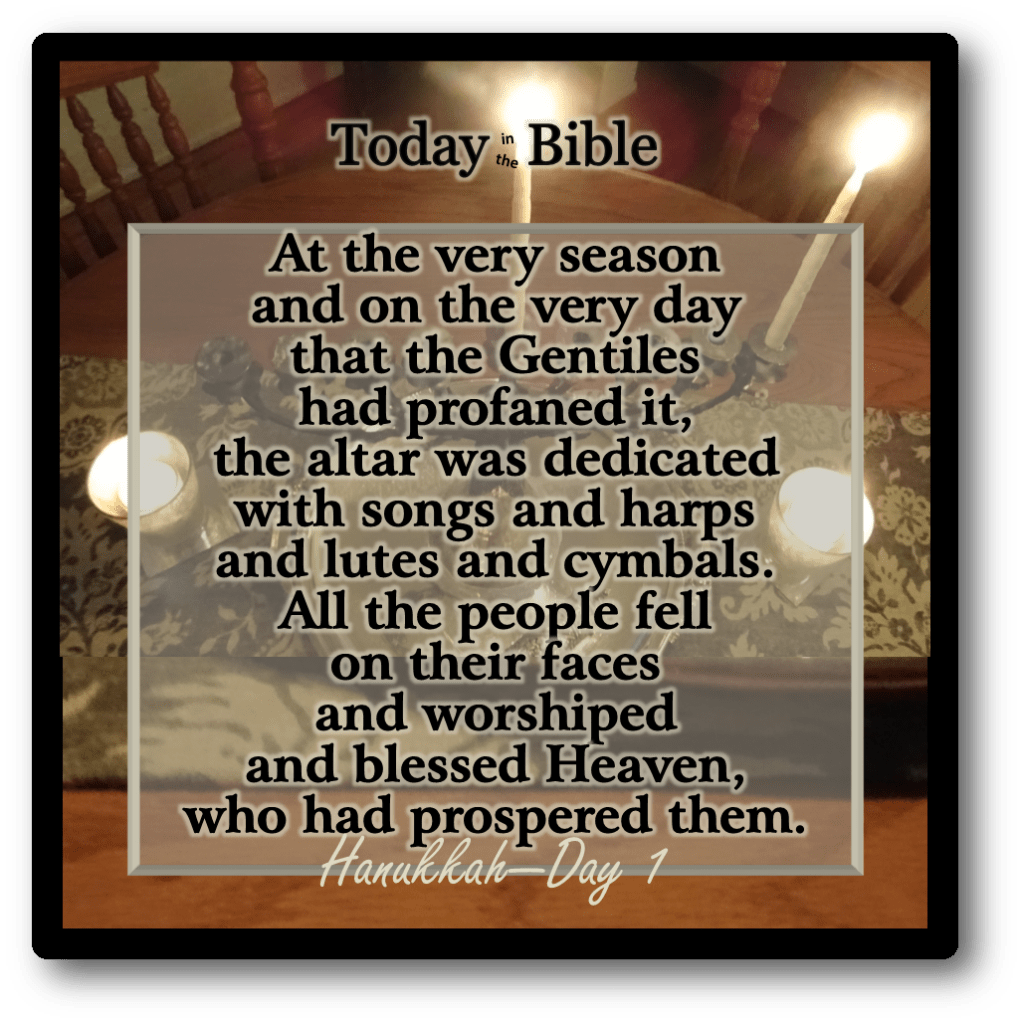
Early in the morning on the twenty-fifth day of the ninth month, which is the month of Chislev, in the one hundred and forty-eighth year, they rose and offered sacrifice, as the law directs, on the new altar of burnt offering which they had built. At the very season and on the very day that the Gentiles had profaned it, it was dedicated with songs and harps and lutes and cymbals. All the people fell on their faces and worshiped and blessed Heaven, who had prospered them.
So they celebrated the dedication of the altar for eight days, and offered burnt offerings with gladness; they offered a sacrifice of deliverance and praise. They decorated the front of the temple with golden crowns and small shields; they restored the gates and the chambers for the priests, and furnished them with doors.
There was very great gladness among the people and the reproach of the Gentiles was removed.
Then Judah and his brothers and all the assembly of Israel determined that every year at that season the days of dedication of the altar should be observed with gladness and joy for eight days, beginning with the twenty-fifth day of the month of Chislev.
At that time, they fortified Mount Zion with high walls and strong towers round about, to keep the Gentiles from coming and trampling them down as they had done before. And he stationed a garrison there to hold it. He also fortified Bethzur, so that the people might have a stronghold that faced Idumea. – 1 Maccabees 4:52-61 (RSV)
These events are recounted again in 2 Maccabees chapter 10:
It happened that on the same day on which the sanctuary had been profaned by the foreigners, the purification of the sanctuary took place, that is, on the twenty-fifth day of the same month, which was Chislev.
And they celebrated it for eight days with rejoicing, in the manner of the feast of booths, remembering how not long before, during the feast of booths, they had been wandering in the mountains and caves like wild animals. Therefore bearing ivy-wreathed wands and beautiful branches and also fronds of palm, they offered hymns of thanksgiving to him who had given success to the purifying of his own holy place.
They decreed by public ordinance and vote that the whole nation of the Jews should observe these days every year. Such then was the end of Antiochus, who was called Epiphanes. – 2 Maccabees 10:5-10 (RSV)
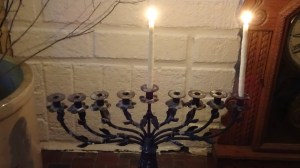
Hanukkah – Day 1
To see all of our posts revolving around the history of the Maccabees, just click on the image above.
© 2026 Today in the Bible
 Today in the Bible
You must be logged in to post a comment.