Kislev 26, 5786; from sunset December 15, 2025, to sunset December 16, 2025
(The twenty-sixth day of the ninth month)
The word Hanukkah comes from the Hebrew verb “chanach” (חָנַךְ) – this is why you often see “Hanukkah” spelled like “Chanukkah” (חֲנֻכָּה) The verb-root “chanach” means “to dedicate or inaugurate.” The festival started as a rededication of the Temple after it was defiled by Antiochus IV during the days of the Maccabees. The below excerpt, from a chabad.org article, explains why we refer to Hanukkah as the “Festival of Lights.” This is one of the rare times at Today in the Bible where we are unable to quote directly from the Bible or from one of the books of the Maccabees. Instead, this tradition comes to us from the Babylonian Talmud. It seems fitting, however, to bring in this story from Jewish tradition.
After the Maccabees had liberated the Temple, they set about restoring it. They didn’t have all of the fancy golden furnishings and utensils made in the days of old, but they decided to do what they could to honor God with what they had.
Since the golden Menorah had been stolen by the Syrians, the Maccabees now made one of cheaper metal. When they wanted to light it, they found only a small cruse of pure olive oil bearing the seal of the High Priest Yochanan. It was sufficient to light only for one day. By a miracle of G‑d, it continued to burn for eight days, till new oil was made available. That miracle proved that G‑d had again taken His people under His protection. In memory of this, our sages appointed these eight days for annual thanksgiving and for lighting candles.[1]
Some say that Hanukkah is celebrated for eight days because of the one cruse of sanctified oil they found when cleansing the Temple. One cruse of oil was the appropriate size to last for one day. Instead, this one special cruse of oil lasted for eight days, giving them enough time to obtain more purified oil.
But there may also be a connection between the eight-day “chanukkah” of the Temple during the days of the Maccabees and the eight-day “chanukkah” of the Tabernacle in the days of Moses. The synagogue readings throughout Hanukkah remember the gifts brought by each of the twelve tribes during the dedication of the altar in the days of Moses. The readings start with Numbers 6:22 (the priestly blessing) and continue on through the gifts of the tribes. It runs all the way through to Numbers 8:4 (the LORD’s instructions to Moses for Aaron to set up the lamps on the lampstand). Let’s look at other Scripture from Moses and Aaron’s dedication of the Tabernacle.
And you shall not go out from the door of the tent of meeting for seven days, until the days of your ordination are completed, for it will take seven days to ordain you. As has been done today, the LORD has commanded to be done to make atonement for you. At the door of the tent of meeting you shall remain day and night for seven days, performing what the LORD has charged, lest you die; for so I am commanded.” And Aaron and his sons did all the things which the LORD commanded by Moses.
On the eighth day Moses called Aaron and his sons and the elders of Israel; and he said to Aaron, “Take a bull calf for a sin offering, and a ram for a burnt offering, both without blemish, and offer them before the LORD. And say to the people of Israel, `Take a male goat for a sin offering, and a calf and a lamb, both a year old without blemish, for a burnt offering, and an ox and a ram for peace offerings, to sacrifice before the LORD, and a cereal offering mixed with oil; for today the LORD will appear to you.’”
And they brought what Moses commanded before the tent of meeting; and all the congregation drew near and stood before the LORD. And Moses said, “This is the thing which the LORD commanded you to do; and the glory of the LORD will appear to you.” – Leviticus 8:33-9:6 (RSV)
Solomon also observed an eight-day “chanukkah” of the Temple built in his days…
And on the eighth day they held a solemn assembly; for they had kept the dedication of the altar seven days and the feast seven days. – 2 Chronicles 7:9 (RSV)
During both of these “chanukkah”s – the glory of the LORD appeared to the people and fire came down from heaven and consumed the sacrificial offerings.
Then Aaron lifted up his hands toward the people and blessed them; and he came down from offering the sin offering and the burnt offering and the peace offerings. And Moses and Aaron went into the tent of meeting; and when they came out they blessed the people, and the glory of the LORD appeared to all the people. And fire came forth from before the LORD and consumed the burnt offering and the fat upon the altar; and when all the people saw it, they shouted, and fell on their faces. – Leviticus 9:22-24 (RSV)
When Solomon had ended his prayer, fire came down from heaven and consumed the burnt offering and the sacrifices, and the glory of the LORD filled the temple. And the priests could not enter the house of the LORD, because the glory of the LORD filled the LORD’s house. – 2 Chronicles 7:1-2 (RSV)
When we place the story of Hanukkah in the context of the eight-day “chanukkah” of the Tabernacle of the days of Moses and the eight-day “chanukkah” of the Temple in the days of Solomon, we may see a mini version of these grander dedications displayed in the eight-day miracle of the oil. One wonders if there may be a connection to the days of Elisha and the miracle of the oil recounted then.
Now the wife of one of the sons of the prophets cried to Elisha, “Your servant my husband is dead; and you know that your servant feared the LORD, but the creditor has come to take my two children to be his slaves.”
And Elisha said to her, “What shall I do for you? Tell me; what have you in the house?”
And she said, “Your maidservant has nothing in the house, except a jar of oil.”
Then he said, “Go outside, borrow vessels of all your neighbors, empty vessels and not too few. Then go in, and shut the door upon yourself and your sons, and pour into all these vessels; and when one is full, set it aside.”
So she went from him and shut the door upon herself and her sons; and as she poured they brought the vessels to her. When the vessels were full, she said to her son, “Bring me another vessel.”
And he said to her, “There is not another.”
Then the oil stopped flowing. She came and told the man of God, and he said, “Go, sell the oil and pay your debts, and you and your sons can live on the rest.” – 2 Kings 4:1-7 (RSV)
Just as Elisha used what was available to provide for the widow of the prophet, so too the Maccabees used what they had available to honor God. In both instances, there was a miracle associated with the oil. Join us again in a few days when we’ll take a deeper look at the symbolisms associated with the menorah and the oil.
Hanukkah – Day 2
[1] https://www.chabad.org/holidays/chanukah/article_cdo/aid/102978/jewish/The-Hanukkah-Story.htm
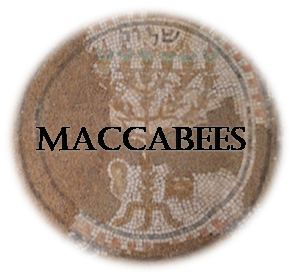
To see all of our posts revolving around the history of the Maccabees, just click on the image above.
© 2026 Today in the Bible
 Today in the Bible
You must be logged in to post a comment.