Elul 25, 5786; from sunset September 6, 2026, to sunset September 7, 2026
(The twenty-fifth day of the sixth month)
Today, according to Jewish tradition, is the anniversary of the first day of creation. The day God spoke and it happened. The author of Psalm 33 celebrates the LORD and His power to create by the word of His mouth. He commanded – and it was done.
Rejoice in the LORD, O you righteous! For praise from the upright is beautiful. Praise the LORD with the harp; make melody to Him with an instrument of ten strings. Sing to Him a new song; play skillfully with a shout of joy.
For the word of the LORD is right, and all His work is done in truth. He loves righteousness and justice; the earth is full of the goodness of the LORD.
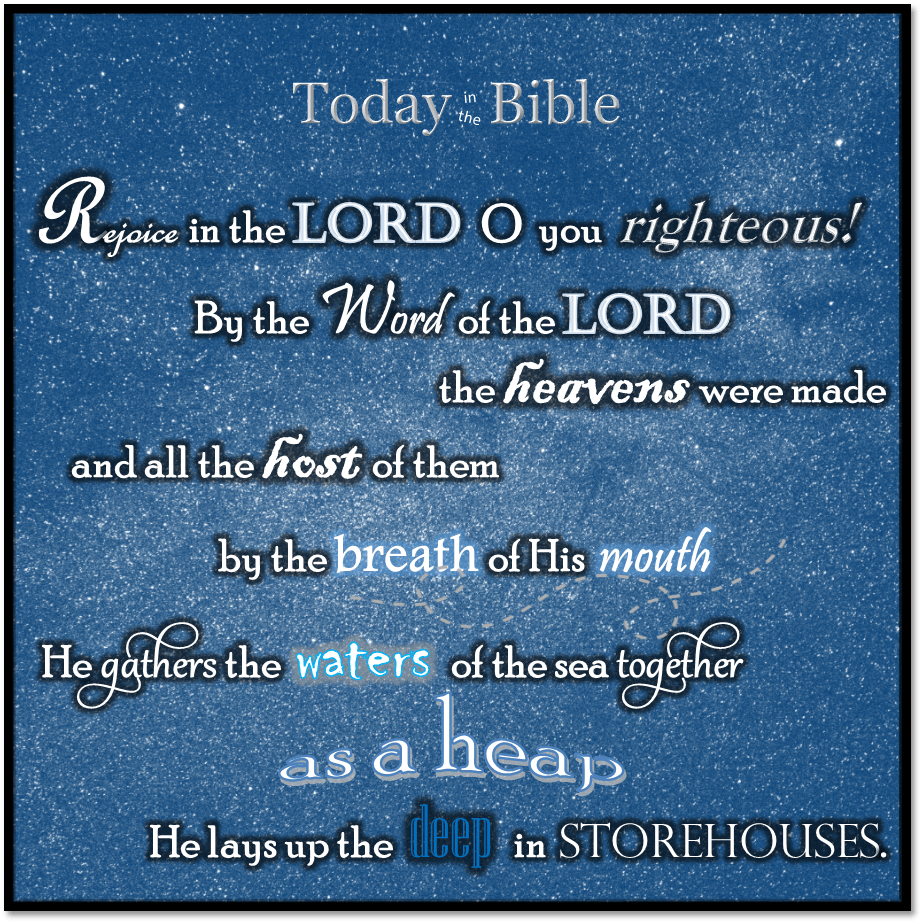
By the word of the LORD the heavens were made, and all the host of them by the breath of His mouth. He gathers the waters of the sea together as a heap; He lays up the deep in storehouses.
Let all the earth fear the LORD; let all the inhabitants of the world stand in awe of Him. For He spoke, and it was done; He commanded, and it stood fast. – Psalm 33:1-9 (NKJ)
דָּבָר
Davar (דָּבָר) is Hebrew for “word.” It’s one of the most intriguing words in the Hebrew language. Below is the dictionary definition of “davar.”
davar = word, speech, thing, matter
So? What’s the big deal? If you think about it a little bit, you’ll see that something that is spoken (word, speech) comes from the same root as something that is tangible (thing, matter). Matter, as in, “We have a matter to discuss.” Or matter, as in, a physical substance; something you can touch.
As a verb, “davar” (דבר) means to speak, declare, converse, command, promise, warn, threaten, sing, etc. Some of its related words take on the meaning of, “what comes after” – perhaps even the consequences of something.
At creation, when God spoke, black words did not appear on a flat piece of white paper. Physical things appeared. It wasn’t virtual reality. It was reality. At Mount Sinai, God spoke the Ten “Words” and the people “saw” it. The original Hebrew literally translates to…
And all the people are seeing the voices, and the flames, and the sound of the trumpet, and the mount smoking; and the people see, and move, and stand afar off… – Exodus 20:18 (YLT)
How did the people see the voices? Did God’s Word take on a physical form then, too? Jewish tradition holds that it did. It says that God words took on the form of sparks or flames that landed on the heads of each person present at the foot of the mountain.
The prophets, also, are said to have “seen the word of God.” Most of the time this is translated as they received a “vision” – but what did they see? Did they just see the letters of a word on the page of a book? Probably not. Did they see something of a physical nature? Was it 3-D? Did it take on form and substance? Or did they see, “what comes after” — did they see the consequences of the sins that God was addressing through them?
We could lose a whole day pondering over the mysteries of “davar” – but the point comes back to this: God’s Word is not meant to be two-dimensional. It’s not meant to be black letters on a flat piece of white paper. It’s meant to take on form and substance — by us — as we walk it out in a way that shows our love for our God and our fellow man.
Just a reminder that it’s tradition to read Psalm 27 daily through the Feast of Tabernacles. You can find it by clicking on the link.
Did you know that you can view any of our posts whenever you’d like?
Visit our home page at https://todayinthebible.com
where you can find them organized by month
in the “Archives” section on the right side of the page.

© 2026 Today in the Bible



You must be logged in to post a comment.